


Moving with a family can feel like trying to pack a whole circus into cardboard boxes. There’s the practical stuff, like tape and labels, and then there’s the emotional stuff, like kids worrying about new schools or missing their favourite park. The good news is that a family move doesn’t have to end in constant stress and meltdowns. Here’s how to help your kids navigate the big emotions of leaving behind a familiar place and settling into a new home.
We’ve moved three times in the last five years—and more times before that. Each move taught me something new about how children experience change. While I spent weeks researching neighbourhoods, comparing homes, planning the logistics, and making endless lists, my kids often seemed completely unaware of what was happening… until it actually happened.
Our first move after my divorce affected my two youngest children even more than the divorce itself. They were five and three and had lived in that house their entire lives. I had spent months dreaming about giving them a better home, but to them, that little house wasn’t temporary—it was simply home. Forever.
Kids don’t always say, “I’m processing a major life transition.” They’re much more likely to cry because the cereal is wrong or revert to being a clingy toddler or suddenly become deeply attached to a random rock from the backyard. Big changes often show up in little ways.

Start Talking about the Move Early
Talk about the move as soon as it’s realistic to do so.
Sometimes that’s difficult. Maybe your moving date depends on selling your house, finding a rental, or a job transfer. Due to circumstances surrounding my divorce, I couldn’t tell my kids about our last move until about a month before it happened.
Looking back, I realize I could have started preparing them sooner. Even if I couldn’t tell them that we were moving, I could have talked about the fact that we were living in a rental and someday we’d be looking for a home that better fit our family. Those conversations would have planted the idea that change was coming, even if I could tell them exactly when.
Use whatever information you can honestly share to begin the conversation.
“How would you feel about moving to a new house?”
“We might be moving because of Mom’s new job.”
If your children have questions, answer honestly. It’s perfectly okay to say, “I’m not sure yet” or “I’m still figuring it out.” Invite them to share their thoughts and ideas too. Their questions may reveal worries you hadn’t considered, and involving them in the conversation helps them feel like part of the process instead of simply being told what’s happening.
As plans become more certain, keep them updated. Explain what will change, what will stay the same, and what the next steps will be. Pick up some books from the library about other families who’ve moved to help your kids imagine and discuss this. For tweens, Disney’s Inside Out is a great movie about all the emotions and questions that may come with moving.
Help Them Picture Their New Home
Whenever possible, involve your children in the process.
Because I have five kids, I didn’t always bring everyone to house viewings—especially when we were looking at rentals! But I often brought one or two along.
They noticed completely different things than I did. I was looking at the bedrooms and kitchen space. They were checking out possible forts indoors and out and where they might put the couch.
I always reminded them that it was a “maybe house.” Afterwards we’d talk about what we liked, what we didn’t, and what we hoped to find.
If you’re moving to a new home farther away, use Google Maps to explore the neighbourhood together. Look up playgrounds, schools, libraries, hiking trails, or ice cream shops. Familiar places—even virtual ones—help make an unfamiliar move feel less intimidating.
Prepare Kids for Moving Day
Moving feels overwhelming when it’s one enormous event. Instead, break it into smaller pieces.
Start talking about packing weeks ahead of time. Explain what happens first, what happens next, and what moving day will actually look like.
If you’re moving out of the province or across the country, book your long distance movers early. We hired a moving company for our move from Victoria to Vancouver (when I only had three kids), and it was one of the best decisions we made.
More recently, I hired movers for a move just five minutes across town. While my kids spent the day with their dad, the movers handled the heavy lifting so the children came home to a house that was messy—but ready to become home.
Pack Their Comfort Items Last
One of my biggest tips is to create a “comfort box.” Pack favourite blankets, stuffed animals, special books, sensory toys, medications, or anything else that helps your child feel safe.
Ask them what belongs in that box. You may know their favourite comfort items, but they might surprise you. My teenagers still pull out favourite blankets and stuffed animals after a difficult day. Those familiar objects matter more than we sometimes realize.
That comfort box should be the last thing loaded onto the truck and the first thing unloaded.
Keep Familiar Routines
Children find security in routines, especially when everything else feels uncertain.
Keep bedtime stories, Friday pizza night, favourite music, family prayers, or other traditions going as much as possible.
Let each child pack a backpack with special belongings they’ll keep with them rather than on the moving truck. Giving them responsibility—even something as simple as carrying their own backpack—helps them feel included instead of powerless.
Make Moving Day Easier
Moving day is almost always chaotic. Depending on your children’s ages, it may actually be easier if they’re somewhere else for the day. Grandparents, friends, or the other parent can often provide a calmer environment while furniture is being moved.
That’s what happened during our last three moves. My kids returned from their dad’s once the truck was unloaded. The older ones helped assemble furniture and paint bedrooms, while the younger ones were mostly excited to rediscover their toys.
For the first couple of days, I don’t worry much about cooking. Breakfast might be waffles or toast. Lunch is sandwiches. Dinner is takeout.
Since eating out is a rare treat for our family, I let the kids choose the restaurant. It gives everyone something fun to look forward to in the middle of all the upheaval.
Focus on Home, Not Perfection
Once you’ve arrived, resist the temptation to make everything perfect immediately. Start with what your family actually needs: beds to sleep in, a functioning bathroom, and enough kitchen supplies to prepare meals.
If possible, unpack your children’s rooms first. Familiar blankets, books, and favourite toys help a strange house begin to feel like home.
Our last move didn’t go quite as planned. Even though I’d hired movers, they underestimated how much our six-person family owned. We ended up making two trips across town, and I still had to return the next day to collect the last few items.
That meant I didn’t have time to clean and patch walls the way I usually would. My landlady asked whether I wanted to come back and finish.
I looked at the mountain of boxes waiting for me in our new home and realized my children needed me there more than my former landlord needed freshly patched walls. I told her to deduct the repairs from my damage deposit.
Sometimes moving forces us to choose where our limited time and energy are best spent. In that moment, making our new house feel like home mattered more than making our old one perfect.
Remember that Home Takes Time
Be honest if your children are sad. You don’t have to pretend moving is one big adventure. It’s okay to say, “Yes, this is hard.”
In the first week, focus on small victories. Find the nearest grocery store. Walk around the neighbourhood and say hi to any new neighbors out walking too. Visit the local playground. Set up the coffee maker. Build cardboard forts or race cars out of the moving boxes as they get unpacked.
Home doesn’t appear the moment the moving truck pulls away. It grows slowly, box by unpacked box.
Someone will probably have a meltdown. Someone will remember exactly which box they packed something in but be unable to find that particular box among the mountains of cardboard. Someone will discover they packed cereal but forgot the bowls. That’s all part of moving.
And don’t expect that once the last box is unpacked, everyone will instantly feel at home. Adjusting to a new house takes time.
After our first move following my divorce, my two youngest children struggled for several months. My five-year-old, especially, became much more clingy. She wanted extra reassurance whenever I went out and suddenly wanted me to stay with her during her group violin lessons. Since I’d always encouraged my kids to be independent, this was a new challenge for both of us.
I did what I could to support her. I took a parenting course about helping children through transitions and arranged a few play therapy sessions for her. Most of all, I tried to be patient and reassure her that she was safe and that our new house really was home. Gradually, her confidence returned, and by our next move, she handled the transition much more easily.
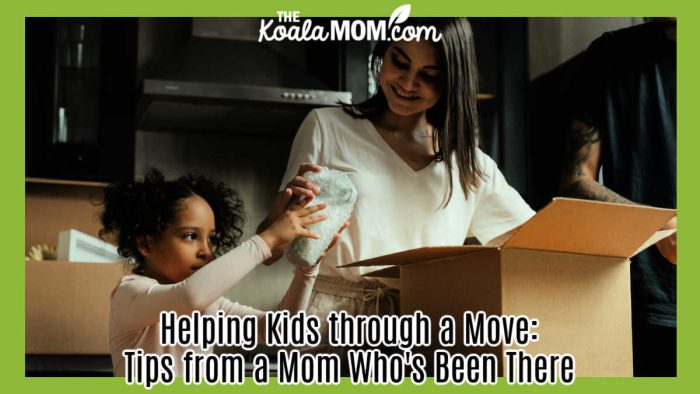
Give yourself—and your kids—a little grace. Box by box, meal by meal, bedtime by bedtime, your new house will gradually stop feeling like a strange place and start feeling like home.
No Responses Yet