


Somewhere in your forties, grocery bags start to feel a little heavier, carrying a sleeping child upstairs takes more effort, and getting up off the floor after playing with the kids isn’t quite as easy as it used to be. Some of that is simply part of getting older. Muscle mass and strength gradually decline after 40, and the changes can become more noticeable around menopause.
But here’s the good news: you can still build muscle and get stronger in your forties, fifties, sixties, and beyond. In fact, research is showing just how effective strength training can be for women at every stage of menopause. My mom is also proof of this, as she’s stayed active into her 60s and has a regular workout routine at her local rec centre.
So what does that look like in practice? Do you need an expensive gym membership, heavy weights, or hours of workouts each week? Let’s look at what the research says and how you can fit a little more strength training into an already busy week.
TL;DR
- Muscle mass and strength gradually decline after 40, and many women notice the changes more during menopause.
- A 2026 analysis of 126 studies found that women gained strength and muscle from resistance training whether or not they had gone through menopause.
- A 12-week program using resistance bands, light weights, and bodyweight exercises improved hip strength and balance in women aged 40 to 60.
- Creatine may offer a small additional benefit when combined with strength training, but research hasn’t found the same strength benefits from taking it without exercise.
What happens to muscle after 40?
Muscle is a bit like a use-it-or-lose-it resource. When you regularly challenge your muscles through activities like lifting, carrying, squatting, or pushing, your body has a reason to maintain and build them.
As young moms, we often get plenty of this kind of activity without even thinking about it. We’re carrying toddlers, lifting children into car seats, hauling diaper bags, playing on the floor, and generally doing a lot of bending and lifting throughout the day. But by the time we’re in our forties, our children are more independent. They walk on their own, carry their own backpacks, and no longer need us to pick them up every five minutes. That built-in workout gradually disappears!
If we don’t replace some of that everyday activity with intentional strength training, muscle size and strength can gradually decline. Researchers at the University of Exeter describe this decline as beginning after 40. Women can be particularly affected during and after menopause, when levels of estrogen and progesterone fall.
And this isn’t just about how your arms or legs look. Strong muscles help you maintain balance, protect your joints, and stay independent as you age. Think about everyday activities: carrying groceries, lifting a toddler, climbing stairs, getting up from the floor, or putting a suitcase into an overhead compartment. These all depend on muscle strength.
Building and maintaining muscle now can make those everyday tasks easier for years to come.
Can women still build muscle after menopause?
Absolutely! Menopause doesn’t mean you’ve missed your chance to get stronger. A 2026 systematic review and meta-analysis published in the Journal of Science and Medicine in Sport looked at 126 studies involving 4,019 healthy women. About two-thirds of the participants were postmenopausal.
The researchers found that resistance training helped women increase strength, build functional muscle mass, and reduce fat mass. Interestingly, menopausal status didn’t make a significant difference. Postmenopausal women gained strength almost as much as pre-menopausal women, with similar results for muscle and fat. The average participant was about 51 years old, so the research is particularly relevant to women in midlife.
This is encouraging news for anyone who has assumed that changing hormones make it harder, or even impossible, to build muscle. Your muscles can still respond to exercise after menopause. You just need to give them a reason to!
When your children were younger, they may have provided plenty of that motivation (whether you wanted it or not!). Now that they’re older, more independent, and busy with their own activities, perhaps it’s time to find a reason to get moving for yourself. Think of strength training as a way to invest in your own health and fitness, rather than just another item on your family’s to-do list.
Do you need a gym to build muscle?
Not necessarily. A gym gives you access to more equipment, but you can make meaningful progress at home with resistance bands, a few weights, and your own bodyweight.
A randomized trial published in Medicine & Science in Sports & Exercise followed 70 healthy women aged 40 to 60. One group continued their usual activities, while the other followed a low-impact exercise program four times a week for 12 weeks.
The program included:
- Resistance bands
- Hand weights ranging from 1 to 5 kilograms
- Ankle weights
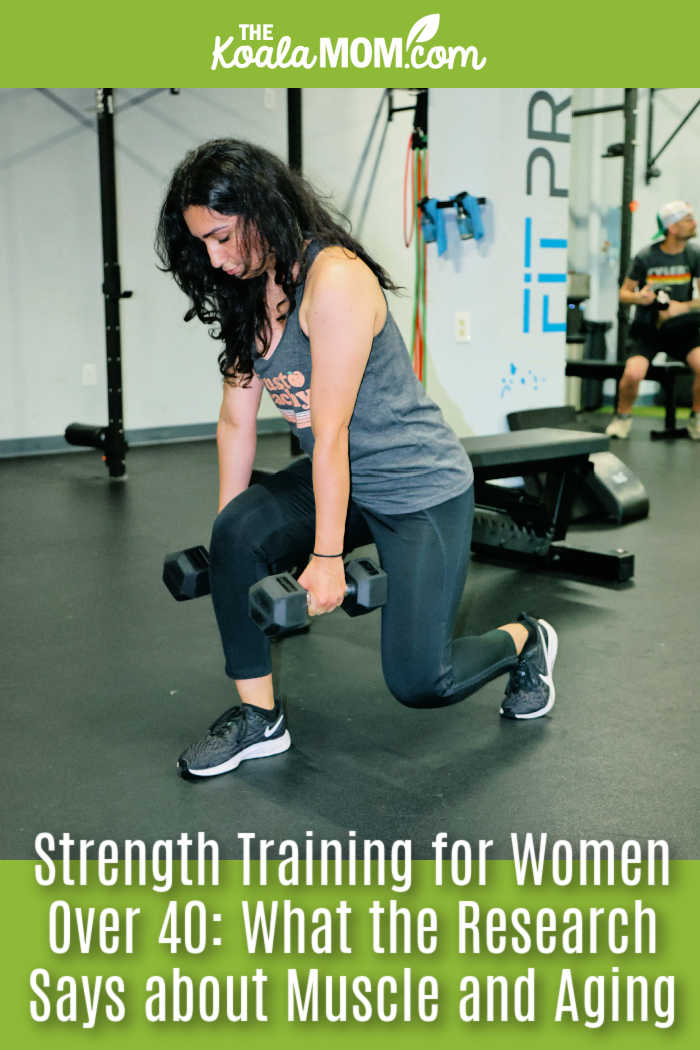
- Bodyweight exercises such as squats, lunges, and planks
Each workout lasted approximately 40 to 50 minutes. After 12 weeks, the women following the program had increased their hip strength by about 20% and improved their balance by 12 to 13%. They also gained approximately 2% lean muscle mass.
The results were similar for pre-menopausal, peri-menopausal, and post-menopausal women. Shoulder strength didn’t improve significantly compared with the control group.
There are a couple of things to keep in mind: the classes were supervised, and the company behind the exercise program helped fund the study. Your results from following a similar routine at home may be different. Still, it’s encouraging evidence that you don’t need a room full of gym equipment to start getting stronger.
What about your bones?
Strength training isn’t just good for your muscles. Your bones benefit from exercise, too.
This is particularly important for women after menopause, when declining estrogen levels can contribute to bone loss. Exercises that put controlled stress on your bones, including resistance training and certain impact activities, can help maintain bone density.
The LIFTMOR trial looked at 101 postmenopausal women with low bone mass, with an average age of 65. For eight months, one group completed supervised 30-minute workouts twice a week. These combined heavy resistance exercises with jumping-style impact movements. A comparison group followed a low-intensity home exercise program.
The results were impressive. Women in the lifting group increased their lumbar spine bone density by about 2.9%, while women in the comparison group lost approximately 1.2%. At the hip, the lifting group maintained bone density while the comparison group experienced a decline. The women who lifted weights also improved across every measure of physical function.
These were carefully screened participants who received close supervision throughout the study. Heavy lifting and jumping aren’t necessarily the right starting point for everyone, especially if you have osteoporosis or other health concerns. If you’re interested in this type of training, talk with your doctor and work with a qualified trainer to build up safely.
How much strength training do women over 40 need?
Here’s another encouraging finding: you don’t have to spend hours at the gym to benefit from strength training. The World Health Organization recommends muscle-strengthening activities that work all the major muscle groups at least two days a week.
A 2022 meta-analysis published in the British Journal of Sports Medicine looked at 16 cohort studies to explore how much muscle-strengthening activity was associated with better health outcomes.
The researchers found that 30 to 60 minutes of muscle-strengthening activity per week was associated with a 10 to 20% lower risk of death from any cause. They didn’t find a clear additional benefit beyond approximately one hour per week.
These findings come from observational studies, so they don’t prove that strength training directly caused the lower risk. However, they do suggest that even a relatively modest amount of weekly activity can be worthwhile.
For a busy mom, two 25-minute workouts a week might be much more realistic than trying to squeeze in an hour at the gym every day.
A simple strength-training routine to try at home
You don’t need a complicated workout plan to get started. Choose five or six exercises that work different parts of your body:
- Legs: Squats or sit-to-stands (lower yourself into a chair and stand back up).
- Hips and glutes: Glute bridges, lying on your back and lifting your hips.
- Leg strength and balance: Step-ups using a sturdy step.
- Back: Resistance band rows.
- Chest and arms: Wall push-ups or knee push-ups.
- Core: Planks or modified planks.
Start with one to three sets of 8 to 15 repetitions of each exercise. Choose a resistance level that makes the last couple of repetitions challenging while still allowing you to maintain good form.
As the exercises become easier, gradually increase the number of repetitions or sets. Eventually, you can move to a stronger resistance band or heavier weights.
The important thing is consistency. Two manageable workouts each week are a much better starting point than an ambitious routine that leaves you exhausted and ready to quit after a few days.
Does creatine help women over 40?
You may have heard about creatine as a supplement used by athletes and bodybuilders. It’s one of the most researched supplements in sports nutrition, but researchers have also been looking at how it might help women maintain muscle as they age.
A 2026 meta-analysis published in the Journal of the International Society of Sports Nutrition pooled seven randomized trials involving 608 postmenopausal women, with an average age of approximately 62.
Compared with women taking a placebo, those taking creatine gained an additional 0.37 kilograms of lean mass on average. In the three trials that measured leg-press strength, creatine users also gained approximately 7.5 kilograms more strength.
The benefits were clearest when women took at least 5 grams daily alongside resistance training. Creatine didn’t improve bone density, and reported side effects were mild and similar to those experienced by women taking a placebo.
One important detail: taking creatine without exercising didn’t produce the same strength benefits. Think of it as a possible addition to a strength-training routine, not a replacement for one.
Most of the research has focused on plain creatine monohydrate, although some supplement companies combine it with other ingredients. For example, Creatine+ from Elysium Health, a longevity supplement company, combines 5 grams of creatine monohydrate with HMB and pomegranate extract. The product is NSF Certified for Sport.
It’s worth remembering that the studies above tested creatine monohydrate on its own. The additional ingredients in combination supplements have their own evidence base, so the results of those studies shouldn’t automatically be applied to every creatine blend.
If you’re considering creatine, talk with your doctor first if you have kidney concerns, take medication that affects your kidneys, or are pregnant or breastfeeding. Creatine can also increase creatinine levels on routine blood tests, so let your healthcare provider know you’re taking it before having lab work done.
Where to start this week
The research offers some reassuring news for women in their forties and beyond: you can build muscle and strength before, during, and after menopause. You don’t need to wait until you have more time, buy an expensive gym membership, or invest in a collection of exercise equipment.
Start with two short strength-training sessions this week. Pick five or six exercises, use resistance bands or light weights if you have them, and focus on learning the movements with good form. To help you actually stick with it, ask your partner or a friend to join you (even if you and your friend do it on your own and just send each other a quick text saying “done my workout today!”).
Once those workouts become part of your routine, gradually increase your repetitions or resistance as you get stronger. If you’re interested in creatine, consider discussing it with your doctor once you’ve established a regular training habit.
The goal isn’t to become a bodybuilder or spend your days lifting weights. It’s to build the strength that helps you enjoy everyday life, keep up with your family, and remain active and independent as you get older.
Frequently Asked Questions
Is it too late to start strength training at 50 or 60?
Not at all! The research shows that women can build strength well beyond menopause. In the LIFTMOR trial, participants averaged 65 years old, and the 2026 analysis of 126 studies found no significant difference in muscle and strength gains based on menopausal status.
Will lifting weights make me bulky?
You don’t need to worry about suddenly developing bulky muscles from a couple of strength-training sessions each week. The changes measured in these studies were relatively modest. In the 12-week home-style exercise program, for example, women increased their hip strength by about 20% while gaining approximately 2% lean muscle mass.
Do I need supplements to build muscle after 40?
No! Resistance training itself produced improvements in the studies discussed above. Creatine may offer some additional benefits, particularly for postmenopausal women, but the research found those benefits when it was combined with regular strength training. You can start building muscle without buying any supplements.
No Responses Yet