


By the second half of pregnancy, many women spend their evenings searching for a seat that doesn’t hurt. The sofa sinks, dining chairs feel hard, and getting up becomes a small project. A large inflatable ball sitting in the corner of the room can look like clutter, but it often turns into the most used piece of furniture in the house.
This article looks at what the ball does for your body, how to pick the right size, and how to set it up so it is stable and safe. You will also find a few gentle movements to try, guidance for late pregnancy, and the rules that keep sessions comfortable. If you are weighing whether the space and the cost are justified, the answers below should help you decide, and they should help you get more from the ball if you already own one.
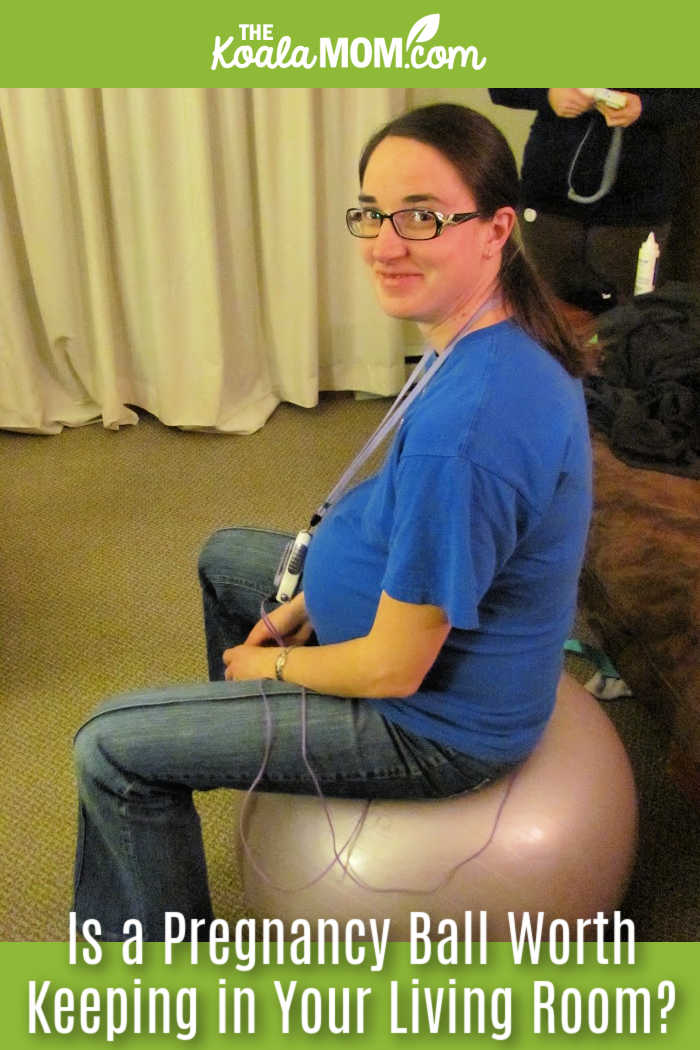
I used a pregnancy ball throughout my first three pregnancies. It was my office chair during my first pregnancy and got me through labour with my third pregnancy. It was also the only way to get my babies to sleep after their births—none of them liking rocking chairs, but they loved being held close while I bounced up and down on the ball.
What a Pregnancy Ball Actually Does
A pregnancy ball is an inflatable exercise ball used for sitting, rocking, and gentle movement during pregnancy. Because the surface moves slightly with you, it encourages small adjustments in your hips and lower back that a normal chair does not. Many people find that this subtle motion eases stiffness after long periods of sitting.
Sitting on the ball also asks your core and pelvic muscles to stay lightly engaged, which supports an upright posture. It is not a workout in the traditional sense. Think of it as a comfortable seat that keeps you gently active, with the added benefit of being easy to use while you watch television, work from home, or talk with family.
Who Tends to Benefit Most
People with desk jobs (like me during my first pregnancy), those who feel pressure in the lower back, and anyone who wants a low-impact way to move at home often enjoy the ball. Partners also like it for late pregnancy, when rocking and bouncing can feel soothing. If you have specific medical concerns, such as placenta issues, balance problems, or a high-risk pregnancy, talk with your provider before using it.
Choosing the Right Size and Setting It Up
A ball that is too big or too small defeats the purpose. The right size lets you sit with your hips slightly higher than your knees and your feet flat on the floor. If your knees are far above your hips, the ball is too small, and if your feet dangle, it is too large.
Inflating It Correctly
Inflate the ball until it feels firm but still has a little give when you sit. A ball that is overfilled bounces too much and can be harder to control, while an underfilled ball makes you sink and flattens the benefit. Many people inflate it, let it rest for a few hours, and then top it off, since the material often stretches a little at first.
Choosing a Safe Spot
Place the ball on a flat, non-slip floor, away from sharp corners and glass. Carpet or a yoga mat adds grip, while polished wood or tile can be slippery. Keep a wall, a sturdy table, or a countertop within reach for balance. A base ring or a ball set with stabilizing accessories can help hold it in place, as in sets from Momcozy designed for maternity use.
During my first pregnancy, I kept my exercise ball in my office. After that, it occupied a corner of our living room. Both spaces were carpeted, so the ball didn’t slide underneath me.
Gentle Movements to Try
Start with basic sitting and add movement slowly. Keep sessions short at first, around five to ten minutes, and build up as you feel comfortable. Stop if you feel dizzy, sharp pain, or any unusual symptoms.
These simple options suit most people:
- Pelvic circles: sit tall and slowly trace a circle with your hips.
- Gentle bounce: keep your feet planted and bounce lightly for a minute at a time.
- Side-to-side rocking: shift your weight from one sit bone to the other.
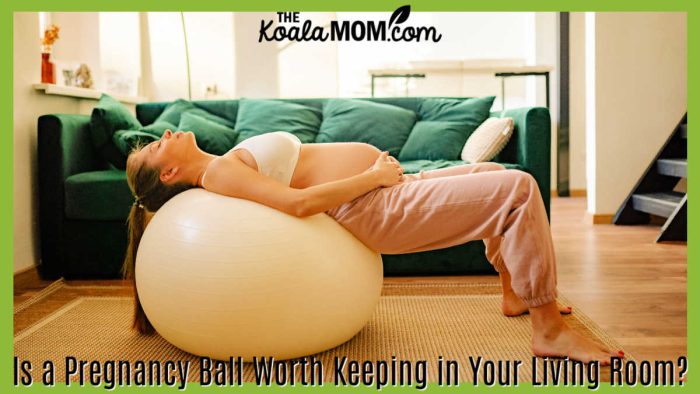
- Forward lean: rest your arms on a bed or sofa while kneeling on the floor in front of the ball.
Making It Part of Your Day
The easiest habit is to replace one chair with the ball for part of the day. Sit on it while you check email, fold laundry, or eat breakfast. Because you are already doing something, you are more likely to keep using it than if you had to set aside separate exercise time.
Using the Ball in Late Pregnancy
In the final weeks, many parents use the ball for relaxation and preparation for labour. Rocking and leaning forward on it can feel comfortable when your belly is large and your back is tired. Some people continue to use it during early labor at home, with a partner nearby to help them balance.
If you plan to use the ball during labor at a hospital or birth center, ask the staff in advance about their policy. Some facilities provide balls, others welcome your own, and a few have restrictions. Having this conversation early prevents surprises on the day.
I had a homebirth with my last three babies, so I was able to use my own ball a great deal during my third labour. I think I decided it took up too much space after that, as I don’t remember using it during my last two pregnancies. For a time during labour, it helped ease my back pain; when it stopped helping, I moved onto other ways to get through the pain.
Safety Rules that Keep It Comfortable
Never stand on the ball, and avoid sitting on it when you feel unsteady. Wear non-slip socks or go barefoot, and keep pets and small children away during your sessions. Check the ball regularly for scratches, leaks, or thin spots, and replace it if you notice damage. A burst-resistant design gives extra peace of mind, but no ball is immune to wear.
Listen to your body. If you feel pain in your abdomen, pelvis, or back that does not ease when you stop, contact your healthcare provider. Pregnancy changes your balance and joints, so a movement that felt fine last month may need adjusting now.
Storage and Space Concerns
The biggest objection to owning a ball is the space it takes up. Fortunately, it can be deflated and stored in a drawer, or kept in a corner where it doubles as extra seating when friends visit. (I have pictures of my mom sitting on it with my first when she was a toddler.) Some parents keep it near the bed so it is ready for evening stretching.
After pregnancy, many families keep using it as a seat for rocking a baby, which extends its usefulness well past delivery. Rocking chairs offer a longer, gentler motion, while bouncing gently on the ball is a shorter, quicker motion that worked more effectively to settle my babies.
Common Questions Parents Ask
How Long Should Each Session Last?
There is no fixed answer, but most people feel best with short blocks of fifteen to thirty minutes, repeated through the day. Long stretches can tire your lower back if your posture slips. Set a gentle reminder to stand, walk, and drink water between sessions, and stop earlier if you feel any strain.
Can It Replace My Desk Chair?
For short periods, yes. Many people alternate between the ball and a regular chair so their muscles do not tire. If you work at a desk, check that the ball height lets your forearms rest at a comfortable angle on the surface, and keep your feet flat on the floor.
What If I Feel Unsteady?
Pregnancy loosens ligaments and shifts your center of gravity, so a little wobble is common. Place the ball against a wall, widen your stance, and keep one hand on a stable surface until you feel more confident. If the unsteady feeling continues, set the ball aside and ask your provider for guidance on safer ways to stay active.
A Simple Habit for a Steadier Pregnancy
For many expecting parents, the ball is worth the space because it gives them a comfortable way to move without extra effort. Choose a size that fits your height, set it up on a stable surface, and begin with short sessions of easy movements. Check with your provider if you have any health concerns, and follow basic safety rules every time. Used regularly, it can make evenings at home more comfortable and give you a small tool to rely on as your due date approaches.
No Responses Yet