


Bringing home a new puppy is exciting for the whole family. Children may enthusiastically promise to do all the feeding, walking, and cleaning up, but once the novelty wears off, those promises can be harder to keep! Still, having a family dog is a wonderful opportunity to teach children empathy, patience, and responsibility.
The trick is to give children age-appropriate jobs that they can realistically manage. A toddler might help fill the water bowl, while a teenager can take on more involved parts of the puppy’s daily care. From researching Bernedoodle generations for active families to preparing your living room for an energetic new puppy, a little planning will help everyone adjust to life with a new four-legged family member.
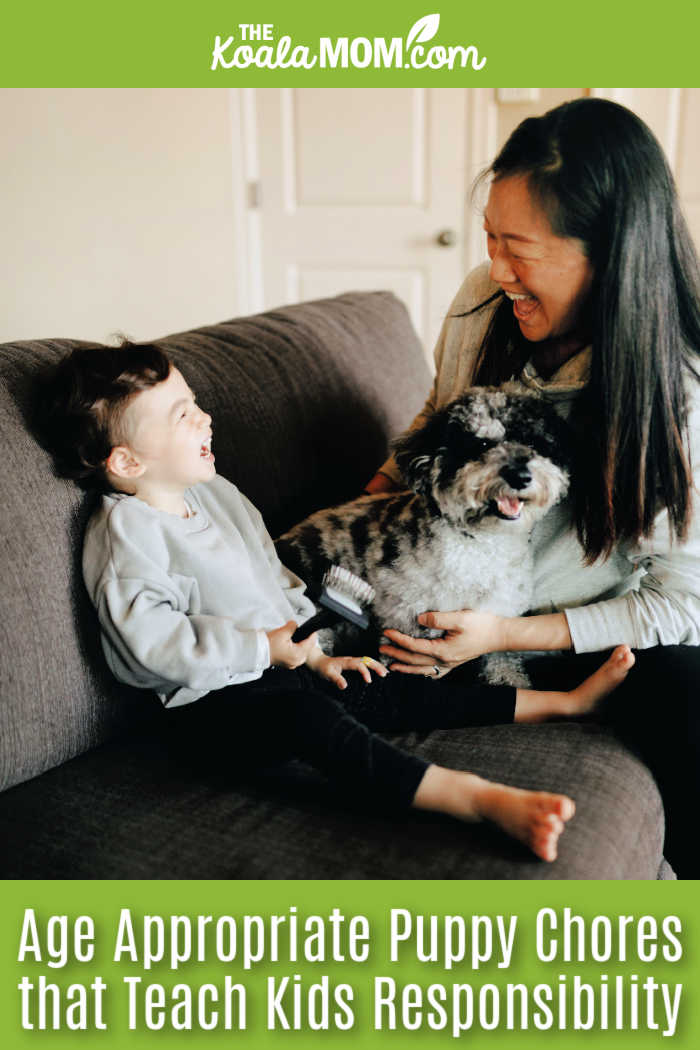
Toddlers and Preschoolers (ages 3 to 5)
At this age, children learn by watching, copying, and participating in simple routines. They aren’t ready to care for a puppy independently, but they can still feel involved in looking after their new pet.
Give your little one a small plastic measuring cup to help fill the puppy’s water bowl, for example. You can supervise and handle the heavier food containers while your child helps pour. Picking up dog toys and putting them in a basket before bedtime is another easy job that can become part of the evening routine.
Mealtimes offer opportunities to help, too. Your child might hold the measuring scoop while you portion out the puppy’s kibble or carry the empty food bowl to the kitchen afterward. Just remember to supervise closely around food, as puppies can become protective or overly excited at mealtimes.
Young children also need to learn how to interact gently with dogs. Show them how to stroke the puppy’s back or side rather than pulling its ears or tail, and remind them to leave the puppy alone when it is eating, sleeping, or resting in its crate. Never leave a young child alone with a dog, even a friendly puppy.
Early Elementary Kids (ages 6 to 9)
Children in this age group can begin taking on regular daily responsibilities. They understand that their actions affect the puppy’s well-being, although they’ll probably still need reminders and some adult supervision.
For example, children can help measure out morning and evening portions of kibble, refill the water bowl, and put away dog toys after playtime. You can even create a simple checklist with pictures or words so they know what needs to be done each day.
Grooming is another good way to get children involved. Depending on the puppy’s coat, a few minutes of gentle brushing with an appropriate brush can help prevent tangles, particularly for a curly or wavy-coated Bernedoodle. Show your child how to brush gently and check for mats rather than pulling at knots.
Other suitable jobs include:
- picking up dog waste in the backyard with a child-sized scooper.
- helping wash food and water bowls.
- practising simple training commands such as “sit,” “down,” and “touch” for five minutes at a time.
- helping prepare toys and treats for a training session.
- telling an adult when the water bowl is empty or the puppy needs to go outside.
Keep expectations realistic. A nine-year-old may be able to remember several daily tasks, while a six-year-old might need you to work alongside them.
Tweens (ages 10 to 12)
By the tween years, children are generally ready for more independence and can handle tasks involving several steps. This is a good time to introduce more of the practical aspects of dog ownership, including grooming, exercise, and enrichment.
For example, a tween might help prepare the puppy’s meals, brush its coat, wash its food and water bowls, or organize its toys. They can also help prepare enrichment activities, such as stuffing a Kong with puppy-safe food or making a lick mat for a quiet afternoon activity.
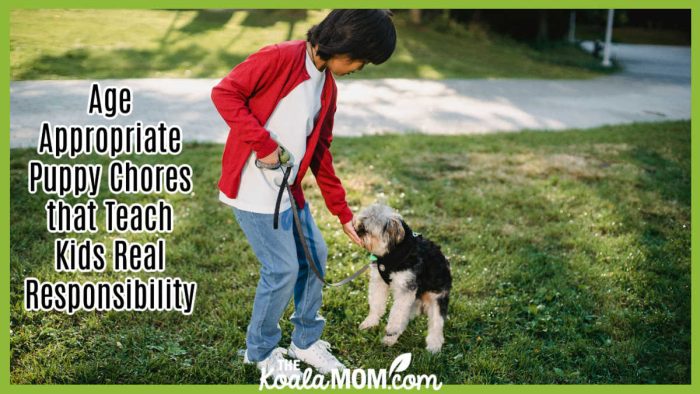
Walking is another responsibility that can be introduced gradually. If the puppy has learned to walk on a loose leash and is manageable for your child, a tween might practise walking it in a familiar area with an adult nearby. However, an adult should remain responsible for walks until the child is strong and experienced enough to handle the dog safely, even if it gets startled or pulls unexpectedly.
Tweens can also take a more active role in training. Have your child practise a few commands each day, reward good behaviour with treats, and keep track of which skills the puppy is learning. This helps children understand that training requires consistency, not just a few minutes of play when they feel like it.
Teenagers (ages 13 and up)
Teenagers can usually take on many of the more involved responsibilities of puppy care. They have greater independence and can begin managing regular tasks with fewer reminders. However, parents should still provide oversight and remain ultimately responsible for the dog’s needs.
Depending on the teenager’s experience and the dog’s size and temperament, responsibilities might include morning or after-school walks, regular training sessions, feeding, and grooming. Teens can also help with bath time, drying wet fur, cleaning muddy paws after walks, and keeping the dog’s bedding clean.
This is also a good age to teach teenagers how to recognize changes in their dog’s health and behaviour. For example, does the puppy seem less energetic than usual? Has its appetite changed? Is it scratching more frequently or limping? Children should know that these changes need to be brought to an adult’s attention rather than ignored.
You can also involve teenagers in the bigger picture of dog ownership. Let them help keep track of veterinary appointments, grooming schedules, food supplies, and other recurring needs. These are practical life skills that will serve them well when they eventually have pets of their own.
How Parents Can Keep Puppy Care Routines on Track
Even the most enthusiastic children need help building new habits. Instead of simply telling your child to “be responsible for the dog,” give them specific tasks and connect those tasks to routines they already follow.
For example, your child could:
- refill the puppy’s water bowl before sitting down for breakfast.
- help with feeding immediately after getting home from school.
- spend five minutes practising training commands before dinner.
- pick up toys and check the water bowl as part of the bedtime routine.
A simple chore chart can help, especially during the first few weeks. You might list each child’s responsibilities and let them check off tasks as they complete them. If you have several children, rotate some of the less popular jobs so that one person isn’t always responsible for cleaning up the backyard!
It’s also important to have a backup plan. Children get sick, have homework, or simply forget. The puppy still needs to be fed, walked, and cared for, so parents must be prepared to step in. Avoid making a child’s allowance, privileges, or family activities dependent on whether the puppy receives essential care.
Finally, remember that puppies are still learning, too. They may chew a favourite toy, have an accident on the floor, or refuse to cooperate during training. Model patience and show children how to respond calmly rather than becoming frustrated. A puppy’s behaviour is not always a reflection of how well a child has cared for it.
Making Puppy Care a Family Responsibility
The goal isn’t to turn children into the primary caregivers of a new puppy. Rather, it’s to help them understand that having a pet involves more than playing and cuddling. Dogs depend on their families for food, exercise, grooming, training, and affection every day.
Look for opportunities to celebrate the small successes. Maybe your toddler remembers to put the toys away, your elementary-aged child successfully teaches the puppy to sit, or your teenager remembers to brush the dog’s coat without being asked. Recognizing these efforts helps children see that their contributions matter.
As you research Bernedoodle generations for active families and plan for your new puppy’s arrival, think about how each family member can participate. With realistic expectations, consistent routines, and plenty of adult guidance, caring for a puppy can become a rewarding family experience rather than another chore on everyone’s to-do list.
No Responses Yet