


Forty has a way of making you stop and ask some uncomfortable questions. For many mothers, the years leading up to it have been spent taking care of everyone else: feeding, driving, soothing, planning, and somehow remembering all the little things nobody else remembers (like what each kid likes on their sandwiches). Somewhere along the way, Mom’s needs ended up at the bottom of the list.
The things that once seemed like harmless ways to cope can slowly become habits that are harder to break. Your body may start sending signals that are harder to ignore. And even hope—the simple belief that life can get better—can start to feel like something meant for someone else.
But starting over at 40 (or 50) isn’t a sign that you’ve failed. Sometimes, it’s simply a course correction. And midlife comes with some real advantages: you know yourself better, you’ve gained perspective, and you’re often much clearer about what actually matters to you. The first step is understanding why this season can feel so difficult in the first place.
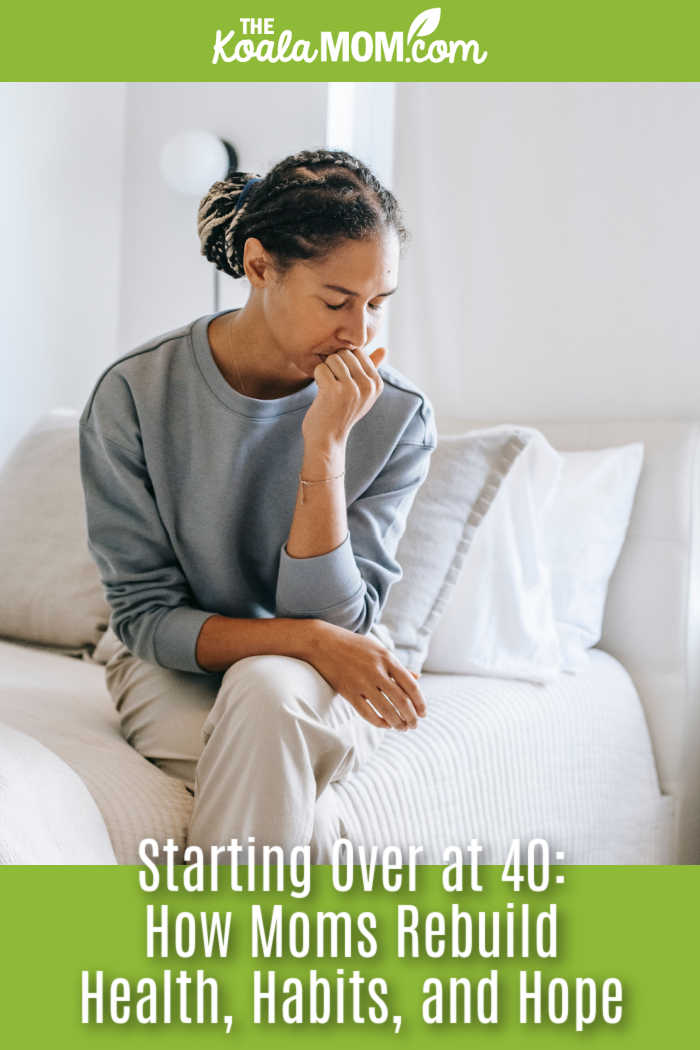
Why Does 40 Feel Like a Turning Point?
A lot of women describe their early forties as a time when several gradual changes seem to hit all at once. None of them might be overwhelming on its own, but together, they can leave you feeling completely off balance.
The Body Starts Keeping Score
Perimenopause can begin years before your periods actually stop. You might notice lighter or more disrupted sleep, mood changes, or that your body suddenly responds differently to food and alcohol. Alcohol, in particular, can hit differently as you get older. According to the National Institute on Alcohol Abuse and Alcoholism, women tend to feel the effects of alcohol sooner than men and can develop certain alcohol-related health problems more quickly. That glass of wine that didn’t seem to bother you at 32 might leave you feeling foggy, anxious, or exhausted at 42.
And there’s another piece of the puzzle that many women (like me) are discovering in their 30s and 40s: ADHD. Some women are only diagnosed at this stage of life after spending years wondering why certain things seem harder for them than they seem to be for everyone else. Research is also beginning to show that hormonal changes during perimenopause can make ADHD symptoms more difficult to manage.
So if you’re suddenly exhausted, overwhelmed, more emotional than usual, or wondering why the things you used to manage seem so much harder now, there may be more going on than simply “getting older.” Your hormones, your brain, your sleep, and everything else you’re carrying through this stage of life can all be affecting each other. Sometimes, understanding what’s happening in your body is the first step toward figuring out what you actually need.
Roles Shift at Home
Your kids may not need you to tie their shoes or cut their food anymore, but that doesn’t mean they need you less. Now you’re driving them everywhere, paying for activities, helping with homework, and trying to navigate the joys of closed bedroom doors and teenage moods.
At the same time, aging parents may start needing more help. It can be a strange combination: feeling less needed in some ways while having more people relying on you in others.
Old Coping Tools Stop Working
This is often where women first realize they need to make some changes. One drink becomes three. A sleep aid becomes something you feel you need every night. A few minutes of scrolling turns into two hours on your phone after everyone else has gone to bed.
Most of these habits don’t start out as serious problems. They start as ways to get through a stressful day or finally have a little time to yourself. But eventually, they can start taking more from you than they give back.
Being Honest about Where You Are
Before you can rebuild anything, it helps to take an honest look at where you are now. That’s easier said than done, especially when you’re used to putting everyone else’s problems ahead of your own.
Look at Patterns, Not Single Days
One bad night doesn’t necessarily tell you much. A month of bad nights might. One bad day when you were incredibly stressed and ended up yelling at the kids can be just that—a bad day (followed by a few apologies and some repair). But if you’re having a week of days like that, it’s worth paying attention. There may be something bigger going on.
For a couple of weeks, try keeping a simple note on your phone or in your planner about what you’re reaching for, when you’re reaching for it, and how you feel before and afterward. You don’t have to judge yourself or try to fix everything at once. Just pay attention.
You may be surprised by what you notice—both the things you want to change and the things you’re already doing well.
Separate Shame From Responsibility
There’s a big difference between saying, “I am the problem,” and saying, “I have a problem, and I can do something about it.”
Shame tends to make us hide and avoid the things we need to face. Taking responsibility gives us somewhere to go next. And if a habit has turned into dependency, that next step may mean getting professional help.
Finding the Right Recovery Center
When drinking or drug use has moved beyond a habit, willpower usually isn’t enough to fix it. That’s not a character flaw. Addiction affects the brain’s reward and stress systems, and treatment is designed to address those changes.
Finding the right treatment program can be an important part of that process.
What Matters Most
Look for a program that treats you as a whole person rather than focusing only on the substance you’re using. Depression, anxiety, and trauma can all overlap with substance use, particularly for women, so it’s worth asking how a program addresses those issues.
The National Institute on Drug Abuse notes that there isn’t one treatment approach that works for everyone. Your treatment plan should take your circumstances, history, and responsibilities into account.
A mother of three with a part-time job may need something very different from a single 25-year-old, and a good program should recognize that.
Questions Worth Asking
Ask how the program involves family members, since addiction affects the whole family. If full-time residential treatment would completely disrupt your household, ask whether outpatient or more flexible options are available.
It’s also worth asking what happens after treatment ends. Recovery doesn’t stop when you leave a treatment program, and having a plan for those first few months can make a big difference.
Take your time comparing programs. If possible, visit an addiction recovery center in person or spend some time talking with the staff. You want to know that the people helping you understand your situation and will treat you with respect. If a program feels rushed, vague, or judgmental, it’s okay to keep looking.
Treatment can give you the foundation for change, but what happens in everyday life is what helps that change stick.
Rebuilding Daily Habits that Last
Big changes usually come from small choices that you make over and over again. Instead of trying to completely overhaul your life overnight, look for ways to make the healthier choice a little easier.
Start with the Morning
Mornings can set the tone for the rest of the day. You don’t need an elaborate two-hour morning routine, though. Maybe it’s a glass of water, five minutes outside, and a real breakfast before everyone else needs something from you can be enough to start. Or maybe it’s singing in the shower, drinking a cup of coffee with the cat, and then helping the kids start their day.
Figure out what works for you, what really helps you get going, and keep it realistic. A routine that takes an hour probably won’t survive a sick kid, a forgotten permission slip, or a morning when you sleep through your alarm.
Replace, Don’t Just Remove
When you take a habit away, you often leave a hole behind. It’s easier to fill that space intentionally.
If your evenings used to revolve around wine on the couch, try replacing that ritual with herbal tea, a walk around the block, or a warm shower with your phone left in another room. The new habit doesn’t have to be exciting. It just needs to give you something else to reach for when the old craving shows up.
Move for Your Mood, Not as Punishment
Exercise in your forties doesn’t have to be about fixing your body. Think of it as another way to take care of yourself.
Walking, swimming, strength training, or taking a dance class with a friend can help with mood and sleep. And you don’t have to go all in on day one. Twenty minutes four days a week is much more useful than an ambitious workout plan that lasts two weeks.
Repairing Relationships at Home
When you make changes in your own life, the people around you are going to notice. They may have been affected by your struggles, even if nobody has talked openly about them.
Talking with Your Kids
Kids usually notice more than we give them credit for. An honest, age-appropriate conversation can be healthier than pretending everything is fine.
Younger children may simply need to know that Mom hasn’t been feeling well and is getting help. Older kids and teens can often handle more information, and they may appreciate being included in the conversation rather than left to wonder what’s going on.
Letting Your Partner Back In
Your partner may have their own mix of relief, anger, hurt, or fear. Couples counseling can give you both a place to work through those feelings.
And rebuilding trust takes time. Consistency matters more than a single big apology. Showing up and following through, day after day, is what eventually helps rebuild confidence in the relationship.
Growing Hope over Time
Hope doesn’t always show up as a sudden feeling that everything is going to be okay. Sometimes, it grows slowly as you start seeing evidence that things really are changing.
Look at the Bigger Picture
Day-to-day progress can be hard to see. Instead of judging yourself based on how yesterday went, look back over a few months. For me, it really helped to look through photos from a year or two ago. I could see my growth since then, both in the activities I was doing and in the happiness on my face in the photos.
Are you sleeping better? Are you laughing more? Are you keeping the promises you’ve made to yourself? Those changes may not feel dramatic, but they’re meaningful.
Build a Circle of Support
You don’t have to rebuild your life by yourself. Support groups, faith communities, trusted friends, and counselors can all play a role. It can be hard to open up to a friend about what you’re struggling with, but I’ve often found that such openness encourages a deepening of friendship and real openness in return. (If one friend isn’t able to walk with your through this struggle, let that go and try another friend.)
If you’re not sure where to begin, the SAMHSA National Helpline offers free, confidential referrals to local treatment and support services.
Moving Forward
Starting over at 40 can feel daunting, especially when you’ve spent years putting everyone else first. But it doesn’t mean you’ve failed or wasted those years.
Start with an honest look at where you are. Get professional support when you need it. Build small, realistic habits that you can actually maintain. Repair the relationships that have been affected along the way, and give yourself time to see the changes take hold.
You’ve spent years building a life around the needs of other people. Midlife can be an opportunity to start building a healthier life that makes room for you, too.
No Responses Yet