


Over the last few years, I’ve spent a lot of time wrestling with how the formation I received from other Catholics, from my conversion in my early 20s until now, has affected my marriage, my faith, and my life. The hard truth I’ve come to is that the Catholic marriage formation I received not only failed to recognize that my marriage was invalid and unhealthy, but actually enabled ongoing problems within my marriage.
This led me to a bigger question: Did what I heard as a Catholic wife about the Church’s teachings on marriage actually reflect what the Church teaches, or was it simply the opinions of people who had been given authority to teach within the Church?
Because if Church teaching on marriage actually encourages abusive, toxic, or unhealthy relationships, then I’m out. But if Church teaching on marriage encourages beautiful, holy, and loving relationship, then that’s what I want. I believed in the sacramentality of marriage when I got married. Was I wrong? Or was I simply given bad information about marriage for over a decade? Were people in the Church misrepresenting or misinterpreting its teachings?
So I’ve dug into the Catechism and papal encyclicals, and followed others who are deconstructing their faith, too. The more I’ve studied, the more I’ve noticed how often one person’s theological opinions are presented as Church teaching. I’ve seen how a charismatic person with a large following can lead thousands of people to believe that a particular interpretation of the faith is the only correct one, and how that can cause real problems.
As Catholic therapist Paul Fahey writes, “…misrepresenting theological opinion as if it were magisterial teaching, even when done with the best of intentions, can cause real harm to others.”
Unfortunately, when I’ve pushed back against the harm these teachings have caused, I’ve often heard that the person “meant well” or that their advice “worked for some people.” But neither of those things alleviates the harm done to others. Good intentions don’t make harmful advice harmless, and something that works for one couple may be damaging to another.
As a Church, we cannot keep repeating things that harm some of the people sitting in our pews. We must continually strive to love each person and eliminate, as much as lies within our power, the suffering and harm experienced by those around us.
I see two ways forward.
This post contains affiliate links; as an Amazon associate, I earn from qualifying purchases.
1. We need better accountability for those in positions of authority.
We live in an influencer society, where anyone can become an “expert” overnight simply by acquiring thousands of Instagram followers. But popularity isn’t the same as authority, and a large following doesn’t guarantee sound theology.
We must encourage Catholics who teach or influence others to maintain a humble attitude, remain open to correction, and continue learning. If they discover that they’ve inadvertently promoted an opinion contrary to Church teaching, they should be willing to acknowledge and correct it. I’ve seen this humility in Joshua Harris, Sheila Wray Greogire, and Ngina Otiende, evangelical Christian influencers who have all recanted and apologized for former things they taught about faith and marriage that have now been recognized as harmful.
Those in positions of influence should also have some form of accountability. A layperson who teaches about the Church should seek spiritual direction and guidance from others. A priest is accountable to his bishop. No one should be so influential that they become answerable to no one.
This is where I have particular concerns about The Marriage Gap by Kim and Devin Schadt. This is a Catholic marriage book written by a Catholic couple and published by a well-known Catholic publisher. I would expect books from a Catholic publisher to accurately reflect Catholic teaching. Unfortunately, I don’t believe The Marriage Gap does.
The book draws heavily on ideas from evangelical Christian authors whose teachings and influence have, over the last few decades, caused considerable harm in marriages, particularly to women seeking help for difficult relationships. Numerous evangelical influencers are now speaking out about the damage these ideas have caused. And yet these same ideas are now being presented to Catholics through a trusted Catholic publisher.
I honestly expect better. It also makes me question other books in the publisher’s catalogue. Where are the checks and balances? Is there any examination of proposed books to ensure that they align with Church teaching? Did the editors not recognize the problematic ideas within this book, including its misrepresentation of Pope John Paul II’s writing? How did this book get published?
Fahey explains the seriousness of this problem:
“So if someone in a position of spiritual authority over others—be they a priest, apologist, or popular theologian—presents something that isn’t magisterial teaching as if it were, they are essentially demanding that those under their care give religious assent to their theological opinion. This is a gross abuse of power and an unjust imposition on the consciences of others. This person is claiming for themselves the authority to interpret the will of God. The abuse of power is worse still when the opinion is presented as definitive, because in that case the person is in practice claiming to speak on behalf of God, invading the consciences of others. It’s an act of violence against the dignity of the other.”
Now, the Schadts aren’t presenting their book as magisterial teaching. They’re presenting it as good advice to help marriages. However, I would argue that writing as Catholics, and having their book published by a Catholic publisher, gives their words additional weight. Many readers will naturally assume that the advice reflects Catholic teaching, even if they don’t stop to question it.
The Church actually has a process for reviewing publications on matters of faith and morals. Under Canon Law (823–827), the Church has both the right and responsibility to ensure that writings do not harm the faith or morals of Catholics. This process can involve a theological review by an appointed censor, who grants a nihil obstat (meaning “nothing stands in the way”) if no doctrinal error is found. The bishop can then grant an imprimatur (“let it be printed”), officially approving the work for publication. Although not every Catholic book is required to have an imprimatur, it provides an additional level of assurance that a publication has been reviewed and found free of doctrinal error.
The Marriage Gap doesn’t have an imprimatur, indicating it did not go through this review process. While an imprimatur isn’t required for every Catholic book, I do think it’s reasonable to ask why a Catholic publisher wouldn’t seek this additional level of theological review for a book offering advice on Catholic marriage.
As Fahey further explains:
“Likewise, a Catholic marriage podcaster or blogger, anytime they invoke Church teaching or objective morality, is perceived by their followers as an authority in that area. If people are listening to you to better understand God’s will or Church teaching, you are an authority, and therefore it is your responsibility to use that power with care. This requires using that authority solely in service to the good of others and having ‘the most absolute respect for the conscience and person of the other’ (Directory for Catechesis, 142).”
I think this is an important point. Authority doesn’t come only from an official Church position or a formal declaration of teaching. It can also come from the trust people place in someone who speaks confidently about God, morality, and marriage. With that trust comes responsibility.
2. We need better formation among Catholics.
Accountability for teachers is only part of the solution. We also need to equip ordinary Catholics to think critically, study their faith, and develop well-formed consciences.
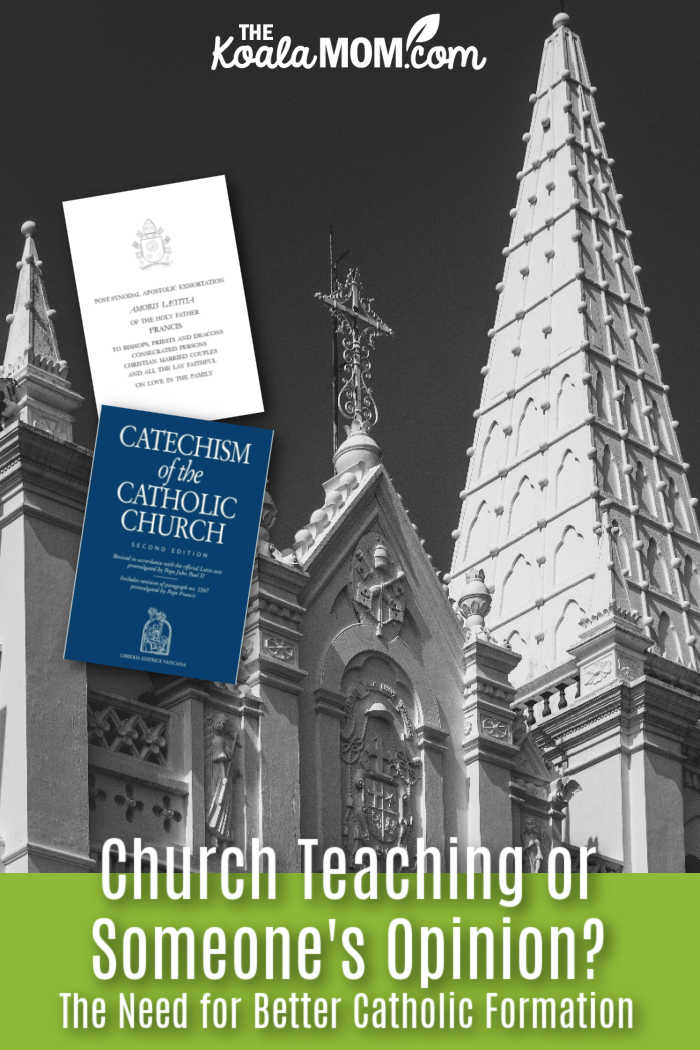
Each of us is responsible for forming our own conscience, reading Scripture, and discerning what is true and good. As Paul Fahey explains in his deep dive into Amoris Laetitia, we aren’t supposed to blindly follow rules or simply look for someone else to tell us what to do:
“So here in Amoris we have the pope, the highest teaching authority in the Church, saying that he has no right to replace someone else’s conscience. If he doesn’t have the right, then certainly your bishop, your pastor, confessor, spiritual director, youth minister, spouse, parent, etc. don’t have that right.”
Pope Francis makes this point himself in Amoris Laetitia, acknowledging the gaps in the formation Catholics have received and the need to focus more on forming consciences:
“We have long thought that simply by stressing doctrinal, bioethical and moral issues, without encouraging openness to grace, we were providing sufficient support to families, strengthening the marriage bond and giving meaning to marital life. We find it difficult to present marriage more as a dynamic path to personal development and fulfilment than as a lifelong burden. We also find it hard to make room for the consciences of the faithful, who very often respond as best they can to the Gospel amid their limitations, and are capable of carrying out their own discernment in complex situations. We have been called to form consciences, not to replace them” (AL 37).
Many of us want easy answers. We want to be able to say, “The Catechism says XYZ, so if I do that, I’ll have a good life.” Much of the marriage formation I received focused on teachings like this: taking a Bible verse or a quote from a saint and telling women to implement that advice in their marriages to create a better marriage. But we’re called to something deeper. We’re called to think, discern, study, and wrestle with the questions we face in life. Sometimes, that means asking difficult questions, like why my marriage was hell from the beginning, or why implementing all the advice I received never made it any better.
I received a lot of formation in Catholic doctrine, particularly during the years I was involved with Opus Dei. Knowing the doctrine of the Church, however, never improved my marriage (or the marriages of my friends who were also involved in the organization and are now going through divorces).
What I see here is a gap between “head knowledge” and “heart knowledge.” This is something Jesus confronted in the Pharisees of his day. Despite knowing the law inside and out, they failed to recognize him. Their knowledge of the law wasn’t translating into lives that reflected its deeper meaning. They had memorized the rules without allowing those teachings to transform their hearts, their thinking, and the way they treated others.
This kind of discernment requires us to look beyond isolated Bible verses, quotes from saints, or someone else’s interpretation of Church teaching. We need to examine what we hear against the broader context of Church teaching, rather than simply accepting someone’s interpretation because they present it confidently. We also need to consider how teachings apply to the realities of people’s lives and take the time to understand the nuances involved.
Even when a well-known Catholic teacher tells us something is Church teaching, we should be asking questions. Does this actually align with what the Church teaches? Is this a matter of doctrine, a theological opinion, or simply someone’s personal advice? Does the interpretation respect the dignity and conscience of the people involved? Is this advice appropriate to my life and my situation?
We cannot abdicate our consciences to a particular author, podcaster, or priest simply because that person is charismatic or has three million followers.
Ultimately, the Church’s teachings deserve to be understood and presented accurately. And the people who teach them need to remember that their words have consequences. Good intentions are not enough. We need humility, accountability, and a willingness to listen when someone tells us that what we’ve taught has caused harm.
No Responses Yet