


Juggling school runs, grocery trips, and kids’ playdates means I spend a lot of time in my Jeep with my most precious cargo. While I can’t control what other drivers do, I can take concrete steps to make every trip safer for my family. Building a few road-safety habits into our routines helps reduce stress and gives me one less thing to worry about when we’re all climbing into the car.
For busy parents, road safety isn’t just about what happens behind the wheel. It starts before you pull out of the driveway—with properly installed car seats, age-appropriate restraints, and a few habits that help keep everyone safe. And unfortunately, sometimes accidents happen even when you’re doing everything right. Here’s what I’ve learned about keeping my kids safe on the road, from car seat installation to what to do after a collision.
Car Seat Safety Essentials
Your child’s car seat is one of the most important pieces of safety equipment in your vehicle, but buying the right seat is only the beginning. It also needs to fit your child, fit your vehicle, and be installed correctly.
I’ve had a lot of practice with car seats over the years. With five kids, I’ve installed infant seats, convertible seats, five-point harnesses, and booster seats more times than I can count, in a variety of vehicles from a sporty Jeep TJ to classic mom minivan. And one car accident in particular made me wish I’d been a little more cautious about moving one of my children to the next stage.
I was rear-ended in my minivan shortly after Jade had graduated from a five-point harness into a booster seat. My older daughters, who were just a little bigger and physically stronger, weren’t very affected by the collision. Her younger siblings, who were still in five-point harnesses, weren’t either. Jade, however, complained of a sore neck afterward and talked about how hard the SUV had hit us.
I can’t know whether staying in the five-point harness would have changed anything about her injuries, but the experience certainly made me rethink how quickly I was moving my kids from one stage to the next. At the time, I was trying to make three car seats fit across the minivan, and keeping Jade in her harness longer would have made that arrangement more difficult. After the accident, though, I wished I’d prioritized the extra protection over the convenience.
Keep Kids in the Right Seat for their Size
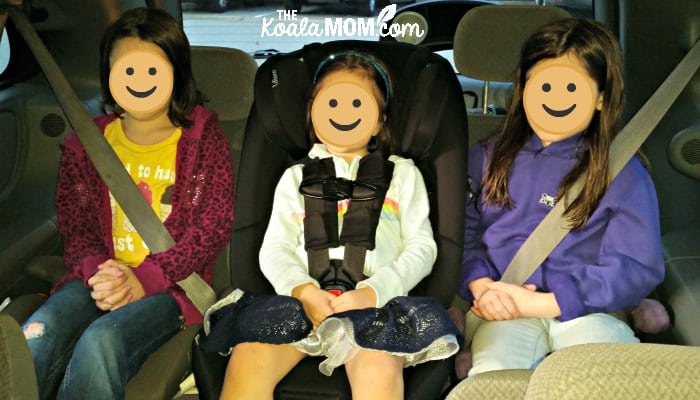
Choose a car seat or booster that fits your child’s current age, height, and weight, and follow the manufacturer’s instructions for when they should move to the next stage. Don’t rush a transition simply because your child seems big enough or because a booster is easier to buckle.
The American Academy of Pediatrics recommends keeping children rear-facing for as long as possible, until they reach the maximum height or weight allowed by their particular seat. From there, children should continue using the appropriate restraint system for their size and developmental stage. Every child—and every car seat—is a little different, so check the specific limits for your seat rather than relying on what another family is doing.
Make Sure the Seat Is Installed Correctly
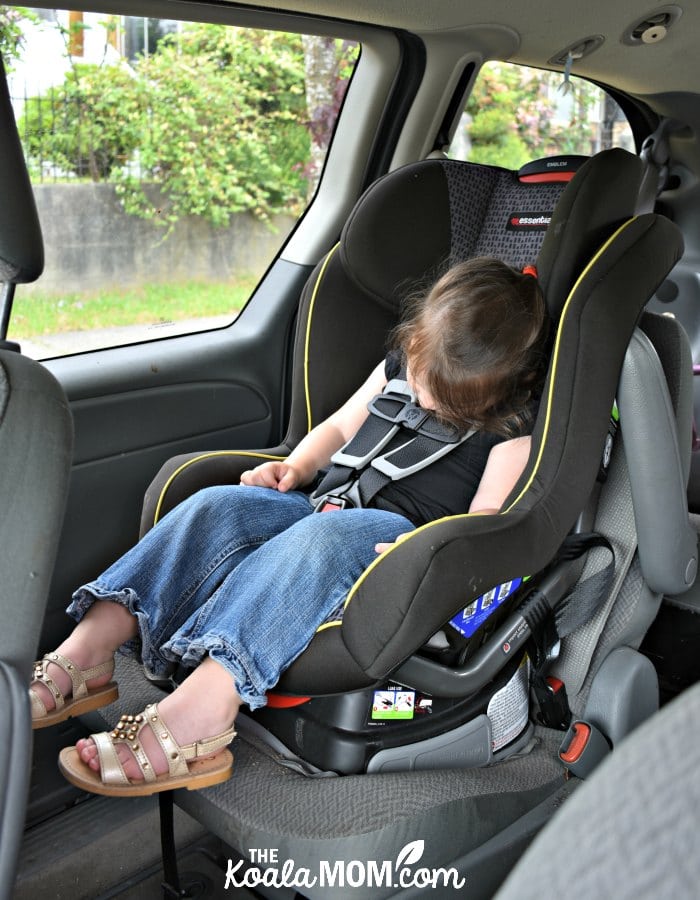
Choosing the right car seat isn’t enough if it isn’t installed properly. Follow the manufacturer’s instructions carefully, whether you’re using your vehicle’s seat belt or the LATCH (Lower Anchors and Tethers for Children) system. (If you’re vehicle shopping, I highly recommend adding the LATCH system to your list of must-haves in a family vehicle.) Don’t use both methods unless the car seat manufacturer specifically says that you can. Once installed, the seat shouldn’t move more than about an inch side-to-side or front-to-back when you test it at the belt path.
If you’re not sure you’ve installed it correctly, don’t just cross your fingers and hope for the best. A certified Child Passenger Safety Technician (CPST) can check your installation and show you how to make any necessary adjustments. Depending on where you live, local fire departments, police stations, hospitals, or other community organizations may offer this service. And if you’re planning a longer trip, it can be helpful to review a family road trip safety hub for additional checklists and reminders.
The goal isn’t to become an expert in every type of car seat. It’s simply to make sure the seat you’re using is appropriate for your child and installed correctly before you pull out of the driveway. With everything else parents have to remember, having a reliable car-seat routine means you don’t have to think twice about whether you’ve done the basics right.
Distraction-Free Driving Habits
When you have a car full of kids, distractions are inevitable. Someone drops a toy just out of reach of anyone in the car. Someone else is suddenly starving despite eating five minutes ago. Two siblings start arguing over who was looking at whom (or who was looking out whose window). If you’ve driven children around for any length of time, you know that the back seat can become its own little world of drama.
The trick isn’t to pretend those distractions won’t happen. It’s to expect them and set things up so you don’t have to deal with them while your attention should be on the road. True safe driving starts before you even put the car in gear. A few minutes of preparation can prevent a lot of mid-drive interruptions.
Give Everyone a Job
As my kids have gotten older, they’ve become much more useful passengers. My older kids can help the younger ones find a dropped toy, hand a sibling a snack, or even take care of small things on my phone that don’t require me to look at it. My 1o-year-old loves being the DJ and taking song requests from anyone else in the vehicle so she can create a queue of music on Spotify.
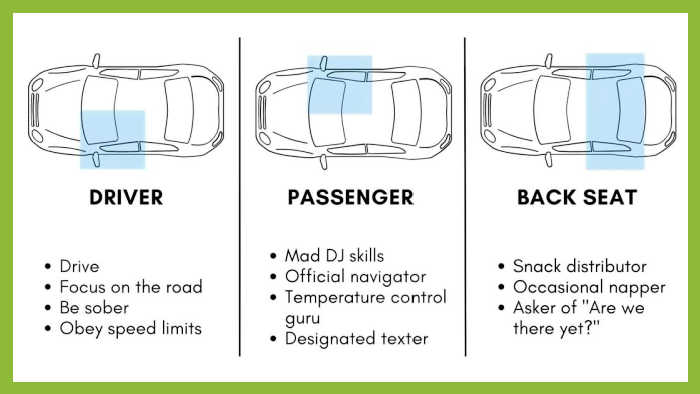
Of course, there’s a difference between letting your kids help and expecting them to solve every problem while you’re driving. If something needs my attention, I don’t reach for it just because someone in the back seat is asking. There have been plenty of times when I’ve pulled over to deal with a sibling argument in the back seat. The kids know that when Mom actually stops the car to deal with an argument, they’re in big trouble!
For younger children, a few simple preparations can make a big difference:
- Set expectations. Talk about basic car rules, such as keeping hands to themselves and using indoor voices. They won’t always follow those rules perfectly, but knowing what’s expected ahead of time means that you just need to remind them about it on the go.
- Keep an activity bag in the car. Books, soft toys, colouring supplies, or other quiet activities can keep younger children occupied. I keep my kids’ magazines in the car and swap out the older one when a new issue arrives, so there’s usually something fresh to look at.
- Prepare snacks and drinks. Spill-proof containers make everyone’s life easier. If you know your children are going to be hungry, hand out snacks before you leave. If someone needs something that you can’t safely reach while driving, pull over.
- Set up your technology beforehand. Enter your destination, choose your music or podcast, and connect your phone before you leave the driveway. If you need to make a call, use a hands-free system—and if the conversation requires too much attention, wait until you’ve parked.
And remember that distracted driving isn’t limited to texting. Eating, applying makeup, searching through a bag, turning around to deal with a child, or getting caught up in an intense conversation can all take your attention away from the road. Now that I’ve got a teenager learning to drive, all of these little habits become even more important because I want to make sure she’s learning to be a safe driver too.
You don’t have to create a perfectly quiet car. You just need a system that means you don’t have to choose between parenting and paying attention to traffic.
Navigating School Zones Safely
School zones are another place where a few extra minutes of patience can make a big difference. Cars are pulling in and out, buses are stopping, parents are looking for parking spots, and children are walking or biking in every direction. It’s a lot to keep track of, especially during the morning rush when everyone is trying to get somewhere on time.
The most important thing you can do is slow down and follow the posted speed limit. School-zone speed limits are lower for a reason: when you’re traveling more slowly, you have more time to react if a child suddenly steps into the road.
Give yourself extra following distance, too. Expect frequent stops and don’t assume the car in front of you will keep moving just because the light is green or traffic appears to be flowing.
Pay attention to crossing guards and follow their directions. Never pass a vehicle that has stopped for pedestrians in a crosswalk. A stopped vehicle may be blocking your view of a child who is still crossing.
Drop-off and pick-up can be frustrating when you’re running late, but that’s exactly when it’s most important not to take shortcuts. Use the designated areas rather than double-parking or stopping somewhere that blocks the view of other drivers and pedestrians. When children get out of your vehicle, have them exit on the curb side whenever possible.
These little habits may seem obvious, but school zones bring together a lot of moving pieces at once. Staying alert, slowing down, and giving yourself enough time to get through the chaos safely are some of the simplest ways to protect your kids—and everyone else’s.
What to Do After a Collision
Even the most careful drivers can end up in a collision. I’ve learned that one the hard way—not once, but a couple of times. The most memorable incident (and the only time we were in the vehicle) was when I got rear-ended on the way to church.
The moments immediately after a crash can be chaotic and stressful, especially when you’re trying to figure out whether your children are okay while also dealing with the other driver, emergency responders, and everything else happening around you. Knowing what to do ahead of time can make those moments a little easier.
Start with Safety
Your first priority after a collision is making sure everyone is safe. Check yourself and your children for injuries. If anyone is seriously hurt or in immediate danger, call 911. Don’t move someone who may have a serious injury unless leaving them where they are puts them in greater danger.
If the vehicles can be moved safely and are blocking traffic, pull over to the shoulder or another safe location. Turn on your hazard lights and follow the instructions of emergency responders.
Once everyone is safe, exchange information with the other driver. Depending on where you live, this may include names, contact information, driver’s license information, license plate numbers, and insurance details. If you’re able to do so safely, take photos of the vehicles, the damage, the surrounding area, and relevant documents.
And if you’re anything like me, keep your phone with you. When I got rear-ended, I’d decided to leave my cell phone at home. I was only going to church, after all, and I’d put my phone on silent once I got there. Of course, that’s the one day I really could have used it. I couldn’t take pictures of the vehicles or the scene, and I had no way to contact anyone. I don’t leave home without my phone anymore.
I also wasn’t particularly calm about the accident. A few months earlier, I’d already dealt with ICBC after a hit-and-run damaged my van. When I realized the SUV behind me had actually hit us, my first thought was essentially, “I really don’t want to deal with another ICBC claim.” I was too upset to go talk to the other driver, so I let the firefighters who arrived on the scene handle the immediate details. Thankfully, we were close to my church. Friends were able to come quickly, make sure we were okay, and help us get home after my van was towed.
That experience taught me something important: you don’t always respond to an accident the way you imagine you will. Having a phone with you, knowing who to call, and keeping basic information in your vehicle can help when your brain is overwhelmed.
If police, firefighters, or other emergency responders attend the scene, give them a clear, factual account of what happened. Avoid arguing with the other driver about fault at the scene. Your job in those first few minutes is to keep your family safe and provide accurate information.
It’s also important to pay attention to how you and your children feel after the collision. Some injuries or symptoms aren’t immediately obvious. If you or one of your children develops pain, dizziness, headaches, or other concerning symptoms afterward, seek appropriate medical attention.
If a collision involves significant injuries, complicated insurance issues, or a disagreement about what happened, you may also want to speak with a qualified car accident lawyer about your situation. This is especially true if the accident happens closer to home. If you’re in the Charlotte, North Carolina area and dealing with the aftermath of a car accident, Brent Stewart, founder of Stewart Law Offices, can help you understand your rights, deal with insurance adjusters, and pursue the compensation you’re owed.
Dealing with Insurance Claims
Once the immediate crisis is over, there is often another part of the accident to deal with: insurance. And if you’ve ever had to deal with an insurance claim while simultaneously taking care of children, you know that “just a little paperwork” can quickly turn into a surprisingly large project.
Start by notifying your own insurance provider or following the claims process required where you live. Keep all the information you’ve collected in one place rather than scattering photos, emails, receipts, and notes across your phone and house.
A simple folder—digital or physical—can include:
- photos of the accident scene and vehicle damage
- the police or incident report
- insurance claim information
- towing and rental-car receipts
- medical records and receipts related to the accident
- correspondence with insurance adjusters
- notes about phone calls, including the date and what was discussed
Don’t rely on your memory to keep track of everything. You’re already trying to remember school schedules, grocery lists, appointments, and approximately 47 things your children told you they need tomorrow. Write things down.
I learned this lesson from another vehicle accident we had many years ago. Someone hit our parked vehicle and damaged it badly enough that ICBC wrote it off. When ICBC gave us their initial offer, it was based on the prices of used Dodge Durangos in Grande Prairie, Alberta. That wasn’t particularly useful to us, since we lived near Vancouver. At the time, Grande Prairie had experienced significant job losses in the oil industry, which meant there were a lot of trucks on the local used-car market.
We looked at comparable Dodge Durangos for sale locally and used those prices when we asked ICBC to reconsider its offer. They did—and ultimately matched the local-market price we had presented. The lesson wasn’t that I had somehow mastered the insurance system. It was simply that the first number you receive isn’t necessarily the end of the conversation. Knowing your policy, keeping good records, and doing your own research can help you understand whether an offer or decision makes sense.
If you aren’t sure about your rights or responsibilities after a collision, seek advice that’s appropriate for your province or state rather than relying on generic information from the internet. A family highway safety guide can also provide useful general information about preparing for road travel and understanding common safety risks.
Make Safety Part of Your Routine
Road safety doesn’t require a complicated system. Much of it comes down to a handful of habits: using the right car seat correctly, preparing the kids before you start driving, putting your phone away, slowing down in busy areas, and knowing what to do if something goes wrong.
As a busy parent, I can’t control every driver on the road. I can’t guarantee that we’ll never have another accident, either. What I can do is make sure my kids are properly restrained, minimize the distractions I can control, and give myself the tools I need to respond when something unexpected happens.
That’s one of the best things we can do for our families—not eliminate every risk, but prepare for the ones we can anticipate and make the safest choices we can along the way.
No Responses Yet