


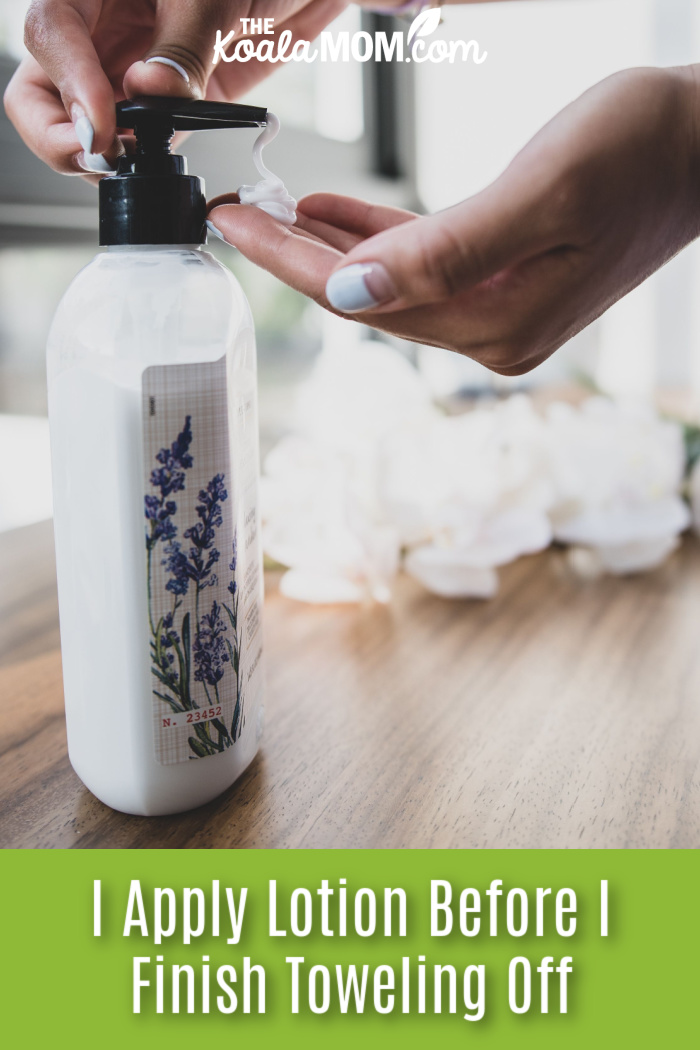
I apply lotion before I finish toweling off. I get out of the shower, pat myself down halfway, and start putting on lotion while I’m still visibly damp. It looks inefficient. It feels slightly ridiculous. It is, as far as I can tell, the single most effective change I’ve made to my skin in years.
I didn’t invent it. I read it somewhere years ago, ignored it for a while, then tried it during a particularly brutal Vancouver February when my shins were flaking through my leggings. It worked within about four days. I’ve done it ever since, and I’ve now inflicted the habit on all five of my kids.
Here’s why it makes such a difference, and what I’ve learned about actually sticking with it.
The Timing Is the Trick
The reason has to do with what lotion is actually doing.
Moisturizer doesn’t add water to your skin so much as it keeps the water that’s already there from evaporating. Apply it to bone-dry skin and there’s much less moisture available to hold on to.
This isn’t folk wisdom. Dermatologists advise applying moisturizer while skin is still damp after a shower, keeping baths and showers to five or ten minutes in warm rather than hot water, and patting dry gently instead of rubbing.
That last detail surprised me. I had been briskly towel-drying like I was buffing a car.
The chemistry underneath is worth understanding, because it explains why some lotions feel like they do nothing. A clinical review of moisturizers describes three working parts: humectants that attract and bind water, occlusives that form a barrier and reduce water loss, and emollients that smooth and soften.
The same review notes something I found genuinely useful — humectants pull water from the ambient air only when humidity is above roughly 70 percent. Below that, they’re drawing moisture up from the deeper layers of your own skin. Which means in a dry heated house in winter, a humectant on its own can actually leave you drier. It needs something on top of it to seal.
That’s the argument for damp application in one sentence. You’re giving the humectant water to work with.
What I Look For in a Natural Body Lotion
For years I bought whatever was on sale in a giant pump bottle. Then two of my kids developed the kind of dry, itchy patches that make bedtime miserable, and I started reading labels.
Fragrance was the first thing to go. It’s one of the most common irritants, and “unscented” isn’t the same as fragrance-free.
I also wanted something that actually spread on damp skin without needing to be worked in for five minutes, because I have a limited window before someone else needs something and some of my kids don’t have the patience for a 5-minute massage.
[comfort zone] divides its range into creams and gels, which was what finally made the categories click for me — a natural body lotion isn’t one single thing, and a lighter formula and a richer cream are solving genuinely different problems.
The rule I use now is simple. Lighter lotions for normal or combination skin and for summer; thicker creams with more oil for dry skin and for winter.
I keep both. My teenagers use the light one. My shins in January need the other.
I also look for a short ingredient list, no synthetic fragrance, and no silicones. That’s a personal preference rather than a medical requirement, but I like knowing what I’m putting on six people.
How I Actually Do It
The routine has to be fast or it doesn’t survive contact with my household.
- Keep the shower short. Five to ten minutes, warm not hot. Hot water strips oils faster than anything else in the bathroom.
- Use a gentle cleanser, and only where it’s needed. Underarms, feet, the usual. Not every square inch, every day.
- Pat dry, don’t scrub. Leave your skin visibly damp — not dripping, but not dry either.
- Apply within three minutes. This is the part that matters. Set the bottle on the counter before you get in so it’s within reach.
- Work from the feet up. I don’t know why this is faster, but it is.
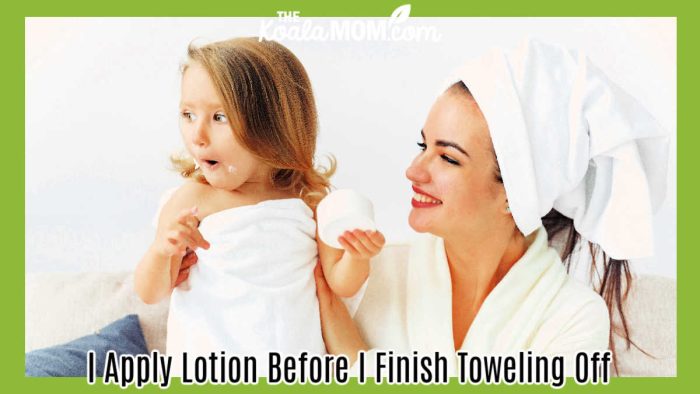
- Do the kids the same way. Straight out of the bath, towel around them, lotion on while they’re still damp and complaining.
The whole thing adds maybe ninety seconds. I’ve timed it, because some of my kids need to know this.
Why Does This Work Better in Some Houses than Others?
Because your water is not the same as my water. Hardness varies enormously by region, and it affects how skin feels after washing. The USGS classifies water as soft below 60 milligrams per liter of calcium carbonate and very hard above 180. Here on the West Coast, we have very clean, soft water; when we travel back to Ontario to visit my partner’s family, we really notice the hard water.
If you’ve ever traveled somewhere and found your skin felt different after a shower, that’s often the mineral content rather than anything you did.
There’s also the question of your own skin’s oil production, which varies by body part more than most people realize. Cleveland Clinic notes that sebaceous glands are most heavily concentrated on the face and scalp. That’s why arms and legs go dry first while foreheads stay oily. It isn’t inconsistency — it’s just different real estate.
So the same routine will produce different results in different homes, and possibly on different parts of the same person. Adjust accordingly.
What Changed Around Here
My kids no longer scratch at their legs at bedtime in February, which is the outcome I actually care about.
I go through more lotion than I used to, and less of the expensive stuff I was buying to fix problems that better timing solved for free.
And I’ve made peace with standing in a damp bathroom looking faintly absurd for ninety seconds a day.
If you try one thing from this post, make it the three-minute window. Everything else is optional.
I’m not a medical professional. If you or your kids have persistent dry, cracked, or itchy skin, it’s worth talking to your doctor, since it can sometimes point to something that needs treating.
No Responses Yet