
)
)
When I was about 16, my best friend introduced me to Jane Austen by inviting me over to watch a movie. We settled into her older sister’s comfortable living room, turned on the big-screen TV, and lost ourselves in Pride and Prejudice (the Colin Firth version). Only when the movie ended and I glanced at my watch did I realize how long we’d been sitting there. I was going to be late for supper—and my parents were strict about that!
Since then, I’ve devoured Jane Austen’s novels many times over, whether in university, at the theatre, with friends, or on my own. Recently, my own daughters have started discovering Jane’s works. Pride and Prejudice (the Keira Knightley version) is one of my oldest daughter’s comfort movies.
Despite my love for Austen, I’ve always been a little dubious about fan fiction. Surely no one could write as well as Jane! Until recently, I hadn’t read any novels inspired by her works.
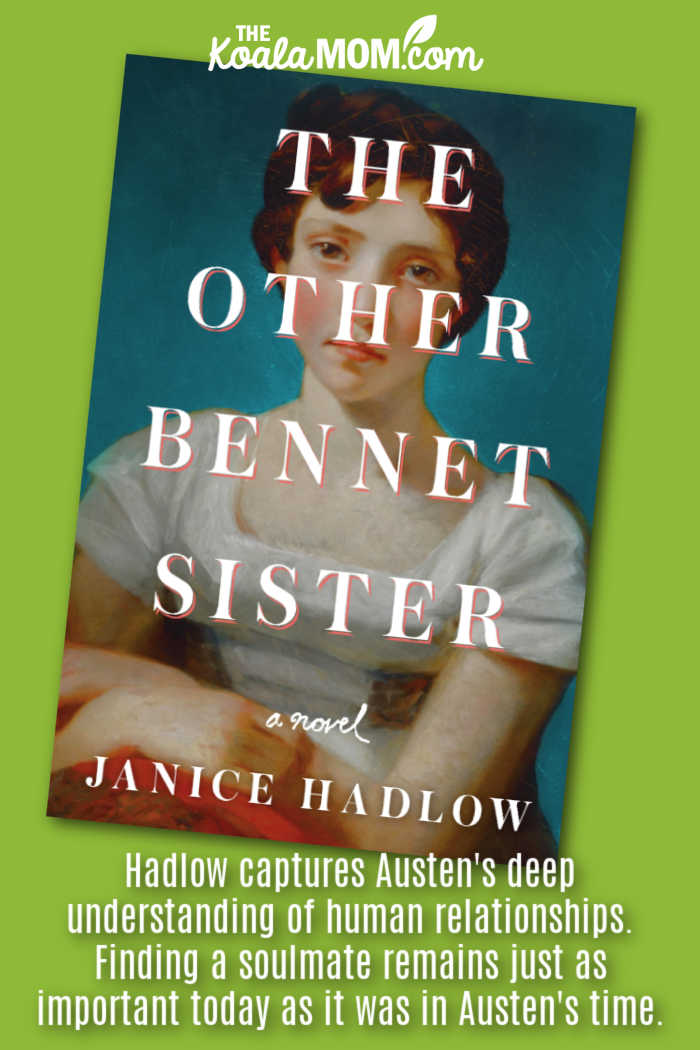
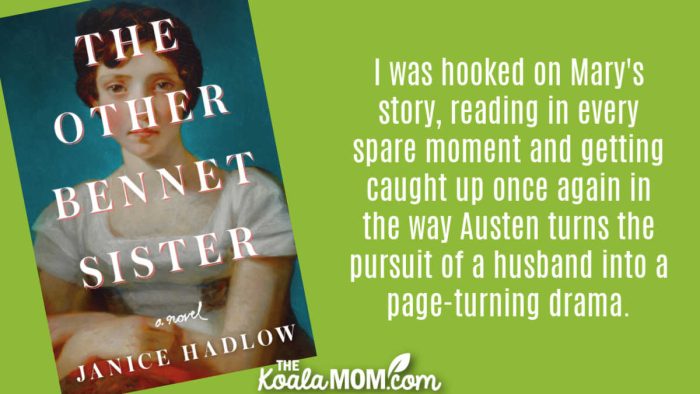
The Other Bennet Sister caught my attention with its many positive reviews, so I finally put it on hold at the library. After a couple of months, it arrived, and I began reading. The first chapter immediately drew me in with the author’s obvious grasp of Austen’s style and language. From there, I was hooked on Mary’s story, reading in every spare moment and getting caught up once again in the way Austen turns the pursuit of a husband into a page-turning drama.
This post contains affiliate links; as an Amazon associate, I earn from qualifying purchases.
The Other Bennet Sister Plot Summary
The five Bennet sisters are familiar to any fan of Jane Austen. Jane Bennet is the beautiful, gentle eldest sister; Lizzy is the quick-witted second daughter whom Mr. Darcy initially considers “tolerable”; Mary is the plain, bookish, musical middle sister; Kitty is playful and easily overshadowed by Lydia, the spoiled and impetuous youngest sister. In Pride and Prejudice, we see Jane and Lizzy happily married to wealthy men who genuinely love them. In The Other Bennet Sister, we follow Mary’s attempts to find love, too.
The opening chapters introduce Mary and explore how she became the uncertain, bookish, musical young woman we meet in Pride and Prejudice. We then see some of the early events of Austen’s novel through Mary’s eyes, including additional conversations between her and Charlotte about marriage.
After her sisters marry and Mr. Bennet dies, Mary and her mother are left to depend on their sisters’ generosity for a home and financial support. (Like Jane Austen herself, Mary faces the limited options available to an unmarried woman without an independent fortune.)
Mary moves from Jane’s home to Lizzy’s and then to Charlotte’s, trying to find her place while observing their marriages and considering what she wants for herself. Eventually, she finds a haven at the Gardiners’ home in London, just as Lizzy and Jane once did. There, in the uncomplicated acceptance she receives from her aunt and uncle, Mary finally has the space to blossom and become herself. Under her aunt’s guidance, she improves her wardrobe and social skills while continuing to pursue her music and studies. She also meets two handsome young men…
A Study in Relationships
Why do Jane Austen’s stories of family drama and romance remain so popular more than two hundred years after she wrote them? It’s a question worth considering, especially given the thousands of novels published since then and all the changes in how we produce and consume entertainment.
I think the answer lies in something fundamental: like Austen’s heroines, we all long for love, and we still face many of the same challenges in finding it that Lizzy, Jane, and Mary did. Society has changed, but human nature hasn’t.
Today, women are unlikely to meet their future husbands at a ball or become financial burdens on their relatives if they fail to marry a man with ten thousand pounds a year. Yet the deeper questions in Austen’s novels remain relevant. How do we find happiness? What makes a good marriage? How do we truly get to know another person? Is marriage simply a matter of financial security, or can we hope to find a soulmate and lifelong companion?
Through Mary’s observations and conversations in The Other Bennet Sister, Janice Hadlow explores these questions, inviting readers to consider the meaning of relationships through the eyes of an unlikely heroine.
Relationships Must Be Based on Truth
Early in the novel, Mary remarks during a conversation with Charlotte:
“I merely wondered whether a marriage can be embarked upon with any real possibility of happiness if the husband and wife know so little of each other when they begin. And if one or both of them pretends to feelings they do not yet possess, then surely that cannot promise well for their future.”
I’ve often wondered how women in Austen’s day could truly get to know a potential husband through dinners and dances. Formal conversations in public settings don’t seem like the best way to discover whether someone shares your values and interests—or whether their everyday habits will annoy you completely!
In some ways, Mary is more direct than her sisters. She doesn’t always understand the social niceties of her day and would rather have deeper, more meaningful conversations. This sparks the conversation with Charlotte quoted above, but it also leads to further attempts to develop her social skills at various dinners. Those scenes reminded me of my own efforts, after growing up as a somewhat isolated homeschooler, to figure out how to make friends and navigate group settings. Like Mary, I sometimes felt as though everyone else understood social rules I was still trying to learn!
In Pride and Prejudice, Lizzy initially dislikes Mr. Darcy after meeting him at a ball and in drawing rooms, where his reserved manner makes him seem stiff and disagreeable. It’s only through repeated interactions in different settings that she begins to understand his true character. Hadlow explores this same idea through Mary’s relationships, showing how genuine connections develop through shared interests, honest conversations, and a willingness to understand another person.
A Marriage Is a Partnership of Equals
In London, Mary has the opportunity to observe not only the Gardiners’ home life but also Mr. Gardiner’s successful business. When she compliments Mrs. Gardiner on their comfortable circumstances, her aunt replies: “I flatter myself that Mr. Gardiner would not have succeeded as he has without my help. He has often told me that my judgement in matters of taste, quality and prices has been of the utmost use to him.”
Mrs. Gardiner may be a behind-the-scenes partner in her husband’s business, but that doesn’t make her contribution any less important. Mary sees how her aunt and uncle have built a successful home and business together, thanks in part to their strong relationship. They value and respect each other as equals.
Their marriage contrasts sharply with Mary’s parents’ relationship. Mr. Bennet never seems able to respect his wife, instead retreating into sarcasm and tolerating her foolishness. One wonders how much their lack of partnership contributed to the family’s financial and personal difficulties. Hadlow also explores how their differing approaches to parenting contribute to Lydia’s unruly behaviour and, eventually, her scandalous elopement. Without a united approach to raising their daughters, Mr. and Mrs. Bennet allow their differences to undermine not only their marriage but also their children’s upbringing.
Later in the novel, Mary has more opportunity to reflect on the importance of equality and respect in marriage:
She did not wish to be her husband’s instructor any more than she wished to be his pupil. What she sought was a union of equals, a coming together of like minds and sympathetic intellects. At Longbourn, with the Collinses, she had seen how want of esteem was fatal to a marriage, how it soured goodwill, chilled relations between husband and wife, and snuffed out all sympathy. She had watched it freeze Charlotte Collins’ feelings, even as it plunged her husband into an unhappiness he struggled to either comprehend or escape. But that was not the first time she had witnessed the corrosive effects of contempt in that house. She understood now very clearly how it had poisoned the marriage of her own parents. Mr. Bennet’s studied detachment, the ironic scornfulness of his teasing, the bitter amusement he took in the failings of others, especially his wife and daughters—all those cruel jibes flowed from the frustrated knowledge that he had married a woman he could never think of as his equal.
In certain circles, there’s an emphasis on how important it is for a husband to have his wife’s respect. Austen and Hadlow demonstrate that respect is indeed essential to marriage, but it must go both ways. In the happy relationships portrayed in these novels, the spouses respect each other. In the marriages that make us laugh or shake our heads, that mutual respect is missing.
Mr. Bennet cannot have a happy marriage when he refuses to respect his wife, just as Charlotte cannot have a fulfilling relationship with a husband she cannot respect. A successful marriage requires both partners to recognize each other’s worth.
Self-Worth and Self-Acceptance Matter
In today’s era of selfies and social media, many of us know how difficult it can be to avoid comparing ourselves with others and with beauty standards we can never achieve. Mary faces a similar struggle. Mrs. Bennet constantly reminds her that she is somehow less valuable because she isn’t as pretty as her sisters. Unfortunately, Mr. Bennet also fails to appreciate Mary, despite her attempts to win his approval through her intellect and studies.
This constant criticism causes Mary to shrink into herself. She becomes withdrawn and begins to judge herself as harshly as her parents have judged her. Her poor self-image affects not only her behaviour but also the way she dresses.
After Mary has been staying with the Gardiners for several weeks, Mrs. Gardiner asks whether she can help her build a new wardrobe. Along with offering practical advice about clothing, her aunt shares some important observations about self-acceptance:
I am very far from suggesting a woman is to be judged solely by how she dresses. There are some among us who pay no attention at all what they wear and do so with a cheerful nonchalance. They really do not care what they look like. But that is not the case with you. Your appearance does not suggest a blithe indifference but an acute awareness of your choices. You dress as you do because you do not believe you deserve anything better; and in doing so, you communicate that low opinion of yourself to everyone who sees you. If you were to embrace a few improvements, I believe it would signify something more than merely a desire to look a little smarter. I think it would suggest a willingness to allow yourself the self-respect you deserve, and which you have been reluctant for so long to grant yourself.
The climax of the novel isn’t simply whether Mary finds a husband, as her sisters have. It’s that, by the end, she has learned to love and accept herself. She chooses happiness for herself, with or without a romantic relationship. Unlike Charlotte, she refuses to settle for a marriage of comfort and convenience. She will only marry a man with whom she is truly and deeply in love.
Of course, this was also Lizzy’s choice, but the decision is more difficult for Mary because she begins the novel with so little confidence in her own worth. Before she can find a fulfilling relationship with someone else, she must first learn to value herself.
This is an area where many of us can learn from Mary. Whether we’ve been told we’re not good enough by a parent, a peer, or social media, we can internalize those messages until they shape how we see ourselves. The resulting sense of inadequacy can leave us desperately seeking love and acceptance, sometimes making us more vulnerable to unhealthy or abusive relationships.
Austen and Hadlow explore the disappointments of unequal or unhappy marriages, but other writers have taken this theme further. In the generation after Austen, Anne Brontë’s novel The Tenant of Wildfell Hall shows that the stakes for women can be much higher than simply ending up in an unhappy marriage. Today, statistics show that as many as one in three women worldwide experiences physical or sexual violence at the hands of an intimate partner. This sobering reality makes the choice of a marriage partner—and the importance of recognizing respect, equality, and genuine love in a relationship—even more significant.
Final Thoughts on The Other Bennet Sister
After returning The Other Bennet Sister to the library, I told my teenagers they needed to get me a copy for Christmas so they could all read it, too! This is a novel I’ll happily place beside my boxed Austen collection and revisit someday.
Hadlow captures all our favourite Austen characters, from sardonic Mr. Bennet to haughty Caroline Bingley to the perpetually confused Mr. Collins. A few of the early chapters summarizing familiar events made me want to call out, “Show, don’t tell!” I also wish Kitty had been given a few more pages. But overall, I thoroughly enjoyed The Other Bennet Sister.
Most of all, I think Hadlow captures Austen’s deep understanding of human relationships. Finding a soulmate remains just as important today as it was in Austen’s time. Perhaps marriage is less financially stressful for women now, but all our modern technology hasn’t necessarily made it any easier to find the right person. Like Austen, Hadlow examines the many factors that shape our romantic choices and the consequences of making the wrong ones.
One of my favourite passages beautifully captures the kind of love Mary has come to value:
At that moment, there was nothing they wanted more than to sit together in loving, companionable silence. It might seem an unromantic circumstance; but in truth, there is not state that better demonstrates real firmness of affection than the ability to remain quietly comfortable together without conversation.
No Responses Yet