


A bedroom should do two things well: support genuine rest and accommodate the small rituals that bookend each day. Yet many bedrooms quietly work against both—cluttered surfaces, poorly placed lighting, and storage that bears no relationship to how anyone actually lives in the space.
Designing a calming, functional bedroom isn’t about chasing trends; it’s about making deliberate, lasting choices around storage, surfaces, and light that serve your real routines.
Understanding How You Actually Use the Space
Before moving a single piece of furniture or buying anything new, take stock of your daily habits. What do you reach for in those last ten minutes before sleep? What needs to be within arm’s reach when you wake up? My bedside essentials include:
- reading light
- my water bottle
- charging cord for my phone
- box of tissues
During the winter, I usually also keep hand cream and cough drops on my bedside table, as I’m more likely to need them. While I’m sleeping, my glasses and watch land on the nightstand too.
As a mom with ADHD, I’ve learned that “put it away” isn’t always a useful organizational system. If putting something away requires opening a door, walking across the room, and remembering which drawer I put it in, there’s a good chance I’ll leave it on the nearest surface instead (which is usually my partner’s desk beside the door). Instead, I try to store things where I naturally use them.
I also created a “not from this room” basket, which lives next to the door. If I find a child’s sock, a library book, or a random Lego on my bedroom floor, I don’t necessarily need to stop what I’m doing and put it away immediately. I can toss it in the basket and deal with it when I’m already heading downstairs.
Balancing Storage and Surfaces
Visible surfaces set the emotional tone of a room. A bedside table crowded with objects signals busyness to the brain, even during sleep. The principle worth applying here is “closed storage for clutter, open surfaces for essentials and a few meaningful objects.” This principle really helps my ADHD brain to feel less scattered.
Dressers, drawers, and lidded boxes handle the things you need but don’t want to look at. The tops of surfaces—bedside tables, windowsills, low shelves—should be intentionally edited. One lamp (unless you can install wall lighting), one book, one small object with personal meaning: that’s often enough.
For an ADHD brain, completely hidden storage isn’t always the answer. If I can’t see something, I may genuinely forget I own it. The trick is deciding which things need to be visible and which things simply create visual noise. Everyday essentials can stay visible and easy to grab, while duplicates, seasonal items, and things I use occasionally can go behind closed doors. For example, under my bed is an “out of sight out of mind” zone where I store spare bedding and my partner’s childhood toys (that shall not be touched and broken by any other children).
Designing the Bedside Zone: Function First
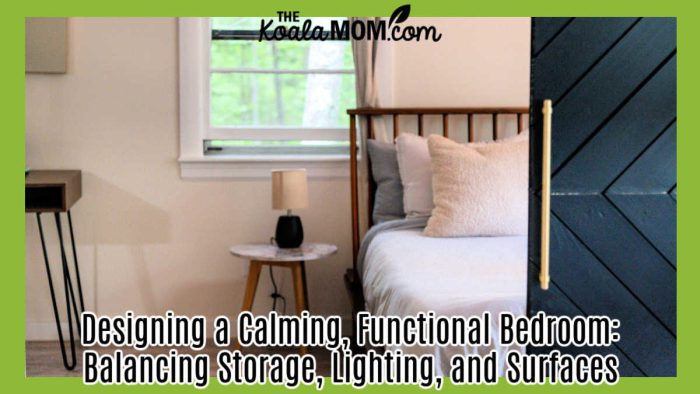
The area directly beside the bed is the most-used surface in most bedrooms, yet it’s frequently treated as an afterthought. Whether you prefer wall-mounted shelves, a simple stool, or modern nightstands that combine drawers with integrated charging, the goal is a bedside zone that supports your routines without adding clutter. Prioritize height alignment—the surface should sit roughly level with the top of your mattress—along with stability and cord management to eliminate trip hazards and visual noise.
My nightstand isn’t a minimalist display piece, and I’m okay with that. It has to work for me at 10 p.m. when I’m tired, not impress someone looking at a photograph of my bedroom. I want anything I use every night within arm’s reach and everything else contained. Drawers are particularly useful because I can clear the surface quickly without having to make twenty individual decisions about where everything belongs.
Room size shapes the decision meaningfully. In a smaller space, a wall-mounted shelf frees up floor area and keeps the room feeling open. In a larger room, a piece with drawers provides storage without requiring a separate dresser. What matters most isn’t the style of the piece but whether it holds what you need and keeps everything else out of sight.
On my side of the bed, I have a nightstand that is the same height as the mattress and has two small drawers to hide away my pajamas and a few other things. On my partner’s side of the bed, he has a smaller hanging organizer that holds his phone and often his book and reading glasses. For now, that fits our space and meets our needs.
Layering Light around the Bed
Lighting near the bed serves three distinct purposes: ambient illumination, focused task light for reading, and low-level night lighting for safety. Layered lighting addresses all three without leaning on a single overhead fixture that, in practice, does none of them particularly well. A bedside lamp with adjustable intensity handles both reading and wind-down light. A dimmer switch or smart bulb extends that range further. When two people share a room with different habits, directional lamps ensure one person’s light doesn’t disturb the other.
We learned this the hard way when we installed lights above our bed. They’re wonderful when we’re reading, but the dimmer doesn’t actually dim them enough. They’re either “reading light” or “why are we illuminating the entire bedroom?” There is apparently no middle ground. If we were doing it again, I’d pay much more attention to the dimming range before buying them.
ADHD can also come with sensory sensitivities, so think about how lighting feels, not just how it looks. Harsh overhead lighting first thing in the morning can be unpleasant, while a very dim room can make it harder to transition into the day. Having different lighting options gives you more control over what sort of lighting you need when. (Someday, I’m going to fix the lighting in our bathroom, too.)
The Morning Launch Pad
ADHD doesn’t only make bedtime routines harder. Mornings can become chaotic when everything you need is scattered around the house. If your bedroom is where you get dressed, create a small launch pad for the things you need to leave the house.
For example, once I’m dressed, I grab my phone and water bottle from my nightstand and head downstairs. My nightstand is also where I put my glasses when I roll into bed, and where I find them again in the morning when I roll out of bed.
Bringing It All Together
Instead of trying to keep your bedroom perfectly tidy, create a five-minute reset you can do before bed. Put dirty clothes in the hamper, return obvious items to their homes, clear the bedside table, and put tomorrow’s essentials somewhere visible.
Don’t worry about finishing everything. The goal is to make tomorrow morning slightly easier than today.
A functional bedroom isn’t necessarily a minimalist bedroom. For an ADHD brain, sometimes the best solution is adding a nightstand, basket, hook, hamper, or charging station that makes everyday life easier. The goal isn’t to make your bedroom look perfect. It’s to make the things you do every day require fewer decisions and fewer steps.
No Responses Yet