


A move looks simple on paper. You pack what you own, load it into a truck, drive it to the new home, and unpack it again. In practice, the cost creeps upward week by week, and the things you care about most are the ones that arrive scratched, dented, or missing.
Anyone preparing to leave South Florida for a new address in another state knows the feeling of watching a plan that seemed manageable turn into a scramble. The difference between a smooth relocation and an expensive one almost always comes down to how early the planning starts and how honest that plan is about what the job really involves.
Deciding How Much of the Work to Take On
Every household reaches a point in the planning where the true size of the job becomes clear, and the question shifts from what to pack to who is going to carry it. Long-distance movers are often where a budget quietly slips, because quotes get collected in a rush and nobody compares what sits behind each price.
A company that handles relocations across state lines solves that problem, since it can price the entire journey as one piece of work rather than leaving you to stitch together trucks, fuel, labor, and storage on your own. Households preparing to leave the state usually start by comparing long distance movers in South Florida well before they commit to a date.
Moving companies offer a variety of services, from packing and unpacking everything for you to simply carting your boxes across the country. If you have a lot of time and a lot of friends to help you pack, the latter option may be great for you. If you know that you have less time, young kids to watch while trying to move, and less support, then it may be worth paying a bit more for full moving support.
Over the years, I’ve done it all. My first few moves involved me packing everything, loading it into my truck or a borrowed trailer, and driving it to the destination to pack it again. That worked when we had fewer kids and fewer things. As our household has grown, so has the work of moving. For one move, we hired full-service movers. For another move, I packed all the boxes but hired movers to load the truck and drive it across town for me. Even with the movers’ help, that move ended up being much more work, and taking much more time, than I expected.
Building a Budget that Reflects the Whole Journey
Most people budget for the obvious costs and get caught by the rest. The obvious costs are the ones you can picture: moving boxes, packing tape, a truck, a few hours of labor. The costs that surprise people sit at the edges of the move. Cleaning the old place so you get your deposit back. Meals on the road because the kitchen is packed. A short stay somewhere while the new lease begins. Fees for turning services on and off at both addresses. Replacing the everyday items that get thrown out at the last minute because there is no room left.
Write all of it down in one place before you commit to anything. A budget that lives in your head is a budget that grows without you noticing. Once the full picture is on paper, set aside a cushion on top of it.
Some of the things that have surprised me in our moves was the new things we needed at a new place. Maybe it’s just spackling and paint to repair some walls. Other times, I needed to buy new furniture to fit certain spaces. And don’t underestimate your own time. The time that you spend packing, unpacking and sorting is time that you are not spending on something else–so what is your time worth? What are you not doing because you need to wrap the wine glasses in three layers of plastic or you have to dig through thirty-seven cardboard boxes to find the Instant Pot to make dinner?
Making an Inventory before Packing Anything
An inventory is the single most useful document in a move, and almost nobody makes one. (I never have. Do better than I did.) Go room by room and list what you own in plain terms. Photograph anything valuable, anything fragile, and anything that already has damage. The photographs matter, because a scratch that existed before the move is very hard to argue about afterward if nobody recorded it.
The inventory does two jobs at once. It tells you how much you are actually shipping, which keeps your budget honest. It also tells you what you no longer want. Almost every household discovers that a meaningful share of what it owns is not worth the cost of transporting. Sell it, donate it, or discard it now.
Other useful tricks for inventorying your move include
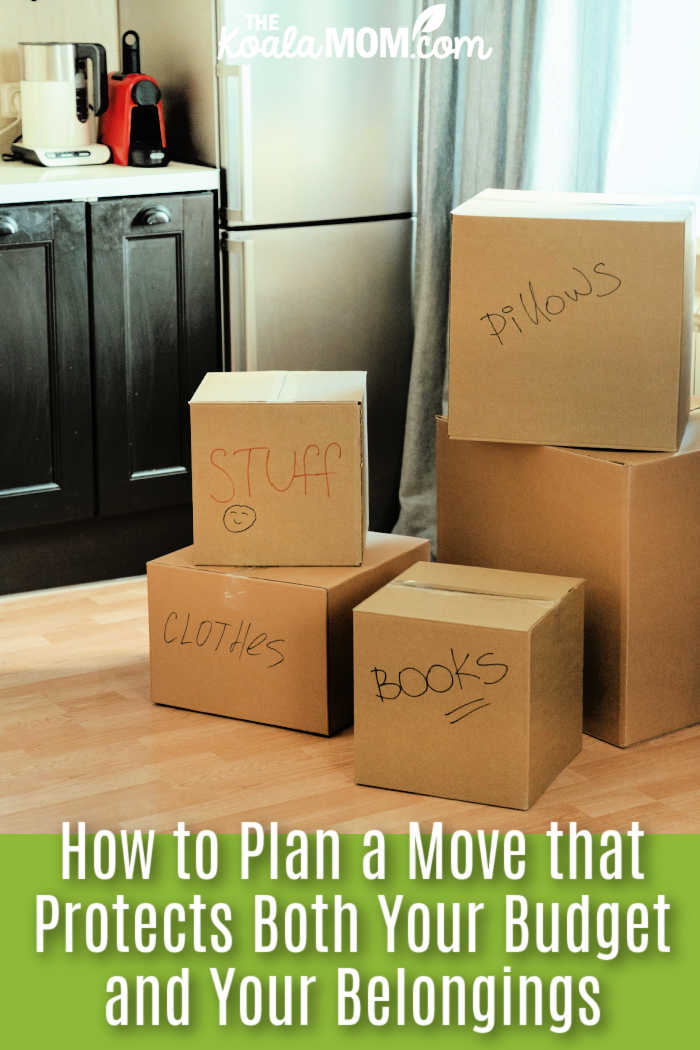
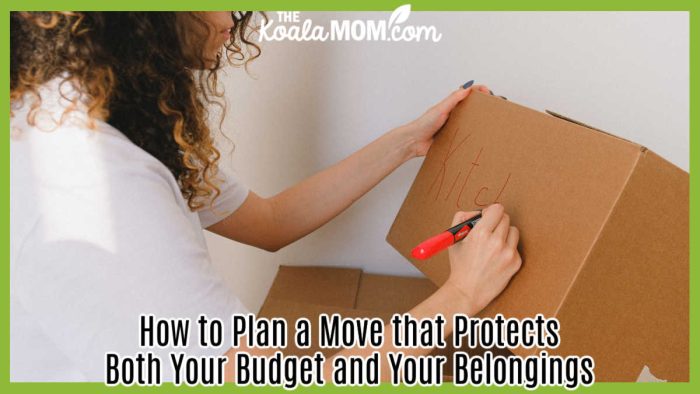
- color-coding boxes (either using colored packing tape or colored Sharpies to mark the box) so that you know exactly which room it goes into (red for kitchen, green for living room, etc).
- giving each box a number that correlates to a list or spreadsheet of what’s inside that box, so you can search the list later to find what box your items are in
- using QR stickers to maintain a list of what’s in each box
Packing in a Way that Keeps Items Safe
Damage usually comes from three habits: boxes packed too loosely, boxes packed too heavily, and boxes packed with a mix of unrelated items. Fill every gap so nothing shifts in transit. Keep heavy items (like books) in small boxes (like wine boxes from your local liquor store) and light items in large ones, so no box is too heavy to lift safely. Pack by room rather than by convenience, and label every box on the sides as well as the top, since stacked boxes hide their lids.
I like to use household linens like towels and spare blankets to pack artwork and other fragile decor. I layer a framed picture between the folds of the blanket, in a large, light box. Those boxes still get labeled as fragile, but I’ve never had pictures break that way.
Wrap plates and bowls on their edges rather than flat, the way records sit in a crate. Take the legs off furniture where you can. Keep all screws and hardware in a labeled bag taped to the underside of the piece they belong to.
Photograph the back of your electronics before you unplug anything, so reassembly later is a matter of matching a picture rather than guessing. Keep all electronics upright (and label the box too), because sometimes this matters; one of my moving helpers packed my printer upside down and nearly broke it doing so.
Protecting Fragile and Irreplaceable Belongings
Some things should never go on a truck at all. Documents, jewelry, medication, keys, small heirlooms, and anything you would struggle to replace belong in a bag that stays with you for the entire trip. Keep that bag small enough to carry in one hand, and keep it in your sight.
For fragile items that must be shipped, extra padding is cheaper than repair. Mirrors, framed art, glass tabletops, and instruments need rigid protection on the flat faces and cushioning on the corners. Mark these boxes clearly and tell whoever is loading them what is inside. A clear label at the point of loading prevents most of the damage that gets discovered at the point of unloading.
Handling Paperwork, Records, and Coverage
Paperwork is the quiet part of a move and the part that causes the most trouble later. Gather school records, medical records, vehicle documents, insurance policies, and anything tied to your lease or mortgage into one folder. Update your address with banks, employers, and government offices before you leave rather than after you arrive.
Read your car insurance coverage carefully and understand what it protects while your belongings are in transit. Household policies vary widely on this point, and the assumptions people make about them are often wrong. Ask direct questions, get the answers in writing, and keep those answers with your inventory.
Settling in without Undoing Your Planning
The first days in a new home decide whether all that preparation holds. Unpack the essentials box first, then the kitchen, then the bedrooms. Leave the rest until you know how you want to use the space, because unpacking everything at once tends to put things wherever there is room rather than where they belong.
Walk through the inventory as boxes come off the truck and check items against your list while the load is still in front of you. Note anything missing or damaged immediately, in writing. A concern raised on the day carries far more weight than the same concern raised a week later, and that single habit protects both your belongings and the budget you worked so carefully to keep.
No Responses Yet