


Every child sees the world in their own special way, and for some, that experience can feel a little more intense. Bright lights, loud noises, or certain textures might just be too much. Creating a play space that truly understands and supports your child’s sensory needs can turn playtime from a stressful moment into a joyful chance to grow.
A sensory-friendly space isn’t about fancy gadgets; it’s about thoughtfully setting up an environment where your child feels safe, calm, and ready to explore. You can find simple, effective ways to do this by figuring out what your child needs and making small tweaks to your home environment.
Understanding Sensory Profiles
To start making a supportive play area, you first need to get a handle on your child’s specific sensory needs. Every child responds to sensory experiences differently. Some kids are “sensory seekers,” meaning they love input like spinning, loud sounds, and different textures. Others are “sensory avoiders,” who might feel overwhelmed by those same things and prefer quiet, calm, and predictable surroundings.
Many children are actually a mix of both, enjoying some sensations while steering clear of others. Just watching your child can give you clues. Do they cover their ears when it’s loud? Are they constantly touching everything? Understanding their profile helps you choose elements that suit their needs. If you’re looking for more structured help, specialized play programs for neurodivergent children can provide additional support tailored to individual needs.
If you aren’t sure whether your child is a sensory seeker or sensory avoider or a mix, an occupational therapist can help you. While I had some idea about certain sensory things my son either loved or hated, I wasn’t totally sure where he fell. His OT provided me with a questionnaire to complete, which she then turned into a report that helped both of us understand his needs better. The OT also did a home visit where we discussed concrete ways that I could meet my son’s sensory needs in the home, based on the report.
Designate a Calm Corner
Whether your child is a sensory seeker or avoider, a calm corner can provide a safe place to retreat when they feel overwhelmed. It should be a positive space for self-regulation, not a time-out area. I’ve shared practical tips for creating a calm, sensory-friendly home that supports children with different sensory needs. These are just ideas to get you started, as your child will have their own preferences.
Your calm corner could include:
- a pop-up tent, canopy, or cardboard box for a cozy hideaway
- soft pillows, a beanbag chair, or favourite fuzzy blanket
- a weighted lap pad, stuffed animal, or blanket
- soft lighting instead of bright overhead lights
- noise-cancelling headphones or a white-noise machine
This cozy nook can become a valuable part of a sensory-friendly home, helping your child manage their emotions and energy.
Integrate Engaging Textures and Sounds
For sensory seekers, a play space should offer safe ways to explore textures and sounds. Instead of discouraging touching, channel that need into enjoyable play and sensory activities. For example, all my kids love fuzzy blankets and stuffies, so we have a lot of these. While I try to keep their stuffies in their rooms, we do have several soft blankets on the couch downstairs so they can wrap themselves up while reading or watching a movie.
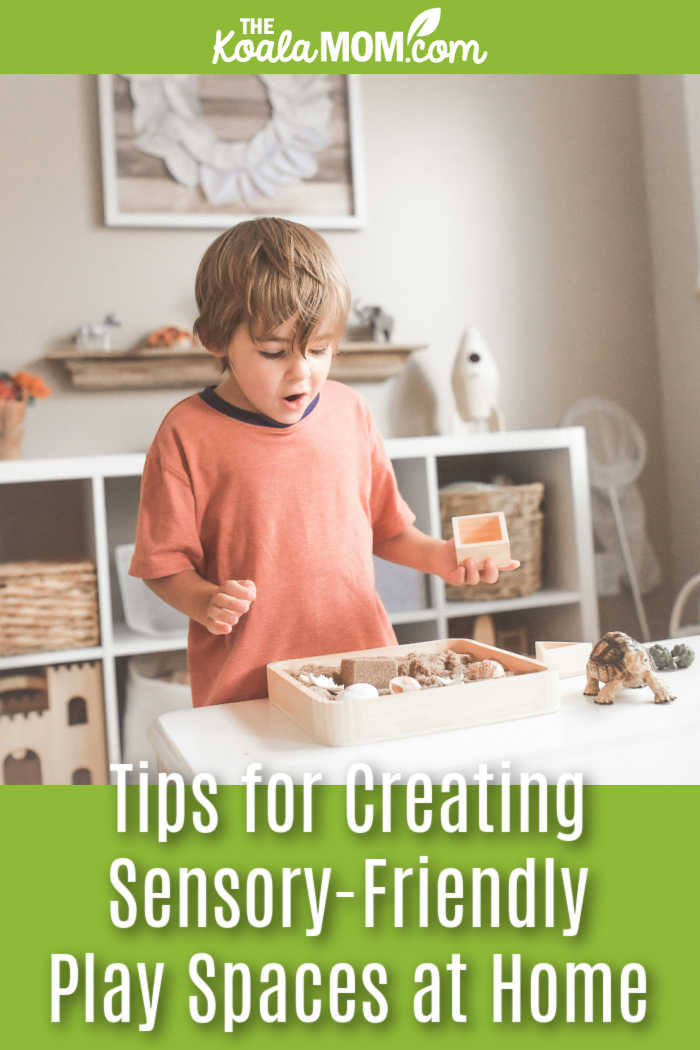
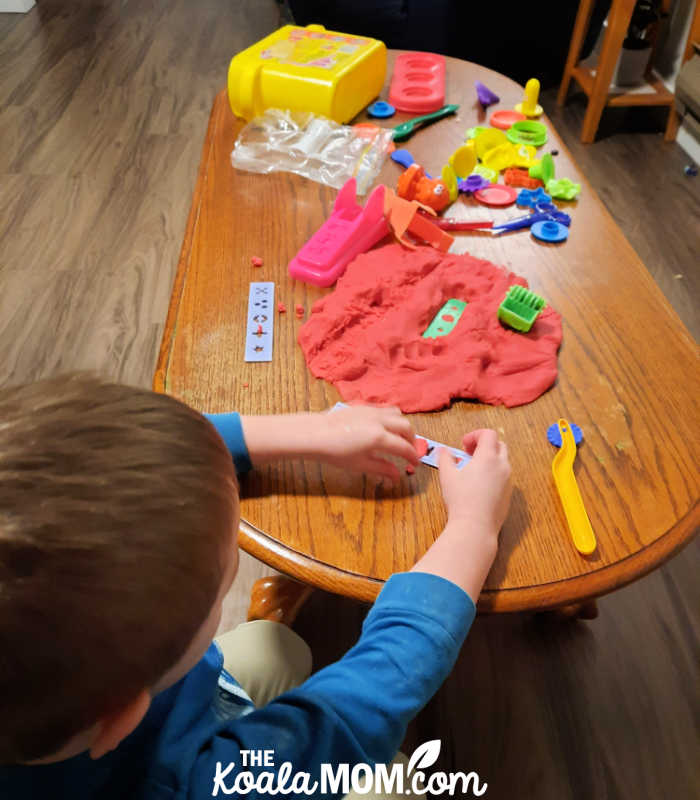
Sensory bins can include dry rice, pasta, sand, or shaving cream with scoops and small toys. My son also really likes play dough, slime, and modeling clay. Textured cushions and fabrics add variety, while gentle sounds from a tabletop fountain, white noise machine, or simple instruments provide further sensory input. The key is giving your child options they can control.
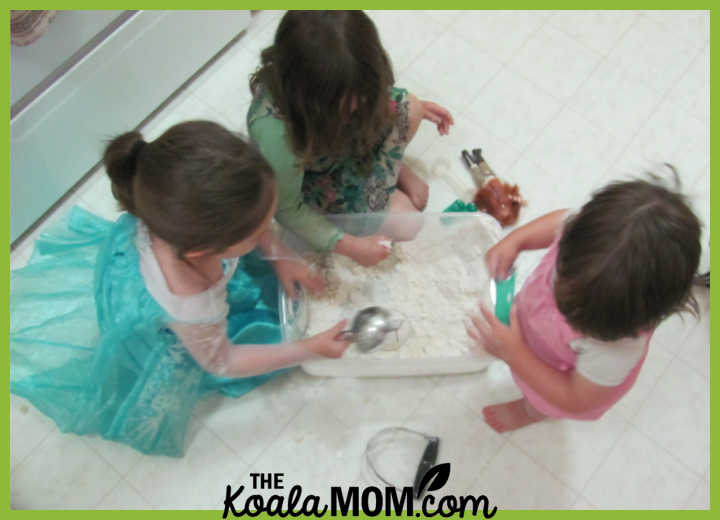
While you’re figuring out what works for your sensory child, it’s okay to admit what also doesn’t work for you as a mom. I realized very early in my motherhood that I greatly dislike sensory bins of any sort because of the mess they create. We’ve tried them all–sand, water beads, kinetic sand, etc. My kids simply can’t keep the sensory material–whatever it is–in the bin.
It’s okay to strike compromises between what your kids need and what you need. Maybe the sensory bins come out only when you have the mental energy to deal with the resulting mess. Maybe the mess of the sensory bin is worth it because it gains you an hour of quiet time while your child is totally focused on the sensory play. Maybe the sensory bins can be played with on the patio where the spilled sand doesn’t matter as much.
Tailoring Activities to Special Interests
Connecting sensory activities to your child’s interests makes play more meaningful and engaging. It also helps sensory exploration feel like natural play rather than an exercise. As a homeschool mom, I’ve always appreciated making learning playful or integrating learning into my kids’ play. Sensory play and special interests can be a perfect combination.
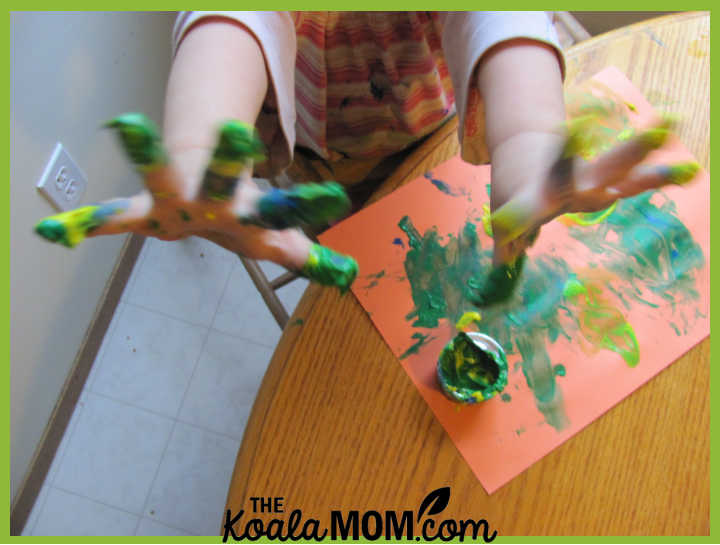
A dinosaur fan might enjoy a “dinosaur dig” with kinetic sand and toy skeletons, while a space lover could explore glow-in-the-dark stars and constellations. For vehicle enthusiasts, create a track across different surfaces to explore textures and vibrations. A child who likes art and color may enjoy finger painting.
Visual Schedules and Clear Boundaries
Knowing what to expect can reduce anxiety for children with sensory sensitivities. A simple visual schedule can show what happens first, next, and last, making transitions easier.
Clear, positive rules also create predictability. For example, “play dough stays at the table” or “the calm corner is for quiet voices.” When my son’s play dough gets on the floor, I give him a gentle reminder like, “Hey, bud, some play dough is on the floor. Let’s pick it up before it gets dried out or dirty.” These boundaries help children feel secure and focus on playing and having fun.
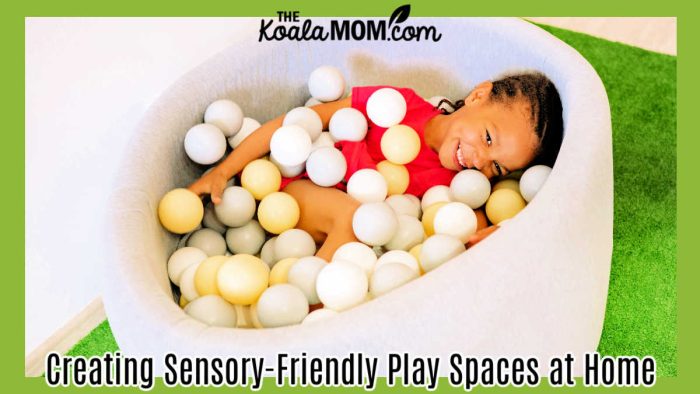
Ultimately, the goal is to create a space that supports your child’s needs, celebrates who they are, and gives their personality room to shine.
No Responses Yet