


I saw a bumper sticker today that said “tired mom club.” I’ve been there, done that, and so has the mom who wrote this guest post. If you’ve also wondered how to get your baby sleeping better, read on for her tip (which also worked for my kids).
I came to motherhood with a firm belief in closeness. Babywearing, co-sleeping, nursing on demand. I read Dr. Sears and other parenting books, followed fellow mom bloggers, and built my parenting approach around the idea that proximity was the answer to most of my baby’s needs. And for many things, it was.
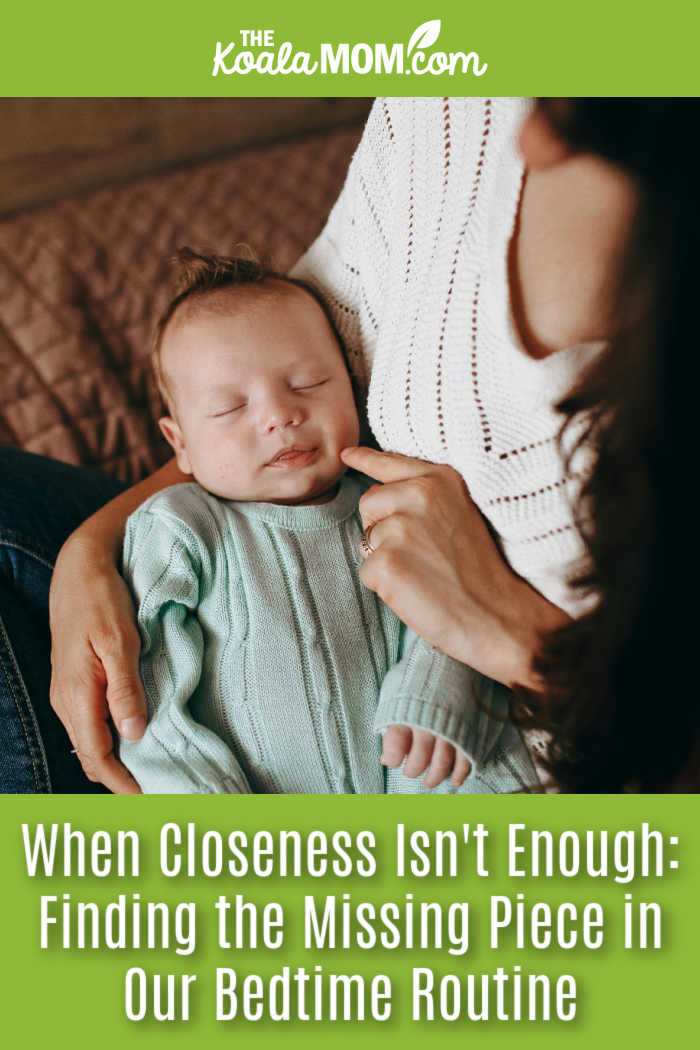
But sleep was the exception. My son would fall asleep in my arms beautifully, then wake the moment I shifted position, or the dog barked, or when a car door closed outside. He was close. He was not sleeping.
The Noise Factor I Had Overlooked
I spent weeks adjusting everything I could think of: his onesies, the lighting, the mattress firmness, my own breathing pattern (yes, really). What I had not considered was the sound environment.
Our home is not loud, but it is not silent either. We have two older children, a dog with strong opinions about squirrels, and a neighbour who apparently needs to close his truck door with the force of a small explosion every morning at 6:15 am.
A friend suggested trying a white noise machine. I hesitated. It felt like adding something artificial to an approach I had tried to keep as natural as possible. Would it interfere with his ability to hear me? Would it become a crutch? But after another week of fragmented sleep, I was willing to give it a try and see what happened.
What Changed (and What Did Not)
The sound machine did not replace closeness. My son still fell asleep in my arms, still nursed at night, still reached for me when he stirred. What changed was what happened between those moments. The steady background sound created a buffer. The dog barking did not jolt him awake. My older daughter closing her bedroom door did not register.
The truck door at 6:15 became a non-event.
His sleep stretches got longer. Not dramatically at first, but consistently. Instead of waking every forty-five minutes, he started doing two-hour blocks, then three. I started getting enough rest to function like a human being again.
What I appreciated most was that it did not change our bedtime routine. I still held him, still sang to him, still lay beside him. The sound machine simply smoothed out the environment around all of that. It was additive, not a replacement.
Rethinking “Natural” Sleep
Here is something I had to unlearn: silence is not the natural state for a sleeping baby. In the womb, babies are surrounded by constant sound. The whoosh of blood flow, the rhythm of a heartbeat, the muffled sounds of the world outside. A quiet bedroom is actually the unfamiliar environment.
A sound machine is not a departure from attachment parenting. It is a way of recreating one small piece of the sensory environment your baby already knows. It works with closeness, not against it.
For the Moms Still Figuring It Out
If you are committed to responsive parenting and still struggling with sleep, please know that using a tool does not undo everything else you are doing right. Your baby still has you. They still have your warmth, your voice, your presence. A little background sound just helps them stay settled long enough to actually benefit from all of it.
Closeness is the foundation. But sometimes the foundation needs a little help from a steady hum and a quieter house.
And if anyone in your parenting group gives you a sideways look for using a sound machine, you can tell them the womb was not exactly silent either. You are just recreating the original playlist.
No Responses Yet