


There’s a certain moment a lot of dog parents notice without quite registering it at first. The stairs your dog used to fly up become a two-part project. The morning stretch takes a little longer. The leap onto the couch turns into a thoughtful pause, a gather, and a hop. None of it looks like an emergency, which is exactly why it’s easy to miss. But those small hesitations are often the earliest hint that a dog’s hips are working harder than they used to.
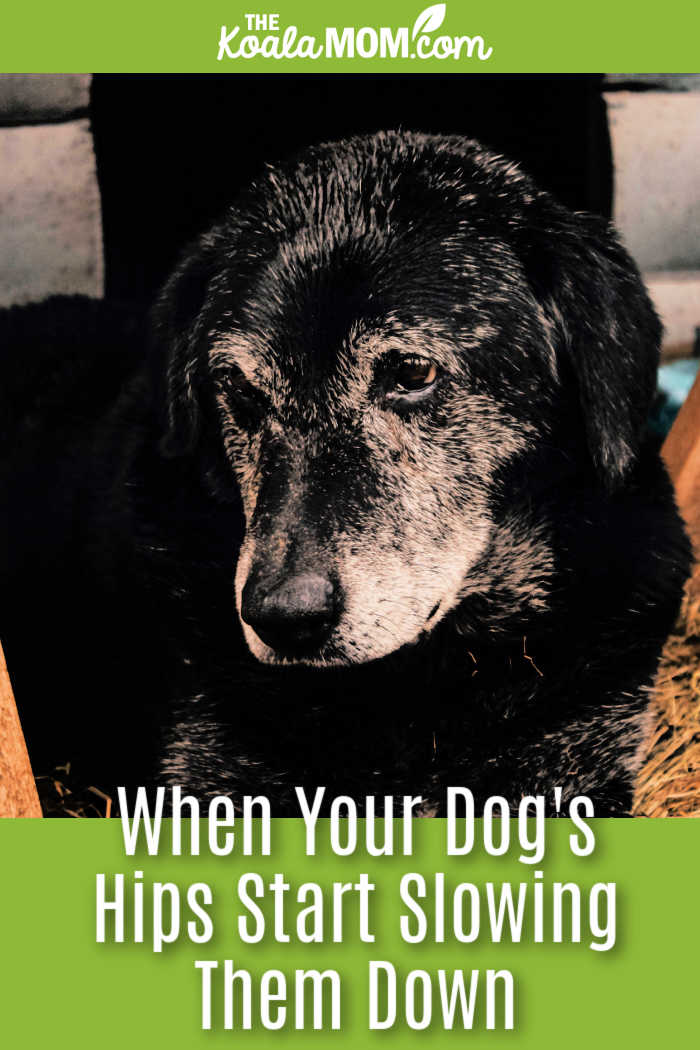
This happened to my childhood dog, a black lab / German shepherd cross named Shadow. As the grey hairs got more numerous around his muzzle, his hind end began going much slower. The dog who used to love his 6-mile walks now thought twice about getting up. It was heartbreaking to see his hind end simply not be able to keep up with his front end. Unfortunately, our vet told us this is a common problem for certain breeds of dogs.
The hip joints support much of a dog’s everyday movement, from the first backyard trip of the day to the full-speed zoomies afterward. Because our dogs are family, keeping those joints comfortable is about keeping them in the middle of everything: underfoot in the kitchen, curled at the end of the bed, ready for one more walk. And a surprising amount of good hip support comes down to small, doable habits at home.
Hips Do a Lot of Heavy Lifting
A dog’s hip is a ball-and-socket joint: the rounded top of the thigh bone nestles into a cup in the pelvis and, ideally, glides there smoothly for life. When the fit isn’t quite right, the surfaces rub and grind instead of gliding, and over the years that wear can add up to stiffness and discomfort.
According to the American Kennel Club, hip dysplasia, where that ball and socket don’t develop or fit together properly, is one of the most common skeletal conditions in dogs, and it shows up most often in large and giant breeds like Labradors, German Shepherds, and Saint Bernards, though smaller dogs aren’t off the hook either.
Genetics play a big role here, which means some dogs are born more prone to hip trouble than others. That’s not a reason to worry so much as a reason to pay attention, especially as your dog moves into the middle and senior years, when the odds of joint changes climb.
Signs Your Dog’s Hips Might Be Bothering Them
Dogs tend to be stoic, and they often hide discomfort surprisingly well. Shadow obviously couldn’t tell us that his hips were hurting. Instead of obvious limping, the signals are usually subtle shifts in how they move and carry themselves. A few signs worth watching for include:
- slowing down on walks or wanting to head home earlier than they used to.
- stiffness after resting that seems to ease up once they’re on their feet and moving.
- hesitation before jumping onto the couch, the bed, or into the car.
- trouble getting up from lying down, or leaning on the front legs to rise.
- a “bunny-hop” gait, where both back legs move together instead of alternating.
- less interest in play, stairs, or the activities they used to love.
- licking or nibbling around the hip and thigh.
Any one of these on its own might just be a lazy afternoon. A cluster of them, or a pattern that sticks around for weeks, is worth a closer look.
Small Daily Habits that Take Pressure Off the Hips
If one thing makes the biggest difference, it’s keeping your dog at a lean, healthy weight. Every extra pound is extra load on the joint with every single step, and it adds up fast on a body built low to the ground. Veterinary experts at Cornell University’s Riney Canine Health Center describe maintaining a healthy body weight as a cornerstone of managing hip and joint comfort. A good rule of thumb is that you should be able to feel your dog’s ribs without pressing, and see a waist when you look down from above.
Movement matters too, in the right doses. Low-impact activity keeps the muscles around the hip strong so they can support the joint, without the pounding of hard sprints on pavement. Think leashed walks, gentle play, or a swim if your dog likes the water. Short and regular tends to beat weekend-warrior bursts.
A few tweaks around the house help more than people expect. Rugs or runners over slick floors give aging legs traction, so hips aren’t scrambling for grip. A supportive, well-cushioned bed eases pressure on the joints through all those hours of sleep. And a small ramp or a set of pet stairs can spare your dog the repeated impact of jumping on and off the couch or into the car.
Feeding with Your Dog’s Joints in Mind
What goes in the bowl is part of the picture as well. Beyond keeping portions in check for that healthy weight, a handful of nutrients show up again and again in joint-friendly diets and chews: omega-3 fatty acids, green-lipped mussel, collagen, and turmeric among them.
Fitting several of these into an already-busy routine can mean juggling a shelf of separate jars, though. If you’d rather keep it simple, a daily canine hip support formula folds many of those ingredients commonly used to support joint health into a single soft chew that most dogs happily accept as a treat. It’s designed to help support joint comfort and mobility, and it’s an easy way to back up the weight and exercise work you’re already doing.
When It’s Time to Call the Vet
Home habits go a long way, but they don’t replace a professional set of eyes. If your dog is limping, clearly in pain, reluctant to move, or if the signs above keep getting worse, that’s a conversation for your veterinarian. Bringing a short list of what you’ve noticed at home, and when, gives them a real head start.
Your vet can pinpoint what’s going on, rule out other causes, and build a plan that fits your dog, which might include weight and exercise guidance, physical therapy, medication, or other options. For example, our family vet recommended a daily aspirin for Shadow (wrapped in a dog treat), which did help him for a time.
Aging isn’t something we can talk our dogs out of, but a lot of the stiffness we chalk up to “just getting old” is workable. A little attention to weight, some thoughtful movement, a few grippy rugs, and joint-minded nutrition can add up to a dog who still meets you at the door, still angles for the walk, and still claims their favorite spot on the couch. That’s the whole point: more comfortable, ordinary days with the family member who wouldn’t dream of spending them anywhere but next to you.
No Responses Yet