
)
)
When I first began following Ginny Kochis on social media, I appreciated her fun resources about saints and unique perspective on teaching the faith to children. Over the last few years, as I began to see the neurodiversity in myself and my kids, I turned more and more often to Ginny’s advice on raising “quirky” kids. When Ginny mentioned she was compiling all her wisdom and experience into a book, I couldn’t wait to get my hands on it.
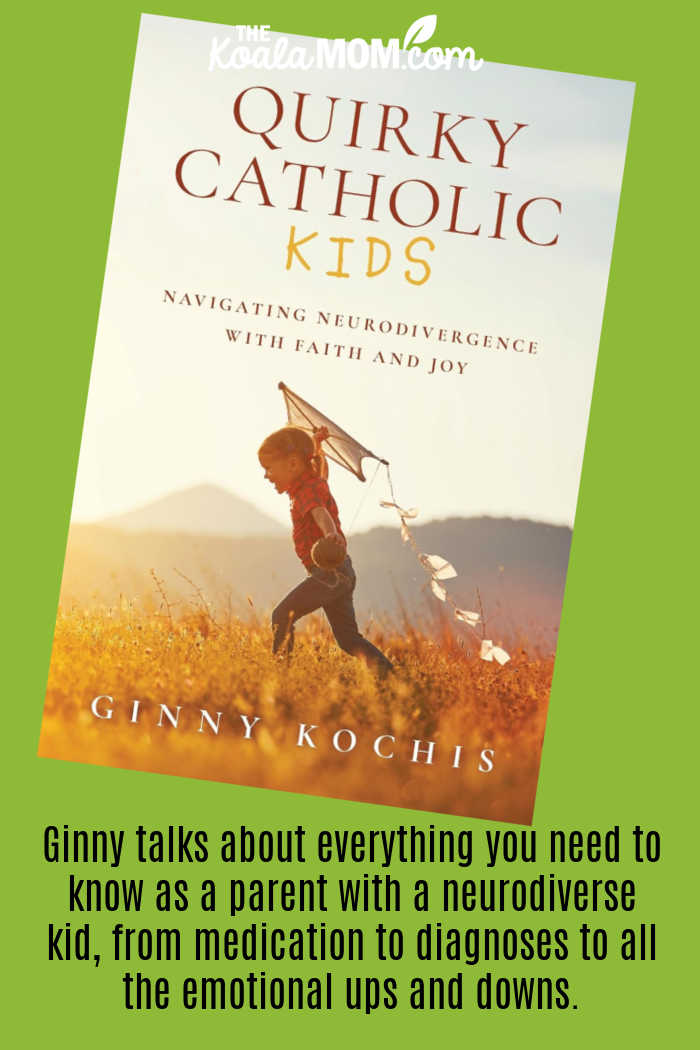
Quirky Catholic Kids: Navigating Neurodivergence with Faith and Joy is full of real stories, real advice, and real faith. Ginny shares honestly about her own journey as a teacher and mom learning more about autism, ADHD, and more. She talks about everything you need to know as a parent with a neurodiverse kid, from medication to diagnoses to all the emotional ups and downs. Ginny’s advice is calm, humble, and encouraging all the way through.
I received a copy of this book courtesy of the publisher; all opinion expressed remain my own. This post contains affiliate links; as an Amazon associate, I earn from qualifying purchases.
Take a Look inside Quirky Catholic Kids
Part 1 covers Support for Parents: Mindset and Attitude. How we approach our kids’ struggles and diagnoses matters. She talks about what neurodivergence is, how to pursue an evaluation, how to work through your emotions around a diagnosis, accepting our kids for who they are with humility, and facing some of the platitudes we may hear. She also talks about how we have the opportunity to influence our kids, to recognize our gifts and challenges and how we can use both to get to heaven.
Part 2 delves into the Practical Application: Tools to Help Quirky Kids Thrive. Ginny discusses various aspects of neurodivergence, including hyperfocus, emotional regulation, asynchronous development, executive function skills, and more. Between each chapter, she provides an example of a saint who may have dealt with this characteristic and can inspire our kids as they face struggles in this area. She also talks about the struggles of teaching neurodiverse children about faith and managing screen time for our unique kiddos.
As quirky kid parents, we have the unique opportunity to set a firm foundation for the self-concept they develop as kids, restructure as teens, and carry into adulthood. The way we approach our children’s talents, gifts and neurodivergence helps root their identity in Christ. … As I tell my kids, our words and actions have meaning. As our children’s influencers, our words and actions should mean something good.
At the end of her book, Ginny includes an index of 100 Intercessors by Interest and Need. This is an awesome resource of saints who can become your child’s patron saint, role model, or simply inspiration as they realize that they are not alone in their quirks.
To Diagnose or Not
One question that faces parents who begin to realize that their child’s brain seems to be wired differently is whether or not to pursue a formal diagnosis. The child’s school, doctor or other caregivers may recommend a diagnosis and may facilitate it. Other times, parents are left on their own to make this decision as they try to advocate for what their child needs. Ginny shares some pros and cons on this topic, but does recommend seeking diagnosis–and telling kids about it.
Sharing diagnostic information with a child gives them insight into who they are. It’s not just a matter of being different from other kids; it’s a matter of self-growth and self-awareness. Instead of wondering who they are and why they do things, they know and understand how their brains work. By arming a child with knowledge of her diagnosis, you help her see that different is neither less than nor a mistake.
Ginny’s book is focused on the child, on helping each of our kids develop into the amazing, unique, wonderful person that God created them to be. While a diagnosis can sometimes feel scary or overwhelming, Ginny provides a positive view of this process. I agree with her that knowing ourselves and our children better always enables us to do better. My son’s diagnosis has helped me to better support him, understand him, and advocate for his needs.
I know some parents worry that if their child gets a diagnosis, it will become a label they cannot escape or simply an excuse for bad behavior. Ginny addresses this concern from her own experience:
As my children have grown over, I’ve discovered that sometimes a diagnosis becomes a crutch. “I was anxious, so I hit him” was a common refrain from one of my children, and the inclination was not to take responsibility for the physical aggression displayed. For that reason, I find it prudent to reinforce a diagnosis as reason for behaviours, not an excuse. A child who lashes out physically when anxious has still hit another child… Once a child reached the age of reason, he is culpable for his choices. Anxiety may have triggered the action, but ultimately, the responsibility for the behavior is the child’s.
Ginny goes on to explain how she and her husband address this from a faith-informed perspective. Throughout Quirky Catholic Kids, I appreciate how she weaves the wisdom and grace of our faith into the ways that we parent our quirky children. We can recognize their unique brains as a gift from God and help them grown not just in their executive functioning skills but also their own faith:
… it was important to me and my husband to help him understand the difference between an excuse — something we use to absolve culpability — and a reason — the root cause of a behaviour. We wanted him to understand that the rage and frustration he felt was not his fault, but that the action he took as a result required ownership. For us, this meant the next opportunity for confession, an apology, and whatever consequences his school had chosen. Our son is not a slave to his diagnosis, and he always has the ability to choose right from wrong.

Find Your Community
Over the last five years, as I’ve navigated my separation and divorce and learning about my kids’ neurodivergence and then my own, I’ve realized again just how much community matters. No matter what we go through in life, it makes a huge difference to have a friend who can walk through that with us and give us encouragement on the journey. If you are a parent of a neurodiverse child, Ginny is that friend. In Quirky Catholic Kids, she comes alongside us, humbly offering all her hard-won wisdom.
If I could wish for one thing as a Catholic, it would be that each of us would find an encouraging community in our churches that sees and accepts each of us as we are, and views our quirky kids the way that Ginny does. Unfortunately, for most of us, this isn’t what we experience. If you’ve been ostracized because your hyperactive ADHD kid can’t sit through Mass, or because your sensory kid can’t handle noise or incense, or because your very literal child with autism cannot grasp the mysteries of your faith, you are not alone. Ginny’s book is a breath of fresh air, showing how the beauty of the faith includes children like ours and always has.
More about Ginny Kochis
Ginny Kochis is a Catholic author, educator and neurodivergent parent coach. She and her husband have three neurodivergent children. Ginny has a Master of Arts in Teaching Writing and Literature and over two decades of experience in educating. She founded the Quirky Catholic Kids website and community in 2017 and shares inspiration and encouragement on her social media pages as well. Quirky Catholic Kids is available from Sophia Press, Amazon, or your favorite Catholic bookstore.
No Responses Yet