


As parents, many of us have a complicated relationship with screen time. We appreciate the convenience of technology, but we also want our children to spend their time learning, creating, and thinking—not just tapping through another game. That’s one reason I was interested in learning more about JOJO Math, a handwriting-based math app designed for children ages 4 to 10. I
recently spoke with Stacy Wang, the company’s COO, about the inspiration behind the app, what they’ve learned from thousands of young users, and how they’re trying to make math practice something kids actually want to do every day.
TKM: Tell us a little about yourself and your background.
Stacy: I’m Stacy Wang, COO of JOJO Math. My background is in business administration, with a focus on finance. I started my career in e-commerce, and later moved into venture capital, where I spent years investing in early-stage consumer and education companies across the Greater China region.
About four or five years ago, I started shifting from investing in EdTech to actually building one — I’ll explain why in a moment. I don’t have kids of my own, but spent years sitting in conversations with families about what they wished existed for their children’s early education. Those conversations shaped almost every design decision behind JOJO Math.
TKM: Are you a “math person” yourself, or did that love grow over time?
Stacy: Honestly, my relationship with math has always been pretty neutral — I didn’t love it, but I wasn’t afraid of it either. But there’s one childhood experience that stayed with me: I briefly attended Kumon. I didn’t stick with it in the end, but during the time I was there, I noticed something important — the program matched problems to my actual level, not to some generic curriculum.
That stood out compared to my school experience. I was a decent math student in elementary and middle school, but I often napped through class because the teacher was covering things I already knew. School taught everyone at the same pace — some kids couldn’t keep up, others were bored. Kumon was the first time I felt what it was like to learn at my own pace. That feeling eventually became the seed of the personalized learning path we built into JOJO Math.
TKM: What first got you interested in educational apps or teaching math?
Stacy Wang: It wasn’t a single moment — it was a conclusion that built up over my years in venture capital. I was studying the global education market and looking at the largest offline and online education companies in the world. One observation kept standing out: Kumon is the most successfully globalized offline education company I’ve ever come across.
Three reasons:
- First, the consistency of the model. Kumon uses nearly the same system across very different countries — Asia, the US, Brazil — and it works in all of them. That tells you the underlying method (structured practice plus personalized progression) is universal, not culture-dependent.
- Second, more than half a century of reputation. The company has been operating for fifty-plus years, and in every market it has built up real trust with parents over time.
- Third, at the same time I was looking at a lot of educational apps as an investor — and most of them disappointed me. The market was full of two extremes: either digitized worksheets (boring) or heavily gamified products that looked like learning but weren’t.
I want to say a bit more about the second category. Many apps use a three-choice tap-to-answer format. Kids can guess and still score a “100” on the screen — but when they go back to school and see the same problem on paper, they can’t solve it. Parents believe their kids are learning, when in fact they aren’t.
That’s when I realized: real learning can’t come from passive consumption. It has to come from active practice. Education research has been saying this for years — watching videos and tapping through games are far less effective than actually doing the work yourself. Handwriting matters because it forces the brain to genuinely think and produce, not just recognize options. The research from Mueller and Oppenheimer at Princeton on note-taking, and Van der Meer’s neuroscience work on children’s handwriting in Norway, all point to the same conclusion: handwriting activates deeper learning than typing or tapping.
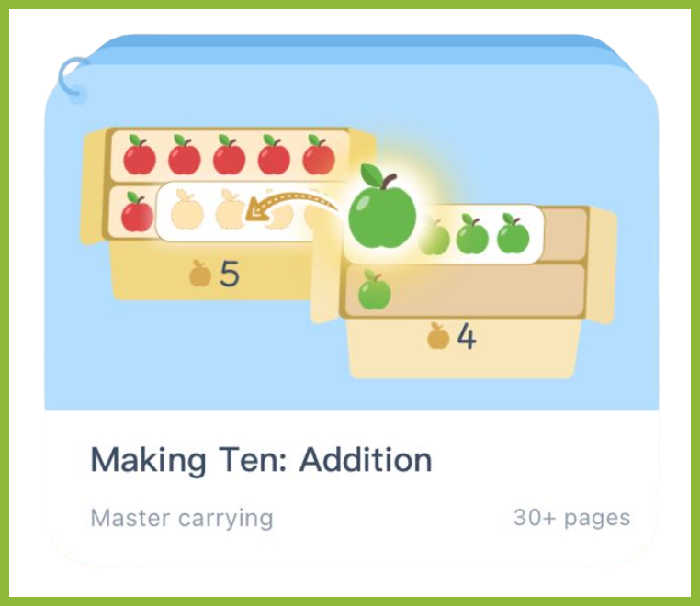
That’s the direction JOJO Math eventually committed to — preserving the structured learning method Kumon proved works over fifty years, but rebuilding it on iPad and Apple Pencil, using handwriting, no guessing allowed, with just enough (but not too much) gentle encouragement to keep kids wanting to come back every day.
TKM: For readers who haven’t heard of it yet, what is JoJoMath?
Stacy Wang: JOJO Math is the first handwriting-based math app designed specifically for children ages 4 to 10, built exclusively for iPad and Apple Pencil. Almost every Apple Pencil app on the market — GoodNotes, Notability, and so on — is built for adult productivity: note-taking, drawing, document work. We’re one of the very few designed from scratch around how young children actually write math.
For homeschool families, the simplest way to describe it is this: it takes the structured, time-tested practice method behind Kumon and brings it onto the iPad, so kids can complete focused 10-minute math sessions on their own — without a parent sitting next to them on every problem. Our tagline is “Writing with Focus” — what we hope kids walk away with isn’t just stronger math, but the habit of sustained attention.
TKM: Who did you create the app for?
Stacy Wang: On the surface, JOJO Math is for kids ages 4 to 10 — with the core sweet spot landing around 5 to 8. On a deeper level, it’s for families looking for screen time that actually produces something. Parents know the iPad is already a part of their kids’ lives, but they want what comes out of that time to be real — not just another round of YouTube or short videos.
That includes traditional school families, homeschool families, and families who simply want to strengthen math at home. Homeschool parents resonate with us in a particular way, because they’re already looking for tools that let a child work independently for 10 focused minutes — not yet another product that requires a parent to sit through every problem.
TKM: Where did the name “JoJoMath” come from?
Stacy: JOJO is the name of the little chick mascot inside the app. We wanted children to feel they weren’t “in class” — they were practicing alongside a friend. JOJO claps when they get something right, gently nudges them when they don’t, and sends them voice messages when they hit milestones. To a child, “JOJO” is the name of the companion who shows up for 10 minutes every day — and that ends up mattering far more than the word “Math” in the title.
TKM: What inspired you to create JoJoMath?
Stacy: We studied a lot of Kumon parent reviews and the feedback was polarized. But within that polarization, one thing stood out. When we travelled in Japan, we saw something striking: three generations of the same family going through Kumon — grandparents who had done it, then sent their own kids, now sending their grandkids. Every generation complained about how tedious the process was. And every generation still believed it had made a long-term difference for them.
The most important thing, it turned out, wasn’t even the math itself. It was the habits of self-discipline and focus that the process built. Parents were willing to put their kids through something hard because they’d lived it themselves — and they knew it actually worked.
As someone who’d invested in a lot of EdTech, that was when I understood: this gap wasn’t going to fill itself. If I kept sitting in the investor seat waiting for someone else to build it, it might never happen. I decided to build it myself on iPad and Apple Pencil, so kids wouldn’t push back the way they used to, and would actually choose to come back every day.
TKM: What was the most challenging part of creating the app?
Stacy: The hardest part has been handwriting recognition. There aren’t any mature, off-the-shelf handwriting recognition models built for children — every existing model is optimized for adults. Children’s handwriting is wildly varied: different sizes, uneven shapes, strokes going in unexpected directions. We had to train our own model from scratch.
And there was an additional layer of difficulty: kids in different countries write numbers differently. Numbers like 4, 7 and 9 are shaped and stroked slightly differently in North America, Europe, Latin America, and Asia. Our model has to be forgiving enough to recognize all of those variations, but not so forgiving that it confuses a “7” with a “1.”
It took a long time to get this right, and it’s become our deepest technical moat. You can’t simply build JOJO Math on top of GoodNotes or Notability.
TKM: What was the most fun or exciting part?
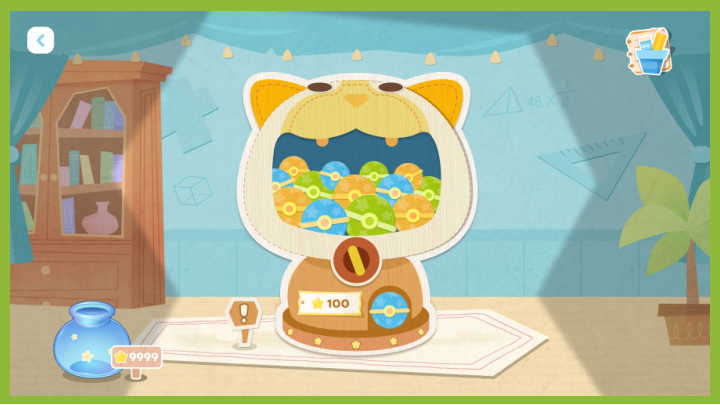
Stacy: The most moving thing for us has been seeing children whose flame streaks have passed 600 days. Inside the app there’s a feature called FlameCalendar — if a child finishes their practice that day, the flame continues; miss a day, and it breaks. A 600-day flame means that child has shown up, every single day, without missing one, to complete that day’s practice.
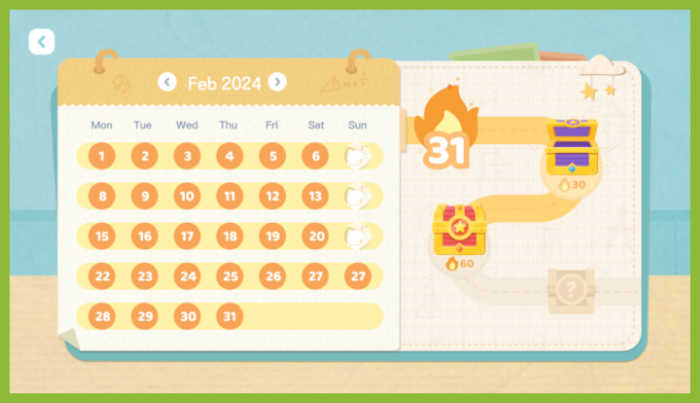
What parents have told us is that the persistence itself is remarkable — but the more surprising thing is that this habit doesn’t stay inside JOJO Math. The same child’s school performance starts to shift too. One parent told us their child went from being outside the top ranks of the class to consistently ranking in the top three.
For our team, seeing this means more than any download number. We’re not building something that gets used and tossed — we’re helping a child build something they carry with them for life.
TKM: Did anything surprise you during the development process?
Stacy: The most surprising finding was that 84% of children self-correct their own mistakes — without a parent stepping in.
Our initial assumption had been that when a child got a question wrong, they’d give up, or wait for an adult to help. But it turns out that as long as the error feedback is designed gently — no harsh “wrong” sounds, no oversized red X — children will want to try again on their own, and quietly fix the answer themselves. That finding changed a lot of our later design decisions. We started trusting children more, handing them more agency, and stepping back from over-intervening.
TKM: Was there a feature that turned out better than you expected?
Stacy: The voice letters JOJO sends to the children. This started as a small touch. Young children don’t always read fluently yet, so we had JOJO write to them in voice messages instead. The content is personalized — a greeting around a holiday, a few words of encouragement before a school exam, a small celebration when a child reaches a milestone, all shaped by what’s actually happening in that child’s life.
What we didn’t expect was how strongly the kids would respond. Many children listen to the same letter again and again, treating JOJO like a real friend. That made us realize children don’t only need a tool that teaches them math — they need a companion. That insight has gone on to shape a lot of our other design choices.
TKM: What kind of feedback have you received from families or teachers?
Stacy: There are three things I hear most often from parents.
“He doesn’t let us interrupt him anymore.” One mother in Taiwan told us her son became deeply focused while using JOJO Math — and after seeing himself ranked #1, his confidence grew and he started genuinely loving math.
“Even his school teacher noticed.” A mother in the US shared that she’d only meant for her child to practice extra at home, but the school teacher came to her unprompted to say the child’s math had clearly improved. For homeschool parents in particular, that kind of validation — home learning showing up as visible school results — is especially meaningful.
“My child proactively asks to do it.” This one we’ve heard from parents in many different countries. For a parent, “my child is actively choosing to learn” is one of the hardest things to achieve — and it’s the reason we hold so tightly to the design principle of “make the child want to come back.”
TKM: What’s next for JoJoMath?
Stacy: Two directions.
The first is expanding into more languages. We already have Portuguese and Spanish versions, and we’re now extending into Japanese, so that more non-English-speaking families can use the product.
The second is broadening the content beyond math — we’re rolling out an ELA (English Language Arts) curriculum for the US market, designed for native English learners. For homeschool families in particular, this means JOJO Math won’t only be a math tool anymore — it can gradually grow into a more complete at-home learning platform.
TKM: What’s your favourite math concept or problem?
Stacy: The Möbius strip. The ring I wear is actually a Möbius strip design — a surface with only one side and one edge, deceptively simple, but if you trace your finger along it you’ll discover you never quite return to where you started, and yet you’ve never left the same path.
I love it because it quietly breaks our intuitions about “inside” and “outside,” “front” and “back.” What I find most beautiful about math is exactly this — it challenges what you thought was obvious, and then opens up a bigger world. I hope what kids take away from JOJO Math isn’t only arithmetic, but a bit of that feeling — staying curious about the world.
TKM: If you could go back and give yourself one piece of advice at the start of this project, what would it be?
Stacy: “Don’t wait until it’s perfect to ship.”
In the early days, it was easy to fall into the loop of “one more feature, one more round of polish, one more version.” Looking back now, getting real children and real parents to use the product even a little earlier would have taught us more than ten internal team meetings.
A lot of features we thought were essential turned out to be things real users didn’t care about — and conversely, things we considered minor (like JOJO’s voice letters) became the parts children loved most. If I could do it again, I’d put the product into real hands much sooner, and let them tell us where to go next.
TKM: What apps, books, or resources are you personally loving right now?
Apps: I use Claude every day to help me learn — everything from understanding coding concepts to organizing my own thinking. I’m genuinely curious about how the way we learn is being redefined right now. AI tools have given me back that “I can finally understand things I once couldn’t” feeling, and that’s been quietly inspiring for how I think about JOJO Math.
Books: It’s been out for a while now, but Walter Isaacson’s biography of Steve Jobs has shaped me deeply. It shaped how I think about product design — particularly the idea of not compromising on the things that matter most. The handwriting math practice we’re building is a relatively niche space, but we still insist on doing it as well as it can be done — for example, training our own children’s handwriting recognition model from scratch rather than borrowing an adult one off the shelf. That kind of insistence isn’t always the most efficient commercial choice, but I believe it’s the only way a product lasts.
Resources: I follow a handful of education and product design podcasts and newsletters — mostly to see what parents and educators in other countries are wrestling with. It keeps me from building inside a bubble.
Try JOJO Math with your kids!
If you’d like to see whether JOJO Math is a good fit for your family, Stacy has provided an exclusive reader code: KOALA14. This code unlocks full access to the app for 14 days, giving your child a focused opportunity to build a consistent daily math habit. To redeem the offer, open the JOJO Math app, tap Parent Center in the top-right corner, select Redeem, and enter the code KOALA14 to start your free trial.
No Responses Yet