


Moving day is usually pictured in one sequence: the family arrives, the truck arrives, and unpacking begins. Long-distance moves do not always line up that neatly. A scheduled delivery window, temporary storage, or a delay can leave your family in the new home before the household shipment arrives.
For children, an empty bedroom and missing familiar belongings can make the gap feel bigger than a night without furniture. You mainly need enough around you for everyone to sleep, eat, get dressed, and follow a few familiar routines until the rest arrives.
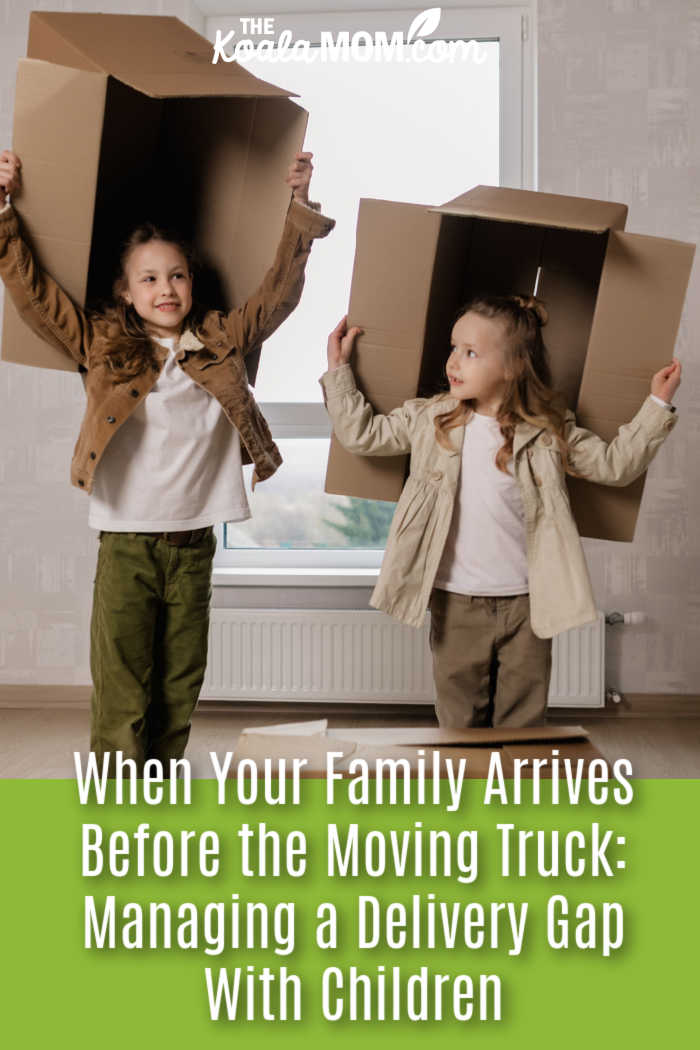
We faced a delivery gap during our move from Victoria to Vancouver. That move was going to happen at the end of the Christmas holidays, so I remained at the grandparents’ place with the children while their dad and grandpa flew to Victoria to supervise the movers. The men then followed the moving truck to Vancouver, and let me know when it would be arriving.
With the arrival time confirmed, the kids and I drove to Vancouver and arrived there once the furniture was set up and the boxes just needed to be unpacked. The kids were happy to explore their new home and jump on their beds and play with the cardboard boxes once they were emptied.
Know Whether You’re Facing a Delay or a Delivery Gap
A truck running a few hours late is very different from a shipment that is not due until the next day.
When planning a long distance move, ask for the actual delivery window, who will update you, and what could change the timing. Before booking travel or handing over the keys, ask long-distance movers in Canada how they set delivery windows and handle storage between pickup and delivery.
Plan for a little longer than the expected gap. If you prepare for two nights and the truck arrives that evening, no harm done. If you prepare for one and the wait stretches into day three, things get much harder.
What Your Family Should Have for the First 48 Hours
Anything your family is likely to need before the shipment arrives should travel with you. Give each child a small overnight bag with clothes, pyjamas, toiletries, a favourite comfort item, a couple of activities, chargers, and anything needed for school or daycare.
If the move also means changing schools, this school-transfer guide for families moving in Canada covers registration records, learning supports and first-school-morning planning.
Set aside family essentials too, especially medications, identification, important documents, medical supplies, and anything that would be difficult to replace quickly. You are not packing a second home. Pack enough to get through a couple of days without needing the truck.
Set Up Sleep Before You Set Up the House
If the beds are still on the truck, decide before arrival where everyone will sleep. Air mattresses, sleeping bags, or bedding brought in the family vehicle can make an empty room workable for a night or two. Make camping in your new home an adventure for the kids. Alternatively, you can book a local hotel or AirBnB and turn it into a mini vacation.
For younger children or neurodiverse kids, familiar things matter more than a finished bedroom. Having their usual comfort item nearby can make the new space feel less strange. For my kids, that includes things like a favorite stuffy and a particular fuzzy blanket.
Try to follow the usual bedtime routine where you can: pyjamas, teeth, story, sleep. Siblings who normally share a room may also feel more comfortable staying together that first night. Bedtime only needs to feel familiar, not finished.
Make Food Easy Until the Kitchen Catches Up
A working refrigerator does not mean the kitchen is ready. Pots, dishes, utensils, pantry food, and children’s cups may still be on the truck. Bring enough familiar food for the first day or two, and check nearby grocery or takeout options before you arrive.
Children with allergies or dietary restrictions need a more deliberate backup. Carry enough safe food to cover a longer wait rather than assuming suitable options will be easy to find.
Don’t Give Children a Delivery Time You Don’t Control
Children may ask all day, “When will our stuff get here?” Avoid promising an exact time unless you genuinely have one. If the truck is expected tomorrow, say that. If the delivery window is still uncertain, say you are waiting for an update.
Give them something else they can count on instead: pizza tonight, a trip to the playground tomorrow, or choosing where something will go in their new room. Children cannot control the truck’s schedule, but a few predictable parts of the day can make the wait feel much easier.
Create One Daytime Family Base
Choose one room or corner as the family’s temporary base while the house is still mostly empty. Keep children’s bags, snacks, water, chargers, books, and a few activities there so everyone knows where to find what they need.
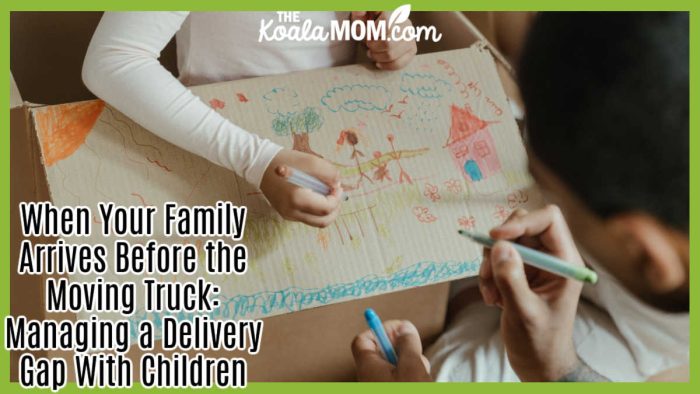
Bring options that do not depend on the shipment, such as colouring supplies, cards, or downloaded shows. Older children may prefer exploring the neighbourhood or making small decisions about their new room.
You do not need to fill every hour. One familiar place and a few easy activities are enough while you wait.
Know What Changes If the Gap Gets Longer
If the shipment is delayed longer than expected, know where you could get extra clothing, diapers, toiletries, or food. If you are staying in temporary accommodation, check whether you can extend your stay.
Have the delivery contact details somewhere easy to access, and confirm any elevator bookings, parking rules, or delivery-hour restrictions before the truck arrives. You do not need a backup for every possible problem. You just need to know your next step if the original plan changes.
When the Truck Arrives, Restore Family Life First
Do not unpack simply in the order the boxes come off the truck. Start with what makes the home usable again: beds and bedding, children’s everyday belongings, clothing, basic kitchen items, and anything needed for school or daycare.
If possible, identify those priority boxes or furniture pieces before unloading starts so they do not end up behind less urgent items. A made bed and tomorrow’s clothes will usually matter more on the first night than unpacked décor.
Let the First Few Days Be Incomplete
A new home does not need to feel finished right away. If everyone can eat, sleep, get dressed, and follow a few familiar routines, you have already done the most important part. The rest of the house can come together once the truck arrives.
Children are more likely to remember how those first days felt than whether every box was unpacked on schedule. A little predictability can make an unfamiliar, mostly empty house feel much easier to settle into.
The delivery gap may last a few hours or a few days. Either way, family life can start before every piece of furniture is in place.
No Responses Yet