


I first encountered the term “post-partum psychosis” in university twenty some-odd years ago. I was taking an introductory psychology course and our professor gave us an assignment: find a story in a newspaper that makes you ask why someone would do that, and then research the psychological reason for it. My family didn’t have any newspaper subscriptions, but I worked weekends at our small-town gas station.
I spent that Sunday afternoon scanning newspaper stories between serving customers. Not many people stopped for gas on Sundays, so I had a lot of time to read the local paper. Page after page left me with no questions, until the very last page of the newspaper… a story about a young woman who had killed all five of her children by drowning them. My other job at that time was babysitter; my dream was to be a mom. That story left me gutted and asking a whole lot of why.
I bought the paper, ripped the story out, and took it to my psychology professor. “How does a woman who loves her children reach the point where she believes killing them is the only thing she can do?” I asked her. “Postpartum psychosis,” she answered. I researched more about Andrea Yates and what had caused her to go from a girl who dreamed of having lots of kids (like me) to a woman who would drown them one at a time and wrote a paper that earned me an A+ in that class.
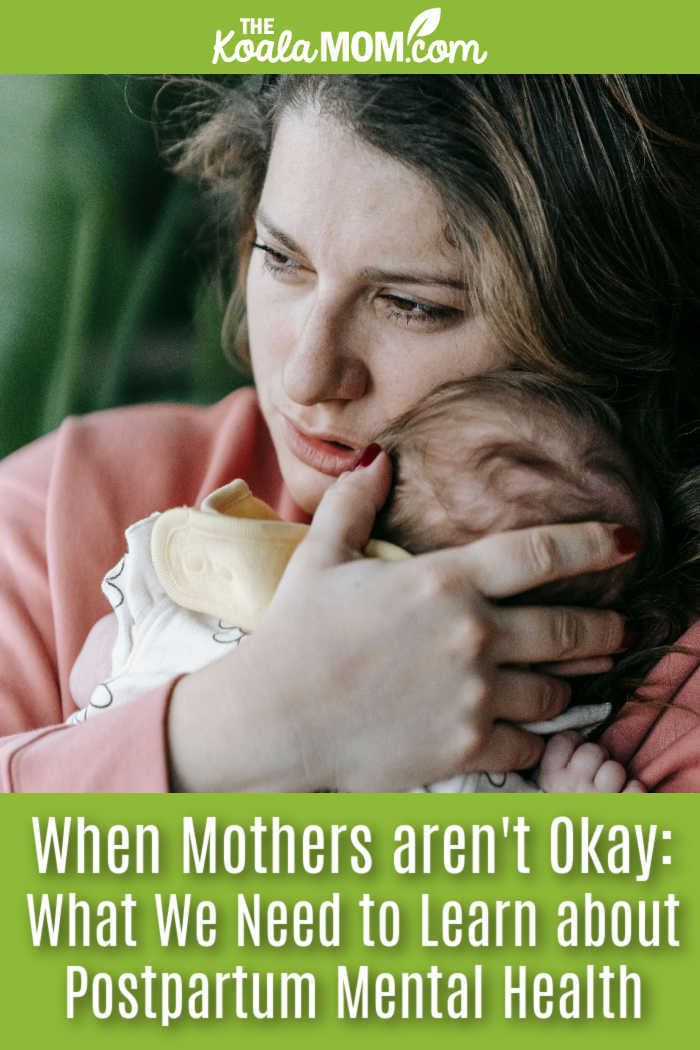
Postpartum Mental Health Today
What I’ve seen on Instagram about the recent Lindsay Clancy trial brought all of those memories back to me, along with a recent case here in BC where a mom died by suicide after struggling with postpartum depression. Jenna Dorman’s friends have now started a charity, In Her Circle, to raise funds for better support for women facing postpartum depression and psychosis. These aren’t just stories from newspaper archives or American courtrooms. This is happening here, too.
Postpartum depression (such as Jenna faced) and postpartum psychosis (such as Lindsay and Andrea faced) are two different conditions.
Postpartum depression is relatively common and can involve persistent sadness, anxiety, guilt, exhaustion, changes in sleep or appetite, difficulty concentrating and, in severe cases, suicidal thoughts. About 1 in 8 women in the U.S. experience symptoms after giving birth, while estimates are higher in some other countries, including Canada. These numbers may underestimate the true prevalence because many mothers don’t report their symptoms because of stigma, fear, lack of awareness, downplaying their own symptoms, or difficulty accessing care. Postpartum depression is treatable, and with appropriate treatment and support, most women can recover.
Postpartum psychosis, on the other hand, is rare but a psychiatric emergency. It can develop rapidly, often within days or weeks after birth, and may involve hallucinations, delusions, paranoia, severe confusion, mania or rapidly changing mental states. A mother experiencing psychosis may genuinely be unable to distinguish what is happening in her mind from reality. It can happen to women with no previous history of serious mental illness, although a history of bipolar disorder or previous postpartum psychosis increases the risk. Sleep deprivation, genetics, hormonal changes and significant stress may also contribute.
The difference matters because postpartum psychosis requires urgent medical attention. Symptoms should never be dismissed as ordinary new-parent exhaustion. At the same time, both conditions remind us that motherhood can place enormous demands on a woman’s physical and mental health—and that recognizing when a mother is struggling is only the first step. She also needs access to timely, appropriate support and treatment.
Moms Need Better Support
We have so many studies that show moms desperately need more support during pregnancy and postpartum. However, too often, women are left with little to no support during this vulnerable period of their lives. The stories of Jenna, Andrea and Lindsay all illustrate how better care could have prevented so many losses.
Healthcare Support
Screening isn’t enough if a mother can’t get an appointment, doesn’t know where to go, or encounters a system that treats her symptoms as normal new-mom exhaustion. For example, my midwives provided follow-up care for me for about six weeks after my baby was born. After that, I didn’t receive further care until the next time I was pregnant. For most of my motherhood, my kids and I haven’t even had a family doctor due to the shortage of doctors here in the lower mainland.
In Lindsay’s trial, evidence has shown that her health care providers brushed her off, ignored her symptoms, and didn’t correctly diagnose her psychosis. In Jenna’s case, while her family was reach out for help for her, it wasn’t available. Our governments need to make healthcare in general and maternal healthcare in particular a bigger priority.
“When somebody finally says they need psychiatric help, we should treat that moment as an intervention point, not the beginning of an administrative waiting period or mental health care scavenger hunt.” ~ Liz Fiorino, ADDitude Magazine
Practical Support
New mothers need sleep, food, help with older children, someone who will notice that they’re deteriorating, and somewhere safe to say, “I am not okay.” When a woman is scared that she will be separated from her child (as Jenna was) if she admits she needs help, then she is less likely to say she needs help. Nor should it be assumed that if a woman has a partner, that partner is an active, helpful presence in her life who will notice she is not doing well.
Community Support
Extended family, friends, churches, neighbours, parenting groups, public-health programs and community organizations can all play a role—but only if mothers know about them and can actually access them. Too many community supports are offered only for moms who fit a certain niche—for example, teen moms, moms who are new to Canada, or moms facing unplanned pregnancies. While those supports are needed, such supports shouldn’t make moms who don’t fit those groups feel left out and unable to find support.
Emergency Support
When symptoms become severe, families need to know what constitutes an emergency and where to go before they’re standing in the middle of a crisis trying to figure it out.
Government Support
These cases illustrate not only problems within our healthcare systems, but also gaps in what we know about women’s health in the first place. For generations, medical research has often treated the male body as the default, leaving important questions about women’s bodies, hormones and health transitions understudied. As Fiorino says, “This is 2026. Women should not still be walking into doctors’ offices describing predictable changes in our brains during major hormonal transitions only to discover that we are explaining a phenomenon that medicine has barely sniffed. Study us!”
Women make up roughly half the world’s population, yet women’s health cannot be treated as a niche area of medicine. Pregnancy, postpartum recovery, menstruation, menopause and other hormonal transitions affect millions of women, and we need research that helps healthcare providers understand what is happening in their patients’ bodies and brains. Government funding has an important role to play here: investing in women’s health research means investing in better information, better medical training and, ultimately, better care for women when they need it most.
What Does Supporting a New Mom Actually Mean?
A new mom’s family and friends are her front line support. There are numerous ways that they can be present for a mom and make her experience of motherhood, from the news about baby’s impending arrival to baby’s first steps, easier. Here are a few ideas:
- Don’t just ask, “Let me know if you need anything.” Offer something specific, like meal, childcare, laundry help, etc.
- Bring food and/or set up a meal train for the new mom.
- Hold the baby while she sleeps or showers OR let her go back to bed with the baby while you clean, fold laundry, or cook for her.
- Take older children somewhere for a few hours.
- Check in regularly rather than assuming no news is good news. A text or phone call every few days can mean a lot.
- Pay attention when a mother says something feels wrong.
- If she’s behaving unusually, confused, paranoid, hearing/seeing things, or expressing frightening thoughts, don’t dismiss it as exhaustion.
- Help her contact a healthcare professional.
- If she appears to be experiencing psychosis or is at immediate risk of harming herself or someone else, treat it as an emergency.
Supporting the mother doesn’t mean taking away her autonomy. It’s about helping her access the care she needs and listening to her.
“Finally, we need to stop treating postpartum like a definitive six-to-eight-week period. The postpartum effects on a mother’s body, mind, health and identity last closer to eight years — with women experiencing elevated levels of anxiety and depression for that duration. We need more postnatal check-ups before and after the six-week-postpartum visit for all mothers, but especially those at higher risk for developing psychiatric issues.” ~ Fiorino
What Should We Learn from Lindsay, Andrea and Jenna?
What would it look like if we took maternal mental health seriously before a crisis became a courtroom case?
That’s the question I keep coming back to when I think about Lindsay, Andrea and Jenna. Their stories are profoundly different, and nothing about mental illness diminishes the unimaginable tragedy experienced by the families and children involved. We can care about victims, believe that people should be accountable for their actions, and still ask whether something could have been done earlier to recognize and treat a mother’s deteriorating mental health.
Part of the reason the Lindsay Clancy case has resonated so strongly with women is that many of us know what it feels like to be dismissed by the healthcare system. We may not have experienced anything remotely as extreme as postpartum psychosis, but we’ve had symptoms brushed off, concerns minimized, appointments rushed and our own knowledge of our bodies questioned. When a mother says, “Something isn’t right,” she needs someone to listen—and she needs access to appropriate care when something genuinely is wrong.
Because mental health issues always exist on a spectrum, women who have suffered quietly and in less brutal, tragic ways, recognize themselves in stories of postpartum psychosis, and in the common trajectory these narratives often take—the isolated desperation, the cocktail of drugs, the institutional abandonment, the escalating postpartum anxiety, the overwhelming pressure a mother experiences to care for everyone while recognizing her own profound depletion and lack of care, the subsequent blame when she inevitably hits a breaking point. ~ Amanda Montei, Mad Woman
Maternal mental health is not a minor issue. The Maternal Mental Health Alliance reports that suicide remains the leading cause of direct maternal death in the year after pregnancy. Almost a quarter of deaths among women during pregnancy or within a year afterward were attributed to mental health-related causes, and assessors believed that improvements in care might have made a difference in the outcome for 67% of women who died by suicide.
These aren’t inevitable tragedies. We cannot prevent every case of postpartum depression or psychosis, and we cannot know whether earlier intervention would have changed the outcome in any particular case. But we can make it easier for mothers to recognize that something is wrong, easier for their families to know what to do, easier to access appropriate care, and harder for a woman in crisis to fall through the cracks.
Prevention, treatment and accountability aren’t mutually exclusive conversations. We can take maternal mental illness seriously without romanticizing it or excusing horrific acts. We can hold space for the victims while also asking why a mother reached such a profound psychiatric crisis in the first place.
The goal shouldn’t be to become better at responding after a mother has reached the absolute end of what she can handle.
The goal should be to help her long before she gets there.
If you or a new mom you know needs mental health support, here are some places to look:
No Responses Yet