


Bathrooms are among the most hazard-dense rooms in any home with young children. Hot water, slippery floors, sharp fixtures, and unsecured medicines all converge in a surprisingly small space — one that demands real, deliberate attention.
Most families start with the obvious, hands-on fixes first: installing faucet covers to cushion hard metal spouts near the tub, for instance, before working through a more complete set of safety measures. This guide walks through a practical, room-focused checklist to help parents and caregivers reduce everyday bathroom risks without the guesswork.
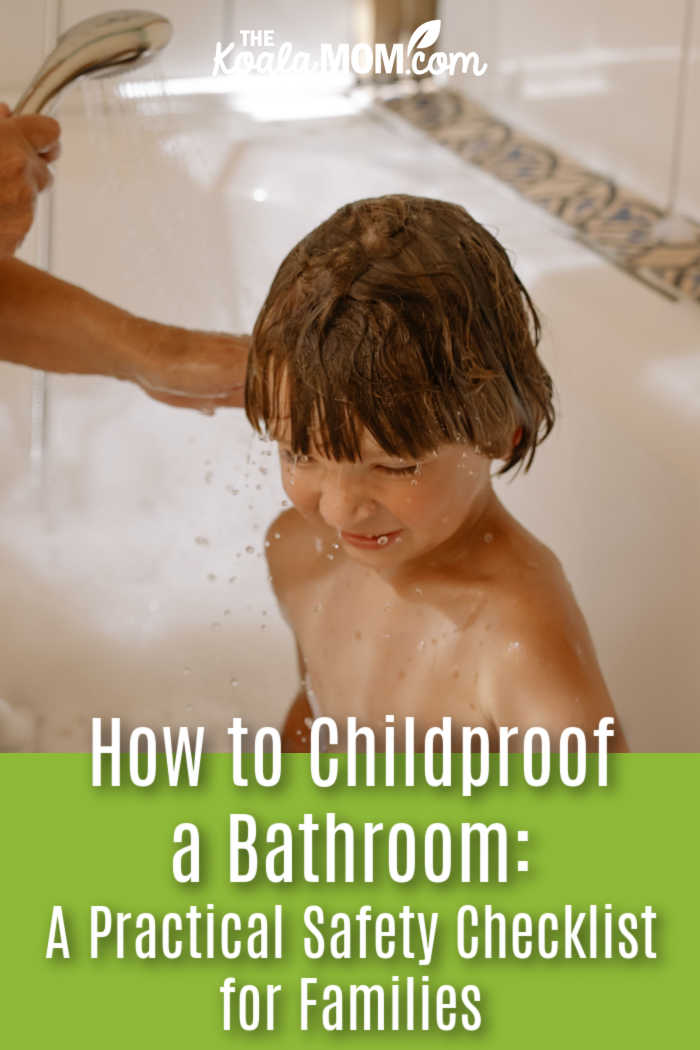
Why Bathroom Childproofing Matters
Few rooms pack as many risk categories into such a tight footprint. Hot water, slippery surfaces, hard fixtures, and toxic substances stored at arm’s reach all share the same space. Pediatric safety guidelines consistently identify drowning, burns, and poisoning as the most serious bathroom hazards for children under five — and all three can occur in ordinary, unsupervised moments.
Key Takeaway: Most bathroom accidents can be significantly reduced through a combination of supervision, targeted hardware changes, and consistent storage habits — not any single product or fix.
Make the Bathtub Safer
The bathtub deserves the most attention first. Set your water heater to 120°F (49°C) or below to prevent scalding, and always test the bath water with your wrist before a child gets in. A non-slip bath mat inside the tub goes a long way toward preventing falls on wet surfaces.
Keep the area around the tub clear of sharp-edged accessories, and pay attention to hard metal fixtures — spouts and handles — that a child can easily knock their head against during bath time. Padding or covering these contact points is a straightforward layer of protection and fits naturally into a broader safety strategy.
Prevent Slips and Falls
Wet floors are a leading cause of bathroom injuries for children and adults alike. Place a non-slip mat with rubber backing outside the tub and near the sink. Store bath toys in a container after each use to keep the floor clear, and make sure towels are within adult reach so children aren’t tempted to climb for them.
Managing wet surfaces is an ongoing habit, not a one-time installation. Wiping up puddles promptly and keeping the floor free of clutter makes the bathroom safer and, frankly, easier to maintain day to day.
Keep Medicines and Cleaning Products Secure
“Out of sight” and out of reach are not the same thing. All medications, vitamins, toiletries, and household cleaners should be stored in locked or elevated cabinets that children cannot access on their own. Child-resistant packaging offers some protection, but it’s no substitute for proper storage — given enough time and motivation, young children can work their way into those containers.
The American Academy of Pediatrics recommends treating every medicine as a potential hazard, regardless of dosage size or how harmless it might seem.
Address Toilet Safety and Hard Surfaces
For toddlers and infants, an open toilet is both a drowning risk and a hygiene concern. Keeping the lid closed at all times is a simple habit, and a toilet lock adds an extra barrier when needed. It’s also worth removing step stools from near the toilet — anything that might encourage unsupervised climbing.
Throughout the rest of the bathroom, hard countertops, sharp cabinet corners, and rigid fixtures are worth padding or rearranging where you can. These small adjustments soften the impact of the inevitable bumps that come with active, unpredictable little kids.
Supervision Remains Essential
Childproofing reduces risk — it doesn’t eliminate it. A toddler can reach a sink in seconds; an infant in a bath seat still requires a parent or caregiver within arm’s reach at all times. As children grow, their mobility and curiosity evolve quickly, which means supervision strategies need to keep pace with them.
Quick Bathroom Safety Checklist
- Set water heater to 120°F or below
- Use non-slip mats inside and outside the tub
- Lock or elevate all medicines and cleaning products
- Keep toilet lid closed; use a lock if needed
- Pad or cover hard fixtures and sharp corners
- Clear the floor of toys and clutter after each use
- Never leave young children unsupervised near water
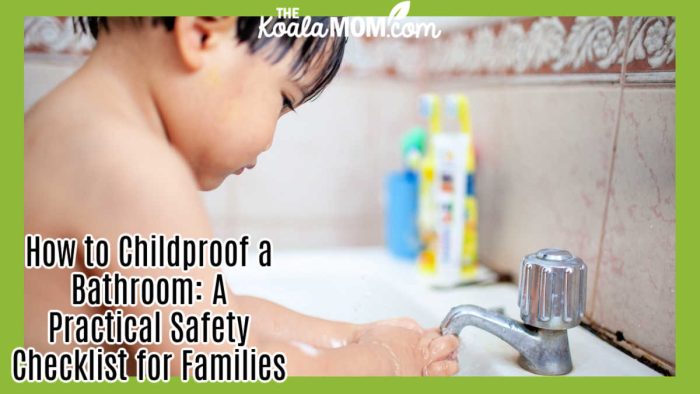
A Safer Bathroom Is an Ongoing Habit
Childproofing works best when it’s treated as a continuous practice rather than a one-time project. Children’s abilities change fast — what was safely out of reach last month may not be today. A handful of thoughtful physical adjustments, paired with consistent daily routines and attentive supervision, can meaningfully reduce the risks that bathrooms present. The goal isn’t a perfect setup; it’s a safer space that works for the whole family without turning everyday life upside down.
No Responses Yet