


Moving resets everything at once. Let’s say you’re moving to Phoenix, Arizona. New streets, new routines, new faces that already seem paired off. For neurodiverse kids this isn’t just “starting over,” it’s being dropped into noise without a script. They hang back and watch first, sometimes for too long. Parents often rush in—“go say hi,” “join them”—but that pressure lands wrong. It adds weight where there’s already too much. It’s better to accept the slow start; this isn’t a flaw, it’s how some kids process change. Give them time to scan the room, to learn the tone of things, to decide who feels safe.
That pause matters more than quick wins.
Parents get tempted to fix it fast (I’m definitely guilty of wanting my kids to make new friends right away). I’ve learned to jump into new communities after moving so I sign my kids up for five activities, push play dates immediately, fill every gap. This looks proactive, but it can overwhelm your neurodiverse child. Too many names, too many expectations, too many new things at once. The child or teen retreats more.
Instead of pushing more interactions and more activities, reduce the field. Try one place, one repeated exposure. Maybe simply visit to the library once a week or join a small group at your church. Connect with one other family for a board game night or to play catch at the local park. Familiarity grows quietly. Same park, same time, same few faces—patterns form, recognition builds, anxiety drops a notch. It’s not gone, it’s just lower. That’s enough to start.
Smoother Moves, Less Noise
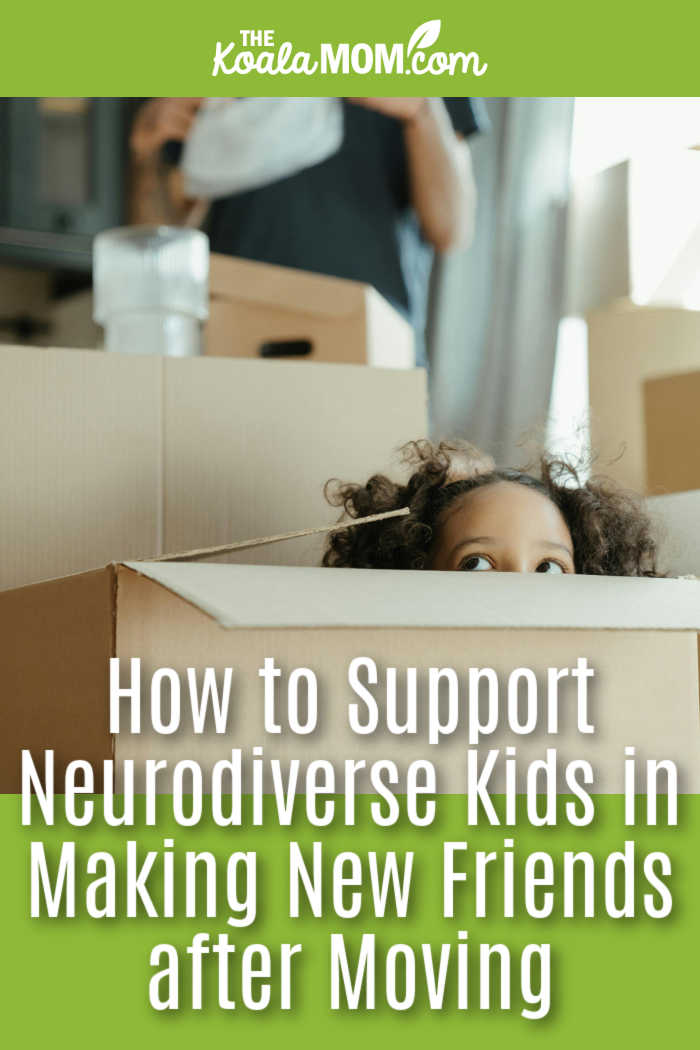
The move itself doesn’t have to feel chaotic. It often does (especially to neurodiverse kids who like routine and don’t know the plans)—but it doesn’t have to. When parents and moving professionals handle it right, most of the visible mess disappears before the children even registers it. Boxes come in, boxes go out, things land where they belong. There are no long days of clutter sitting in the middle of the room. No constant reshuffling. It looks… finished, almost too quickly. That matters more than people think.
Companies that do this well, like Phoenix long distance movers, don’t just move furniture; they compress the disruption. Timing is tighter, transitions cleaner. The move might come up in conversation not as a big event but as a background detail—“they handled it.” While you take the children on vacation for a few days, the movers can pack, move and unpack at the new home, so you arrive to a house that is ready to welcome your child. The child sees less chaos, so they carry less of it into new spaces. That shift is subtle, though still real.
Neurodiverse kids react to disorder and chaos. Too many open boxes, missing items, adults stressed and pacing—it raises the baseline tension. They like to know where things are and what is happening, but that’s hard during a move. In a new space, this internal chaos makes it harder to step outside, harder to meet anyone new. If the environment feels unsettled, they stay guarded. But when the setup is smooth—beds assembled, familiar objects placed early, routines restored fast—the internal noise drops.
And it frees up the parents. Less time managing logistics, more time being present for the child. That presence isn’t loud but rather steady. A parent who isn’t buried in unpacking can notice when the kid hesitates, can suggest a short walk, can sit nearby without rushing anything. Small support, but consistent. The parent can be available to foster new interactions with the children, instead of hoping they go out to play so the parent is free to unpack another box.
There’s also the signal it sends. When a move looks controlled, not frantic, kids read it as safe. The world didn’t fall apart; it just changed shape. That belief sticks. This makes the next step—school, neighbors, a first conversation—slightly less heavy.
It won’t solve everything. But it clears space. And sometimes that’s enough.
Structure Helps, But Keep It Loose
A neurotypical parent or a parent who has gotten used to an inconsistent schedule may not understand the importance that routine has for their neurodiverse child. Same bedtime, same morning flow, same mealtime interactions—these all stabilize the child’s internal state, which then makes social risk a bit easier. But don’t over-structure the social side. Leave space for chance. Kids need unplanned moments—waiting, wandering, noticing—where small interactions can happen without agenda. Planned play dates are useful, yet they can feel like tests. Spontaneous contact often feels lighter.
Schools matter here. Teachers can be allies if they’re informed without making a spectacle. A quiet note—“new student with [diagnosis], takes time to warm up”—is enough. The school’s learning coordinator can help brainstorm appropriate supports for the child’s needs. Seating choices can help, pairing a neurodiverse child with a calm, kind peer rather than the loudest kid in the room. This is not a fix, but it reduces friction. Group work should be manageable, not chaotic. If there are too many voices, the shy kid disappears.
If you homeschool, then work at keeping your child’s schooling routine the same in the new space. Connect with the local homeschool group, but find ways to interact with one or two local homeschoolers before jumping into a larger group homeschool activity.
Let Them Keep One Safe Thread
After a move, everything is new except what you carry with you. Encourage one continuity: an old hobby, a familiar book series, a weekly call with a previous friend. That thread anchors identity. Without it, the child may feel erased. With it, they have something to bring into new conversations. “I like this.” It’s simple, but it gives shape to who they are in a new place.
Technology gets blamed a lot, sometimes fairly. But used well, it can bridge. A message to an old friend before bed can steady nerves. Then the next day isn’t so sharp. It shouldn’t replace local connection but rather support it. Balance is messy. It won’t be perfect.
Adults Talk Too Much
Explanations don’t fix social fear. Long talks about “being confident” or “just trying harder” miss the point. Keep language short and concrete. “Stay a few minutes longer.” “Ask one question.” That’s it. Then stop. The child doesn’t need a lecture; they need manageable steps. And feedback should be specific. Not “good job being social,” but “you stayed even when it felt awkward.” That names the effort, not the outcome.
But also—don’t track every attempt. Kids feel monitored, graded. It turns connection into performance. Sometimes you let it pass without comment. Quiet success builds more naturally.
Watch the Signals, Not Just the Words
Neurodiverse kids often won’t say “I’m struggling.” They show it. Headaches before school, sudden fatigue, irritability at small things. Or the opposite—flatness, no complaints, but no engagement. These are cues. Not emergencies, but indicators that the pace might be off and your child is suffering from depression or autism burnout. Slow it down or adjust the setting. Maybe the club is too loud, the class too big. Fit matters.
And be careful with labels. Your child may choose to share their diagnosis or they may not; that’s up to them. Be aware of how they are perceived if others are not aware of their diagnosis, however; a child may be labeled as “shy” or “awkward” or “bullying” when they are simply unable to read social cues or struggle with new situations. It can be helpful to your child to play social games ahead of time to give them a chance to practice new situations, so they know what to do.
Friendship Doesn’t Start Where You Think
Adults imagine friendship as shared play, laughter, easy talk. For neurodiverse kids, friendship often starts with parallel activity. Sitting near each other, drawing separately, building side by side. Minimal talk. That counts. Respect it. Don’t force eye contact, don’t insist on constant conversation. Closeness can be quiet.
Over time, a detail slips in. A comment, a question, a shared joke that almost wasn’t said. That’s the hinge moment. Hard to spot unless you’re watching gently. If you rush it, you miss it.
Classes and clubs where kids can interact in a somewhat structured environment, yet also have space to be themselves, allow your neurodiverse child to shine. For example, many neurodiverse kids find that art, theatre, or dance classes allow them to be themselves, pursue their unique interests, and connect with other children who also share that interest.
Accept Uneven Progress
There will be a day that goes well—then three that don’t. It’s not regression, just variability. Social energy fluctuates. New environments amplify that. Expect inconsistency as this prevents overreaction. If every setback triggers a new plan, the child feels unstable ground. Keep the course steady. Adjust slowly.
Sometimes they’ll choose solitude. Let them. Not every free minute needs filling. Solitude can restore capacity. The goal isn’t constant socializing; it’s the ability to connect when they want to. That’s different.
Friendship after a move doesn’t arrive on schedule. It grows in fragments, odd moments stitched together. Parents can’t manufacture it, only create conditions where it’s possible. Lower pressure, steady exposure, small steps, patience that doesn’t feel like waiting but like allowing.
And sometimes the best support is restraint. Doing less, not more. Letting the child navigate, stumble a bit, find their own entries. You stay nearby, not in front. It’s slower that way. Yet more real.
No Responses Yet