


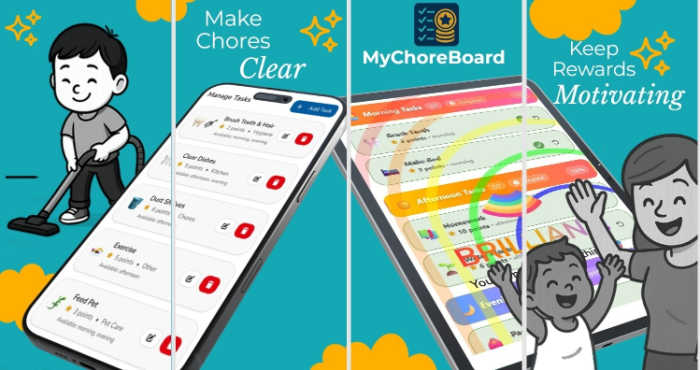
Chores is a dreaded word in most households. Many of us would like our kids to pitch in more often with the chores, especially chores that involve their stuff. However, it’s often easier to do the chores ourselves than to withstands the kids’ resistance to helping with those same chores. Jacob Volk is a single dad who knows this struggle and came up with a solution: MyChoreBoard. This simple, easy-to-use app lets kids and parents discuss what chores need to get done and create to-do lists that meet the needs of the whole family. No more nagging, no more frustration. Here, Jacob shares more about why he developed this app and how it works in his family.

TKM: Tell us a bit about yourself.
Jacob Volk: I’m a dad of two girls and the founder of MyChoreBoard. Professionally, I’ve spent most of my career working in technology and media, but at home I’m just another parent trying to keep the household running smoothly while helping raise respectful, happy, and responsible kids. I also prioritize staying active, whether that means hiking, traveling or getting to the gym.
TKM: Why did you design a chore app?
Jacob: Honestly, a little out of desperation. Every parent can agree that constantly reminding kids to do the same things every day gets exhausting for everyone, especially as kids get older, become involved in more activities, and schedules get more complicated.
I split 50/50 custody of my daughters, which means when they are with me, we are juggling quite a bit between school, homework, and activities like competitive swim, chorus, Girl Scouts. Shared custody also introduces a unique set of challenges because kids living in more than one home often have different responsibilities and expectations each time they change houses.
This year added another layer because my oldest just started middle school, so now we have two different school schedules and routines to manage. Ultimately, last fall during the back-to-school period, things just weren’t getting done and everything felt hectic and messy.
In addition, the girls were plenty old to take on a greater share of the household chores, but frequently it was easier for me to just do the chores than to find them, ask them to do something, and deal with a little pushback. I knew there had to be a better way to get the girls to do things like making beds, feeding the pets, packing bags for school, and cleaning up after themselves while also helping share the other household work.
When the girls were younger, we tried analog chore charts, whiteboards, and Velcro to-do lists, but those never lasted more than a week or two. I started looking for a simple chore system that would help the girls stay on track without having to micromanage everything. I tried a lot of existing apps, but none of them worked quite the way I hoped. Some of them were incredibly gamified, more so than I personally think is necessary. I wasn’t interested in the girls spending time outfitting a virtual pet or using an app whose goal is to encourage kids to spend extra time in the app. I also have subscription fatigue and didn’t want to add another monthly or annual bill.
Eventually I decided to build something for our own family. When it worked well for us, I realized there were probably a lot of other parents facing the same daily challenges, and that’s what motivated me to keep developing it and share it publicly with other families.
TKM: What was the biggest challenge of this project?
Jacob: The biggest challenge was not actually the technology. It was designing something that works in real family life. Every family approaches chores a little differently. Some parents prefer reward systems or allowance, some focus more on routines and expectations, and many families use a mix of both.
Equally important was designing a system that keeps kids engaged and motivated enough to handle their responsibilities enthusiastically, or at least with less pushback. Today there are countless apps competing for kids’ attention, and I didn’t want to create another one that encourages them to stay on their devices longer. The goal was a simple tool that helps kids check what needs to be done and get back to real life.
I spent a lot of time thinking and talking with other parents about how to make the system flexible enough that families can adapt it to their own parenting style and their kids’ personalities.
TKM: What was the most fun about this project?
Jacob Volk: Watching my own kids start using it was definitely the most fun. After a few iterations of the application, there was a moment when it clicked for them. They could look at the board and know exactly what they needed to do without me reminding them over and over again.
It also reduced a surprising amount of mental load. I wasn’t constantly tracking what still needed to get done, reminding the girls, or stepping in to do everything myself. That meant fewer arguments, a little more free time, and a household that ran much more smoothly. The difference was honestly pretty dramatic.
Another really rewarding part has been hearing from other parents who share similar stories. I regularly receive messages from families telling me the app helped reduce arguments about chores, made their mornings run more smoothly, or that the rewards system has their kids asking for extra responsibilities. Knowing that something we built for our own house is helping other families has been incredibly motivating.
It’s also been really fun seeing families from all over the world start using it. We now have users in more than 80 countries, and kids completed more than 100,000 chores in just a few months. It’s been incredible to watch something that started as a small project in our house end up helping families far beyond it.
TKM: You have a lot of resources for ADHD kids / parents. Does this come from personal experience?
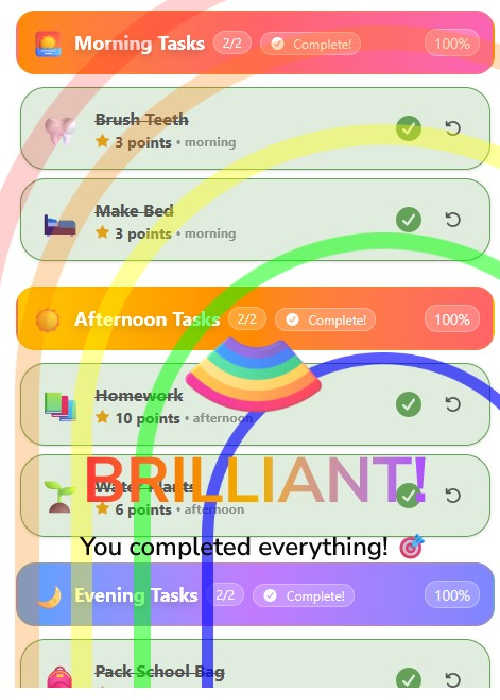
Jacob: Yes, some of it does. One of my daughters has ADHD, which adds another layer of challenge when it comes to routines and organization. Clear expectations, a structured reward system, and an easy-to-understand visual layout help us create and maintain routines that make a big difference at home.
I also started hearing from many parents who told me the visual layout of the app worked really well for their ADHD kids. That feedback encouraged me to write more resources about routines, motivation, and chore systems that work for different types of learners.
TKM: What’s your least and most favourite chore?
Jacob: My least favorite chore is dusting. It somehow feels endless.
My favorite chore is cooking, especially when I have one or two sous chefs helping me in the kitchen.
TKM: When the chores are done, what do you like to do?
Jacob: When the girls are with me, there’s usually a lot going on between school and activities, but we try to carve out time for things we enjoy together. We love traveling, hiking, and getting outdoors whenever we can. We also enjoy rock climbing and sailing together, which are fun ways for us to spend time as a family.

TKM: Is there anything else you’d like to add?
Jacob Volk: One thing I always tell parents is that no chore system is perfect. The goal is not to create a rigid structure. It is simply to help kids gradually learn responsibility and independence. If something like MyChoreBoard can remove a few daily reminders or arguments and help families feel a little more organized, then it is doing its job.
Families can learn more and get the app at MyChoreBoard.com. It’s designed to be fast for parents, easy for kids, and calm/low-distraction. It’s also completely free, and I intend to keep it that way.
No Responses Yet