


As soon as the weather starts warming up, my kids start asking, “When are we going to the beach?” We’ve already been chatting with friends about planning a few beach days this summer, and I can hardly wait. Whether you’re spending an afternoon at your local lake or heading to the ocean for a family vacation, a day by the water is one of the best parts of summer.
As I pack our beach bags, though, I’m also trying to make choices that are a little kinder to the environment. Beaches and lakes are beautiful places to explore, and it’s worth taking a few simple steps to help keep them that way for future families to enjoy. My kids know our two cardinal rules of beach days: we pack out what we pack in, and what we find on the beach stays on the beach. (The only exception, of course, is any litter we can help clean up.)
The good news is that you don’t have to overhaul your entire beach routine. A few reusable, eco-friendly essentials can reduce waste, protect local ecosystems, and often make your beach day easier too. Here are some of my favourite items to pack for a fun—and more sustainable—day at the beach.

This post contains affiliate links; as an Amazon associate, I earn from qualifying purchases.
Bring Reusable Water Bottles
One of the easiest ways to make your beach day more eco-friendly is to pack reusable water bottles instead of buying bottled drinks. They create less waste, save money over time, and keep everyone hydrated on hot summer days.
Our family always brings insulated water bottles because they keep drinks cold for hours—even when they’re sitting in a hot beach bag. If your kids like flavoured water or juice, consider bringing a small container of powdered drink mix or juice concentrate to add to their bottles. It takes up less space than individual juice boxes or pop cans and creates much less garbage to carry home.
Many beaches, parks, and campgrounds now have refill stations, making it easy to top up your bottle throughout the day. Even if there isn’t one nearby, it’s usually much easier to pack a cooler full of reusable bottles than a bag full of disposable drinks. If you’re driving to the beach, freeze the bottles the night before (or freeze them half full and top them up before you leave). They’ll stay colder longer and can help keep the rest of your lunch cool in the cooler.
Like many small eco-friendly choices, using reusable water bottles may not seem like a big deal on its own. But when it becomes part of your family’s routine, it can make a meaningful difference over time.
Choose an Eco-Friendly Sunscreen
Sunscreen is one thing I never skip on a beach day. After a few painful sunburns over the years, I’d much rather take a few extra minutes to apply sunscreen than spend the next few days looking like a lobster and trying not to scratch myself.
If you’re heading to the ocean, consider choosing a mineral sunscreen that’s free from ingredients like oxybenzone and octinoxate, which have been linked to harm in coral reef ecosystems. Many beaches and destinations now recommend or even require these more environmentally friendly options. Even if you’re spending the day at your local lake instead of the ocean, choosing products that are a little gentler on the environment is one small way to help protect the natural places we all enjoy.
You’ll also find many mineral sunscreens packaged in recyclable containers or made with fewer unnecessary plastics, making them a good choice for both your family and the environment.
Of course, sunscreen is just one part of staying safe in the sun. Wearing hats, UV-protective clothing, and taking breaks in the shade can also help protect your skin while reducing the amount of sunscreen you need to reapply throughout the day.
Pack Sustainable Towels and Blankets
A comfortable beach towel or blanket is something you’ll probably use all day, so it’s worth choosing one that’s made to last. Instead of buying inexpensive towels every summer, look for options made from organic cotton, recycled materials, or other sustainably sourced fabrics. A high-quality towel that lasts for years is often the more eco-friendly choice.
One practical option is travel beach towels. They’re lightweight, dry quickly, and take up much less space in your beach bag than traditional cotton towels. That makes them especially handy if you’re walking to the beach, camping, or trying to fit everything into one bag.
For family reunions, girls’ weekends, or beach vacations with friends, custom beach towels can also be a fun idea. Personalized towels are easy to identify (which can help avoid mix-ups with kids!), and they make a memorable keepsake long after the trip is over. Choosing towels you’ll use again and again is much more sustainable than buying inexpensive items that quickly wear out.
Whatever style you choose, taking good care of your beach towels—washing them according to the care instructions and letting them dry thoroughly after each trip—will help them last for many summers to come.
Pack Snacks in Reusable Containers
If you’re spending a full day at the beach, snacks are almost as important as sunscreen! Instead of packing everything in disposable plastic bags or wrapping, consider using reusable silicone bags or bento box containers. They’re sturdier, less likely to tear in your beach bag, and can be washed and used again for your next outing.
I like packing a mix of easy-to-eat snacks, such as fresh fruit and veggetables, hummus, crackers or naans, Baby Bel cheeses, pepperoni sticks, homemade muffins, or granola bars. If we’re planning to be at the beach all day, I’ll usually pack sandwiches. Having plenty of food on hand also means we’re less tempted to buy individually packaged snacks or greasy, expensive concession food once we get to the beach.
Choosing reusable containers is one of those small changes that quickly becomes part of your family’s routine—and one less piece of plastic to throw away at the end of the day.
Bring an Insect Repellent That Works for Your Family
Nothing sends everyone back to the car faster than a swarm of mosquitoes! If you’re spending the evening at the beach or visiting a lake where bugs are common, don’t forget to pack insect repellent. (Living on the west coast where the bugs are few, my kids have gotten rather spoiled and really don’t like mosquitoes and midges, so I always pack along bug spray just in case.)
Some families prefer natural repellents made with ingredients like citronella, eucalyptus, or lemongrass, while others choose conventional insect repellents for longer-lasting protection. The best option is the one that works for your family while fitting your comfort level and the environment you’ll be visiting.
You can also reduce the need for bug spray by wearing lightweight long sleeves in the evening, avoiding standing water when possible, and setting up your picnic in a breezier spot where mosquitoes tend to be less active.
If you’re looking for ways to reduce waste, consider choosing repellents in recyclable packaging or buying larger containers that can be used throughout the summer instead of several single-use travel sizes.
Choose Beach Toys That Last
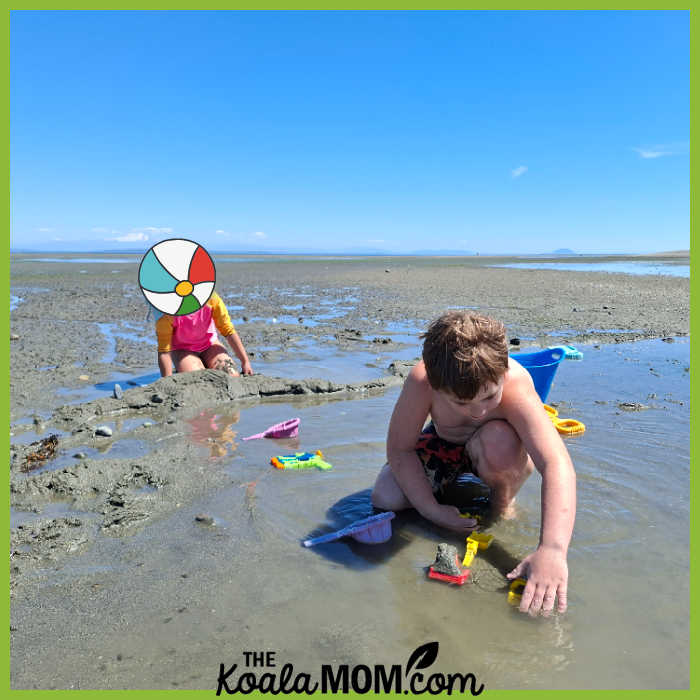
If you’re bringing toys to the beach, look for ones that will last through years of family adventures instead of just one summer. Sturdy buckets, shovels, and sand molds made from recycled or sustainably sourced materials are becoming easier to find, and they’re often much more durable than inexpensive plastic toys.
You don’t necessarily need to replace everything you already own, though. One of the most sustainable choices is simply using what you have until it wears out. We’ve had the same collection of buckets and sand toys for years, and they’ve been to beaches, lakes, parks, and even the backyard sandbox more times than I can count. If you are buying new toys, look for brands that use recycled plastics, plant-based materials, or sustainably sourced wood whenever possible.
Beach toys are also a great opportunity to teach kids to care for their belongings. Before heading home, have everyone gather their toys, shake off the sand, and make sure nothing gets left behind. It’s a simple habit that keeps plastic out of the environment and means your favourite shovel will still be there for the next beach day. I also try to write our last name or initials on all our beach toys so they can’t get mixed up with other toys at the beach.
Bring a Bag for Garbage
One of the simplest things you can pack for a beach day is an extra bag for garbage. That doesn’t have to mean spending your whole afternoon picking up litter. Sometimes it’s as simple as carrying out your own garbage, recycling drink containers if facilities are available, or picking up the snack wrapper that blew across the sand while you were packing up.
If your kids are old enough, turn it into a game by seeing who can spot a few pieces of litter on the walk back to the parking lot. It’s an easy way to teach them that caring for nature isn’t just something we talk about—it’s something we do.

Enjoy the Beach Responsibly
Enjoying nature and caring for it go hand in hand. Whether you’re packing reusable water bottles, choosing products that create less waste, or simply making sure you leave the beach as beautiful as you found it, small choices really do add up. My kids know that before we head home, we do one last sweep of our spot on the beach to make sure we haven’t left behind toys, towels, or snack wrappers.
The goal isn’t to have a perfectly “eco-friendly” beach day. It’s simply to enjoy these beautiful places while helping make sure they’re just as enjoyable for the next family who spreads out a blanket on the sand.
Check out our five favourite beach around Victoria, BC!
No Responses Yet