


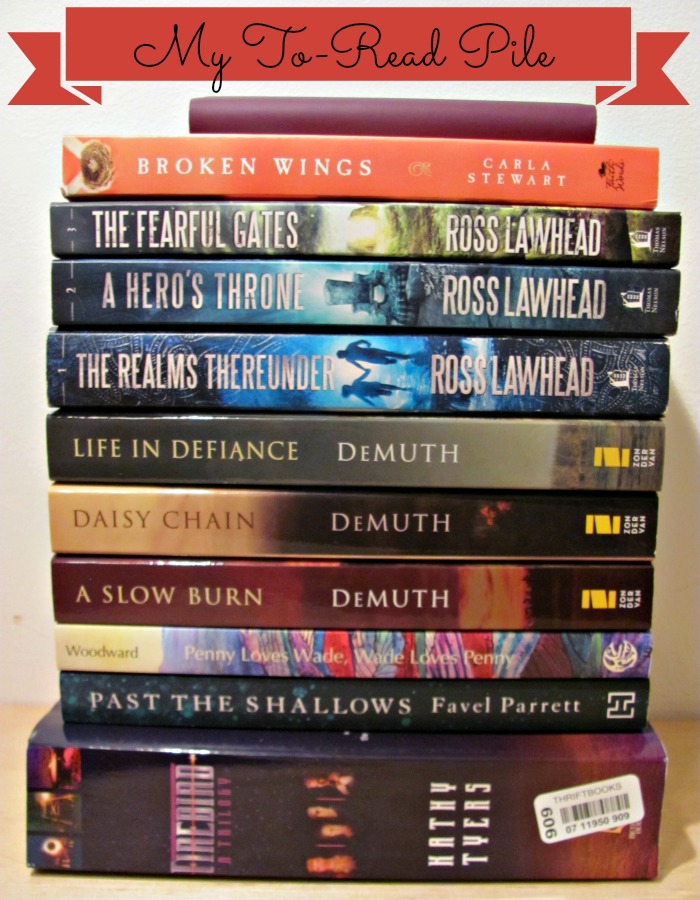
I often have multiple books on the go at once, in multiple formats. While I usually only read one novel at a time, I’ll frequently have several nonfiction books scattered around the house. Which one I pick up depends on my mood, what I’m working on, and how much attention I have available. Sometimes I want to escape into a story. Other times, I want to learn something, solve a problem, understand an issue, or hear someone else’s perspective.
And that got me thinking about the difference between fiction and nonfiction—and why, even though I read plenty of both, fiction often stays with me in a different way.
Why do we remember stories?
Think about the last book that really stayed with you.
You may not remember every detail of the plot. You might not even remember the author’s name. But you probably remember how the story made you feel. You remember a particular character you loved or hated. You remember a difficult choice the character had to make. You remember being surprised, angry, heartbroken, relieved, or hopeful.
That’s one of the things I love about fiction.
A nonfiction book might tell me that domestic violence is complicated, that children in poverty face enormous challenges, or that addiction affects entire families. I can learn those facts and understand them intellectually.
But give me a well-written novel about a woman trying to rebuild her life after an abusive marriage, or a child navigating the foster-care system, or a family struggling with addiction, and suddenly those ideas have faces and names.
I don’t just know something. I can begin to imagine what it might be like. That’s a powerful difference.
Fiction makes us care
I once came across Eileen Astels’ thoughts about fiction and nonfiction, and her words stuck with me. She wrote about enjoying the opportunity to reflect on a good story and consider what it was about the story and characters that drew her in and continued to hold her attention after the story ended.
I think that’s one of the great gifts of fiction. A story gives us someone to care about.
When an author creates a character who feels real, we become invested in what happens to that person. We worry about them. We hope they’ll make the right decision. We celebrate their victories and sometimes grieve their losses. We become angry when someone hurts them. (My partner actually can’t read The Hunger Games because it makes him so angry that children are getting hurt.)
And in the process, we can encounter ideas that might otherwise feel distant or uncomfortable.
That’s why some of my favourite novels have dealt with subjects I wouldn’t necessarily choose to read about in a nonfiction book: addiction, prostitution, foster care, murder, adultery, poverty, trauma, and domestic violence.
Do I necessarily want to sit down and read a factual account of those subjects? Not always. But put those issues into a story. Give me characters I care about. Let me see the consequences of their choices and experience the world through their eyes. Now I’m interested. And, more importantly, I may remember.
But nonfiction can move us, too
Of course, the distinction isn’t as simple as fiction is emotional and nonfiction is intellectual. Some nonfiction has affected me just as deeply as fiction.
Memoirs, biographies, personal essays, narrative journalism, and true stories can introduce us to people and experiences we might never otherwise encounter. Sometimes knowing that something actually happened makes it even more powerful.
A well-written nonfiction book can make us laugh, cry, become angry, change our minds, or reconsider something we thought we understood. And nonfiction has an advantage that fiction doesn’t: it can give us information we can actually use.
If I want to understand how something works, learn about history, improve a skill, research a parenting question, or hear from someone with expertise in a particular field, I’m going to reach for nonfiction.
Fiction can help me understand what something feels like. Nonfiction can help me understand what happened, why it happened, and what we can do about it. We need both.
Stories help us see through someone else’s eyes
Perhaps the greatest strength of fiction is its ability to build empathy. Reading a novel doesn’t automatically make us more compassionate people, of course. But a good story can invite us to step outside our own experiences for a while and to better understand someone else. This is one reason why I often find that a book is better than its movie–because the book gets us inside the character’s head, understanding their thoughts and feelings, instead of just watching them do something.
We can become an immigrant arriving in a strange country. A child growing up in poverty. A teenager struggling with grief. A woman trying to escape an abusive relationship. A soldier returning from war. A parent making an impossible decision.
We don’t have to agree with every character. We don’t even have to like them. But for a few hundred pages, we can see the world from their perspective. And sometimes that changes us.
That’s part of why stories have endured for thousands of years. Humans have always told stories—not simply because stories are entertaining, but because stories help us make sense of ourselves and one another.
Stories can teach us things we weren’t looking to learn
One of my favourite things about reading fiction is discovering that I’m learning something without setting out to learn it.
I might pick up a novel because I’m interested in the characters or because I need a break from real life. Somewhere along the way, I may learn about another culture, another period of history, a social problem, a profession, a place I’ve never visited, or an experience I’ve never had.
Uwem Akpan’s Say You’re One of Them is a good example. Akpan could have written nonfiction about the hardships faced by children in various parts of Africa. Instead, he wrote a collection of fictional stories about children experiencing those realities.
The result is very different from reading a collection of statistics or reports. We meet individual children. We become attached to them. We hope things will turn out differently for them. And sometimes they don’t. Those stories are difficult to forget.
That’s the power of fiction: it can turn an abstract issue into a human being.
So which is better: fiction or nonfiction?
I don’t think there is a winner. I need both.
Sometimes I want facts. I want to learn something new, understand a complicated subject, or find practical advice. That’s when nonfiction is exactly what I need.
Other times, I want to disappear into another world for a few hours. I want characters who make me laugh or cry. I want to think about what it means to be human without necessarily realizing I’m learning something along the way.
That’s when I reach for fiction.
And perhaps that’s the real difference.
Nonfiction often asks us to think about an idea. Fiction invites us to experience it.
The best books, of either kind, do more than give us information. They make us think, feel, question, remember, and sometimes see the world a little differently when we close the book.
That’s why I keep reading both.
Do you prefer fiction or nonfiction? And what’s a book—fiction or nonfiction—that has stayed with you long after you finished reading it?
No Responses Yet