


Middle school and high school can bring some pretty big changes academically. A child who used to breeze through homework may suddenly be struggling to keep up, putting assignments off, or coming home frustrated by things that never seemed difficult before.
That doesn’t necessarily mean something is seriously wrong. As kids get older, school gets more complicated. They have new teachers, more demanding assignments, different expectations, and often a lot more responsibility for keeping track of everything themselves.
The important thing is to notice when your child is struggling and help before a few difficult assignments turn into months of frustration. Sometimes that means sitting down together and figuring out what’s going wrong. Sometimes it means talking to the teacher. And sometimes, getting some extra academic help can make a huge difference.

Identifying Early Signs of Academic Stress
Sometimes the signs are pretty subtle.
Homework that used to take half an hour suddenly takes two hours. Your child starts putting assignments off until the last minute. They seem unusually frustrated when they sit down to work. Their grades start slipping, or they insist they understand something even though they’re clearly having trouble with it.
These changes are worth paying attention to. They don’t automatically mean your child needs a tutor, but they are a good reason to check in and find out what’s going on.
Getting help early can also prevent a child from deciding that they’re simply “bad at math” (like one of my daughters) or “not good at school”. For students who are struggling with math, working with math tutors for 7th grade can give them a chance to slow down, ask questions, and work through concepts they may not have fully understood in class.
And sometimes the problem isn’t a lack of effort at all. A child may be avoiding homework because they genuinely don’t know how to get started.
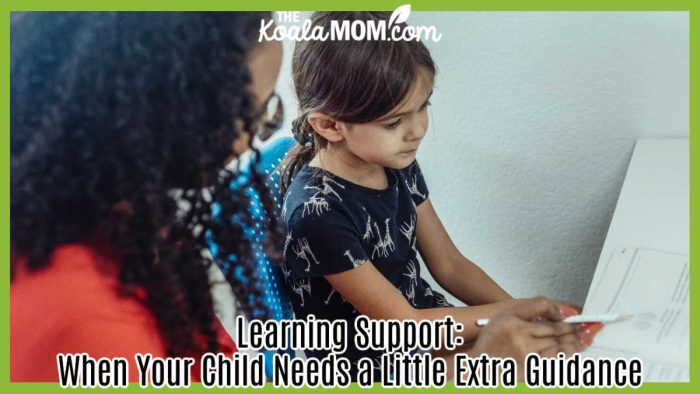
I’ve seen this with my own kids. One of my daughters actually likes having me sit beside her while she does her math. I’ll read the lesson and problems aloud to her, and we’ll talk through what the question is asking before she starts writing down answers. She’s doing exactly the same math she would have done on her own, but having me there somehow makes it feel much more manageable to her.
It also means I can tell pretty quickly when she’s stuck. If she doesn’t understand a particular concept, we can stop, go back over it, and then keep going.
Of course, not every child wants that kind of help. Some kids would rather work independently, while others need someone nearby to keep them focused. The trick is figuring out what actually helps your child. One of my other girls preferred to do her math lessons with the cat.

Understanding the Middle School Academic Transition
The jump into middle school can be a big one. Suddenly, students are expected to keep track of multiple teachers, more assignments, and increasingly complicated material. They’re also being asked to take more responsibility for their own learning.
Math is a good example. By seventh grade, students are moving beyond basic arithmetic and getting into foundational algebra and other concepts that they’ll continue building on in later grades.
That’s one reason gaps can become such a problem. Math tends to build on itself. If a student doesn’t understand one important concept, the next unit may be harder to understand too. Before long, they can feel like everyone else knows what’s going on except them.
Teachers are doing their best to keep an entire class moving, but they can’t always stop and reteach a concept to one student. A child who needs more time, more examples, or a different explanation may simply need something the classroom can’t provide. That’s where extra support can help. Having time outside the classroom to ask questions and work through problems at a comfortable pace can make difficult material feel much less overwhelming.
The Impact of Targeted Support on Student Success
One of the biggest advantages of one-on-one tutoring is pretty simple: your child gets to ask questions.
Some kids are perfectly comfortable raising their hands in class. Others would rather sit quietly and hope nobody notices that they’re confused (like a couple of my kids). Working one-on-one gives them a chance to say, “I don’t understand this,” without worrying about what their classmates might think. It also gives them time to work through problems without feeling rushed.
Over time, that kind of support can do more than improve a grade. Students can develop better study habits, learn how to break a difficult problem into smaller pieces, and become more comfortable asking for help when they need it. Those are skills they’ll need long after they’ve finished middle school math.
Building Confidence Through Customized Learning
There’s also something to be said for having someone explain a concept in a way that finally makes sense.
Every child learns a little differently. Some need to see an example. Some need to talk through a problem. Some need to practice the same type of problem several times before it clicks. And some need to step away for a minute and come back to it. This is probably the biggest thing I’ve learned in a decade of teaching five different kids. Tailoring the curriculum and teaching to the kids can make all the difference in whether school feels easy or hard to them, whether they succeed or struggle.
One-on-one support makes it easier to adjust to those differences rather than expecting every student to learn at exactly the same pace. Personalized support can help with things such as:
- moving through lessons at a pace that works for the student
- netting immediate feedback when something goes wrong
- practicing difficult concepts before a test
- building confidence through repetition and review
- focusing on the specific skills the student is struggling with
Perhaps most importantly, struggling with something doesn’t have to become part of a child’s identity. There’s a big difference between “I don’t understand this yet” and “I’m just bad at math.”
Combining Home Support with Professional Tutoring
Parents don’t have to become their children’s teachers all over again when school gets difficult. While I’ve learned alongside my kids over the years of our homeschool journey, I’ve also had to admit when I don’t know enough algebra to help them with their homework.
There are plenty of ways to support your child at home without knowing how to solve every problem in their textbook. You can provide a reasonably quiet place to work, help them establish a routine, ask how things are going, and notice when they seem frustrated or overwhelmed. You can review the textbook with them (if their teacher provides one), watch YouTube videos about the topic, or ask them to “teach” you how to do it.
You can also celebrate effort rather than only celebrating good grades. “You stuck with that even though it was frustrating” can be just as meaningful as “You got an A.”
If your child is getting professional tutoring, keeping the lines of communication open with the tutor and teacher can make that support even more useful. Everyone has a better idea of what the student is working on and where they still need help.
Preparing Students for High School Demands
The skills students develop in middle school don’t disappear when they move on to high school. In fact, they’ll rely on those foundations more and more as coursework becomes complicated. My daughter who hated math in grade 7 hit another wall with math in grade 11. What had been a huge struggle between us in grade 7 became easier in grade 11 because this time, she knew she needed to ask for help—and she did.
Making sure a student understands seventh-grade math, for example, can make it much easier to tackle the next level of math later on. It’s much easier to learn something new when you’re not also trying to fill in gaps from two years ago.
High school also puts more responsibility on students themselves. They’re expected to organize their work, manage their time, complete assignments independently, and develop their own problem-solving skills.
Helping kids develop those skills before they get to high school can make the transition a lot less intimidating.
Measuring the Broader Benefits of Educational Support
Of course, tutoring isn’t just about raising a math grade.
When a child learns how to work through a difficult problem instead of immediately giving up, that skill can carry over into other parts of life. The same is true of learning how to manage time, ask for help, and break a large task into smaller pieces.
Those skills can help students:
- think through problems more carefully
- manage their time more effectively
- become more independent with schoolwork
- approach difficult tasks without immediately giving up
- feel more confident when they don’t know the answer right away
A report card can show whether a student’s grade went up, but it doesn’t always capture those less obvious changes.
How Families Navigate Changing Learning Needs
What works for a child in elementary school may not work quite as well a few years later.
As kids get older, their schoolwork changes, but so do their needs. A child who once needed someone to sit beside them for every assignment might eventually want more independence. Another child might suddenly need more support because a particular subject has become much harder.
There’s nothing wrong with adjusting the approach.
Asking for help isn’t a sign that a student is failing. It’s simply one way of making sure they have the tools they need to keep learning. And when children get help before they’re completely overwhelmed, they’re more likely to stay engaged and keep learning fun.
How to Select the Right Academic Support
There’s no single tutoring approach that works for every child.
Some students benefit from regular one-on-one sessions. Others may only need help with a particular unit or before an important test. Some need someone who will patiently explain the same concept three different ways. Others need help staying focused and organized as much as they need help with the actual subject matter.
Whatever approach you choose, consistency matters. Having a regular time to work can make tutoring feel like part of the normal weekly routine rather than something that only happens when things have gone badly.
It also helps to have a clear idea of what you’re hoping to accomplish. Is your child trying to catch up? Prepare for a particular class? Improve their confidence? Get ready for high school?
Checking in periodically can help you figure out whether the current approach is working or whether something needs to change.
Middle school doesn’t have to be a constant battle over homework. Paying attention to the early signs that a child is struggling and finding the right kind of support can keep a difficult patch from becoming a much bigger problem.
And sometimes, the best support is surprisingly simple. A little extra time, someone willing to explain things differently, or a parent sitting beside a child at the kitchen table can be enough to help a student get unstuck.
When kids know that struggling doesn’t mean they’ve failed—and that they’re allowed to ask for help—they’re much more likely to keep trying. That’s a lesson that will serve them well long after they’ve finished school.
No Responses Yet