


Dust mites, pollen, pet dander, and mold are all common indoor allergens that can trigger allergy and asthma symptoms in people who are sensitive to them. And when our homes are tightly sealed, poor ventilation can make things worse by allowing some indoor pollutants to build up instead of being carried out with fresh air.
I know this from experience. We’ve worked through all of these steps several times over the last few years because allergies and asthma are very much part of our household. My partner has both asthma and pet allergies. One of my daughters is allergic to grass and pollen, and another recently developed allergies to cats and horses. While they take allergy medication when necessary, we also do our best to reduce allergens around the house so they don’t have to rely on medication all the time.
If you’re wondering how to reduce allergens in your home, here’s the good news: you don’t have to get rid of every last allergen. (Honestly, that’s pretty much impossible.) The goal is simply to reduce your family’s everyday exposure as much as you reasonably can. A few consistent habits—like cleaning the right way, keeping moisture under control, and using proper air filtration—can make a real difference without turning your home into a full-time cleaning project. Here’s where to start.
Know the Most Common Allergens Hiding in Your Home
Before implementing a control strategy, you need to know what you are targeting and where it accumulates. Four common indoor allergen sources include:
- Dust and dust mites: These microscopic organisms thrive in warm, moisture-retaining materials like bedding, mattresses, carpets, and upholstered furniture.
- Pollen: Tracked indoors from the outside, pollen frequently accumulates heavily in entryways and on outerwear.
- Pet dander: Contrary to popular belief, hypoallergenic pets are a myth. Allergens originate from proteins in animal saliva, urine, and dead skin flakes that stick to carpets, furniture, and pet areas.
- Mold spores: Fungi grow rapidly in damp environments, particularly in bathrooms, basements, and around window condensation.
Stop Outdoor Allergens at the Door
Prevention is one of the easiest ways to reduce the amount of cleaning required later. Shoes can carry soil, pollen, and other outdoor particles indoors, where they may contribute to settled dust.
To stop outdoor allergens at the threshold:
- Implement a shoeless policy: Remove shoes at the entrance to help limit the amount of outdoor dirt and pollen tracked through the home.
- Contain outdoor clothing: Keep frequently worn jackets or outdoor clothing near the entryway. During high-pollen periods, change your clothes after spending significant time outdoors.
- Keep windows closed when pollen counts are high: Opening the windows can let pollen and other outdoor allergens into your home, even with window screens. When pollen levels are particularly high, keep windows closed and rely on your home’s ventilation system or air purifier to keep the air fresh and filtered.
- Wipe down pets: Use a damp towel to wipe your pets’ paws and coats after outdoor activity, when appropriate, to prevent them from tracking in weed and grass pollen.
Clean without Sending Dust Back into the Air
Allergy symptoms often paradoxically worsen immediately after cleaning. Traditional dry dusting, sweeping, and vacuuming can stir up dust and allergen-containing particles, temporarily increasing airborne exposure before they settle again.
Instead of standard dusting, busy families should adopt realistic cleaning techniques to trap allergens rather than redistribute them:
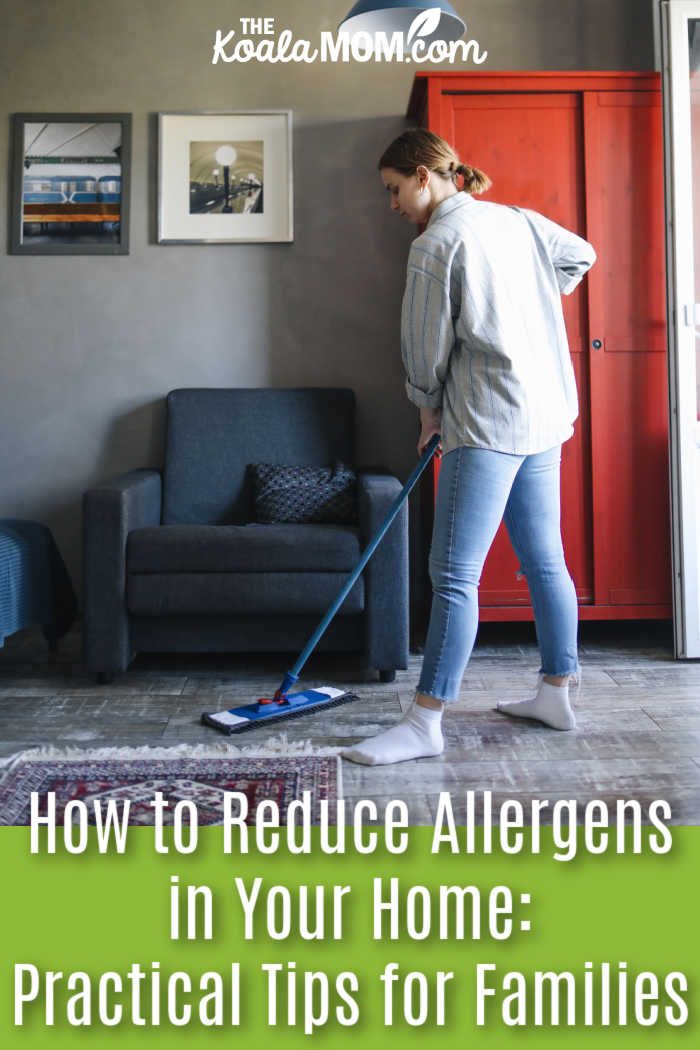
- Damp dust and mop: Always use a damp microfiber cloth for hard surfaces instead of dry dusting, and use a damp mop, such as the Norwex mop system, for hard floors. Avoid feather dusters entirely.
- Vacuum strategically: Vacuum carpets and upholstered furniture regularly, using a machine equipped with appropriate High-Efficiency Particulate Air (HEPA) filtration to prevent exhausting allergens back into the room.
- Target hidden dust: Focus on cleaning frequently touched or easily overlooked areas where dust embeds itself.
- Reduce clutter: Avoid unnecessary clutter on flat surfaces. Fewer objects mean fewer places for dust to collect, making maintenance faster and more sustainable for a busy family schedule.
Use Air Filtration to Reduce Airborne Allergens
While damp wiping and vacuuming can remove settled allergens from surfaces, air filtration can help address the particles that remain airborne. HEPA filters act as the gold standard for capturing microscopic biological triggers. Because they use a three-dimensional structure of ultra-fine fibers, HEPA filters physically capture at least 99.97 percent of small airborne particles as tiny as 0.3 microns. This can help reduce airborne particles such as pollen, dust mite allergens, and pet dander.
When my partner moved in two years ago, we purchased an air purifier to help manage his asthma and allergies while living in a home with a cat. I’ll admit, I was a little skeptical about how much an air purifier could actually help. I’m not skeptical anymore. We have to vacuum the outside of the purifier at least once a month because it collects so much cat hair. And when we clean or change the filter inside, it’s even more obvious how much it’s catching. I now highly recommend using an air purifier in your home, especially if someone in your family is sensitive to indoor allergens.
While air purifier can be a helpful addition to your allergen-reduction routine, but it isn’t a replacement for regular cleaning. Think of it as another tool that helps keep the air cleaner while you’re also tackling dust, pet hair, and other allergens on your home’s surfaces.
If you’re shopping for a portable air purifier, pay attention to the room size it’s designed for. The recommended coverage should take the room’s volume into account, including ceiling height. A purifier that’s too small for the space won’t be as effective as one that’s appropriately sized. For a larger home, you may want more than one purifier. For example, you could have one upstairs and another downstairs rather than expecting a single unit to clean the air throughout the entire house.
And don’t forget to clean and replace the filters regularly. As I discovered with our cat, a surprising amount of pet hair and dust can collect on the outside and inside of a purifier. Keeping it clean helps it do its job effectively. A loaded filter restricts airflow and the unit stops clearing the room as quickly. Replace air purifier filters on the schedule the purifier manufacturer recommends, and check that the replacement is compatible with your specific model.
Make Bedrooms Easier to Keep Allergen-Free
Because families spend many hours there each night, bedrooms deserve extra attention. Keep bedroom maintenance achievable for a normal household by following these rules:
- Wash bedding regularly: Wash sheets, pillowcases, and duvet covers weekly in water 130°F or higher to effectively kill dust mites. Use eco-friendly bedding wherever practical.
- Encase mattresses and pillows: Consider using allergen-resistant, zippered covers to create a physical barrier between you and mite reservoirs.
- Minimize soft surfaces: Reduce unnecessary fabric like heavy drapes and clutter, which act as dust traps.
- Launder soft toys: Regularly wash children’s washable soft toys.
- Establish a pet-free zone: If pet allergies are an issue, keep pets away from beds and out of the bedroom entirely. (Our cat took a week to adjust to this new rule, during which time he meowed mournfully at our closed door. Now he sleeps on the landing between the bedroom doors.)
Keep Pet Dander Under Control
For families that already have pets, managing allergens focuses on realistic suppression rather than removal. Pet allergens are notoriously sticky, but you can keep the biological load manageable with a consistent routine:
- Bathe your pet weekly: Bathing or brushing dogs or cats at least once a week physically reduces the amount of dander and saliva proteins shed.
- Wash pet bedding regularly: Clean the beds and blankets where they sleep to prevent concentrated dander buildup.
- Vacuum targeted areas: Frequently vacuum the specific rooms and areas where your pet spends the most time.
- Wipe down surfaces: Clean upholstered furniture and hard surfaces where pet hair and dander accumulate.
- Restrict access strategically: Limit your pet’s access to the bedrooms when someone is sensitive to dander. For us, that’s all bedrooms.
You may also want to look into allergen-reducing pet food. We started feeding our cat on this new food when my partner moved in, and I’ll admit I was skeptical about whether it would actually make a noticeable difference. But there is research behind the idea: certain foods are designed to reduce the amount of the allergen-producing proteins found in a cat’s saliva and dander.
Our experience has been pretty convincing. My partner has now lived with our cat for two years without having an allergic reaction or asthma attack. Both he and my daughter also notice a big difference when they’re around my friend’s cats, who aren’t fed the allergen-reducing food. They tend to react much more strongly to those cats.
Of course, everyone’s allergies are different, and allergen-reducing food isn’t going to make a cat allergy disappear. But for us, it’s been one more way to reduce the amount of allergens in our home—and it’s a change that doesn’t require us to give up our cat (which was a big deal to my kids).
Control Humidity and Prevent Mold
High humidity and surface condensation are the primary catalysts for indoor mold growth and dust mite proliferation. Dust mites cannot survive in dry conditions because they absorb moisture directly from the air, while mold transitions from dormant spores to active growth on wet surfaces.
To control moisture-related problems, indoor relative humidity is commonly kept between 30% and 50%. Achieve this by:
- Using exhaust fans: Run bathroom exhaust fans during showers and for 20 to 30 minutes afterward. Use kitchen ventilation whenever cooking to exhaust steam outdoors.
- Fixing water sources: Repair plumbing leaks promptly to prevent persistent condensation and active mold growth.
- Addressing the root cause: If you spot visible mold, cleaning it is ineffective unless you simultaneously fix the underlying moisture problem causing it.
Final Step: Create a Simple Weekly Allergen-Reduction Routine
You do not need an exhausting daily schedule to breathe easier. Implement this simple weekly sequence to systematically reduce your home’s allergen load:
- Wash bedding: Run sheets and pillowcases in a hot water cycle.
- Vacuum carpets and upholstered areas: Use a HEPA-equipped vacuum.
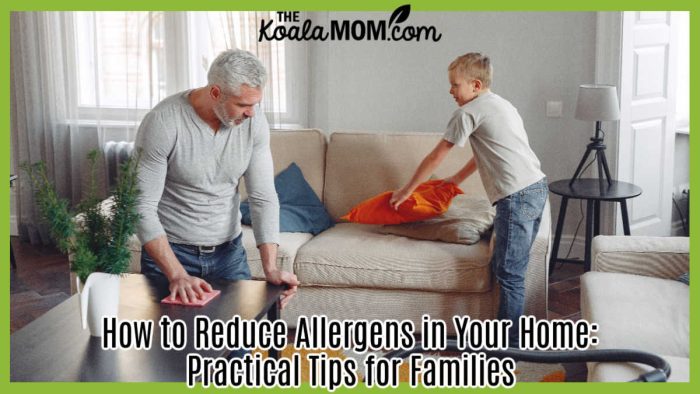
- Damp-dust surfaces: Trap settled particles with a damp microfiber cloth.
- Mop hard floors: Remove tracked-in dirt with a damp mop.
- Clean pet areas: Wash pet bedding and wipe down resting spots.
- Inspect moisture zones: Check bathrooms and other moisture-prone areas for condensation or early mold.
- Check air purifiers: Verify whether filters are approaching their recommended replacement interval.
Consistent, small cleaning habits are usually far more manageable and effective than attempting to make a home completely allergen-free all at once.
No Responses Yet