


Families who spend the majority of their time at home, whether through remote work, homeschooling, or personal preference, feel the quality of their home environment more acutely than most. The layout, the light, the storage, and the general functionality of a space matter differently when you’re in it for most of the day. Improvements that might be a luxury for someone who’s rarely home can be near-essential for a family that’s always there.
The most impactful improvements for these families tend to focus on creating spaces that serve multiple purposes well, reducing friction in daily routines, and making the home feel less crowded when everyone is present at the same time.

Creating Zones Within Your Home
When multiple people are home throughout the day, having defined zones for different activities prevents constant overlap and conflict. A dedicated workspace, even a corner with a proper desk and separation from the rest of the room, supports focused work or school time.
A quiet reading area, a creative space, and a shared family zone all serve different needs and reduce the wear on any single area of the home. Rugs, shelving, and furniture arrangement can create zone separation without requiring structural changes.
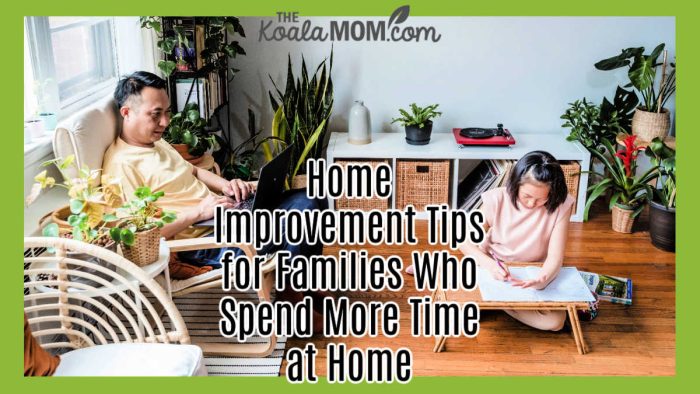
For example, approximately half of the master bedroom in my home is a home office for me and my partner. We have our desks, bookshelves, and a stereo here so we can listen to background music while working. We can leave the door open to hear what the kids are doing or close it if we’re in meetings (and the kids know to see if we’ve got headphones on before asking us questions).
One of the best changes we made for the whole home was adding more intentional storage, in bedrooms and living areas and the garage. Homeschool books, art supplies, and board games can quickly take over the house. Having designated places for frequently used items makes cleanup faster and helps our home feel calmer. We’ve shopped around for shelving, storage bins, and other solutions to make our small space work for a big family.
Making Renovation Plans Work for Your Household
For improvements that go beyond simple DIY, such as adding a room, finishing a basement, or renovating a kitchen, getting multiple contractor quotes ensures you’re planning within realistic budget parameters. Trusted Home Quotes helps families compare local contractor quotes for home improvement projects, so you can plan improvements that are both practical and financially sound.
Before starting a renovation, pay attention to the places where daily life feels hardest. Is everyone fighting for counter space in the kitchen? Are backpacks or shoes piling up near the door? Is there nowhere quiet to work? Often, the best renovation priorities reveal themselves in everyday frustrations. For example, we replaced a noisy, clunky bifold closet door with a smooth, quiet pocket door.
Another matter to consider when renovating is the way your family uses space changes over time. A playroom eventually becomes a study space, and a nursery may become a teen bedroom. Earlier this year, two of my kids swapped bedrooms, which resulted in repainting walls and ceilings, updating closets, and installing new shelving. Renovations that prioritize flexibility often provide the best long-term value.
While my partner and I are both DIYers who’ve done a lot of home reno work on our own, we also know the value of our own time. Sometimes, it’s better to pay a professional to do something in a couple days that might take us a week. We’ve planned a couple small renos that we can do over a weekend, but we’re also looking at some bigger renos that may happen over the summer holidays.
Comfort and Flow for Full-Day Living
Ventilation and air quality matter more when you’re home all day. Improving airflow through better window placement, fans, or HVAC upgrades has a real effect on how comfortable and healthy your home feels over time. Kitchen improvements pay off disproportionately for families who eat most meals at home: more counter space, better organization, and efficient appliances reduce the daily friction of cooking and cleanup.
Outdoor space matters too. Even a modest garden, deck, or patio gives the household somewhere to go that isn’t inside, which is genuinely important for well-being when home is also school, office, and leisure space. Well-designed outdoor improvements extend the effective living space of your home and provide relief from the intensity of a heavily used interior throughout the week.
No Responses Yet