


If you hang out with us for very long, you’re sure to catch a few book or movie references. These are often paired with some comparison between the book and the movie, and the declaration that the “book is always better than the movie!” We’re avid readers and huge movie fans, and we’ve often consumed our favourite stories in all possible forms. While I try to encourage my kids to appreciate each form of storytelling for itself, they’ll inevitably reach the conclusion that the book is always best.
There are a few reasons why I think books trump other methods of storytelling. One is that books are rarely limited by length as movies, musicals, TV shows and radio dramas tend to be. Authors can more fully explore character and plot when they have unlimited pages than when they have only 2.5 hours to tell a story. Authors are also not limited by budget; they can create fantastical worlds, creatures and technology for their reader’s imaginations, without having to worry about the costs or logistics of actually creating such places or costumes.
The biggest reason I think books are better than the movie is that the written word is the only method of storytelling that actually gets us into another person’s head. The limitation of movies, TV shows and musicals is that, as in real life, we are watching the story unfold from an outsiders’ perspective. There are various ways storytellers try to get us inside the characters’ heads within these genres, but those attempts are limited at best. Books, on the other hand, give us a deep dive into another person’s thoughts, feelings, and motivations, letting us truly walk a mile in someone else’s shoes.
This post contains affiliate links; as an Amazon associate, I earn from qualifying purchases.
Inside a Dystopian YA World
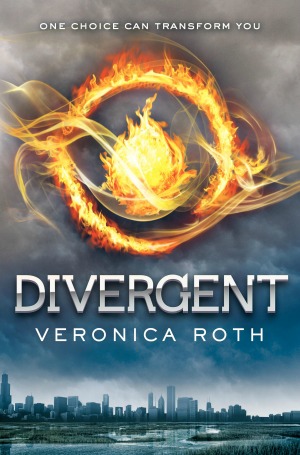 I realized this most clearly in the Divergent and Hunger Games series. I watched both movie series before reading the books. I found both Katniss and Tris to be interesting and yet somewhat cold and confusing characters. Some of the decisions they made were hard to understand. Both movies focused greatly on the action of the stories, particularly in the violence of The Hunger Games, so that many people have found them distasteful.
Then I read the books. Both authors are very good at deep point of view, anchoring us solidly in Katniss’ or Tris’ thoughts so that we know exactly why they do what they do. We know their struggles, their doubts, their past trauma, their insecurities, their fears, their deepest passions. The focus is no longer just on the action and violence, but on how the action and violence affects these young women and how they react to it. And both novels make it very clear that the dystopian, controlling, violent society in which Katniss and Tris live is very toxic and damaging to everyone there.
I honestly applaud Suzanne Collins for writing a novel about Coriolanus Snow. Most authors choose to write novels about likeable characters and hero figures, and Snow is clearly a villain of all villains throughout the books and movies. The Ballad of Songbirds and Snakes reminded me of a short story called The Yellow Wallpaper, which chronicles a woman’s descent into postpartum depression. Similarly, The Ballad of Songbirds and Snakes introduces us to Coriolanus as an ordinary teenager in a war-torn country, and how his past trauma, his pessimism, and his choices lead him to become the man we know in The Hunger Games. This descent into madness is best portrayed in the book, because we are solidly inside Coriolanus’ head and see the motivations and thoughts behind his decisions.
The close-up scene of a main character’s face as they struggle with big emotions has become an iconic part of movies. This scene usually frustrates me, as I wish we could actually know what that character is thinking within that scene, instead of simply trying to guess it based on the expressions on their face. We know that the character is thinking hard or struggling with a particular action, but while we’d be given several paragraphs of those thoughts in a book, we get nothing in the movie.
The Fantastical World of Harry Potter
Another series in which I’ve deeply appreciated the author’s ability to get us inside a character’s head is Harry Potter. These books are written entirely from Harry’s point of view as he grows from a lonely, inexperienced 11-year-old child to a bold 17-year-old with a purpose. We’ve watched each of the movies as we’ve finished each of the books, and each time I’ve been greatly disappointed with the movies. While these movies do an admirable job of sticking to the plot of the stories, they leave out so much, not just in conversations between the characters and minor details that mean so much in the books, but also in Harry’s thoughts.
Harry is a very complicated character. He goes through a lot in the books, from the death of his parents, the abuse he endures from his aunt and uncle, the ongoing threats to his life from Voldemort, and the publicity of his every move. Harry is alternately the wizarding world’s favourite person and then their least favourite person. Because of his past abuse, he struggles to trust the adults in his life, and even sometimes his friends. All of these emotions and struggles are thoroughly explored in the pages of the books, but glossed over in the movies.
While reading the books, we’ve had many great discussions about what Harry does and why, and what he should have done, and why he didn’t do that. One thing we’ve often wanted to yell at Harry is “TELL AN ADULT!” or at least ask for help, yet we’ve also discussed why he feels unable to do this. I also think the romances are better explored in the books rather than in the movies, because we’re in Harry’s head and better understand his feelings for Cho and Ginny and why he treats them as he does.
Jane Austen’s Narrators
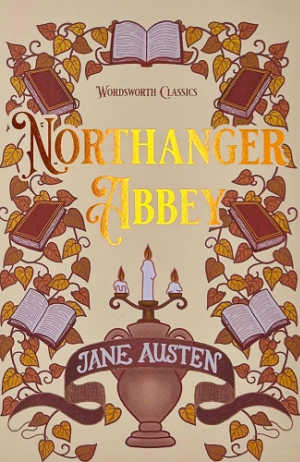 Jane Austen’s novels are brilliant because not only does she bring us inside her characters’ thoughts, but she also masters the art of the narrator. For example, Northanger Abbey is the story of Catherine, a naive young woman who travels to Bath with family friends. With her, we experience the newness of Bath, the ups and downs of making new friends, and the confusion of navigating possible romantic relationships. Catherine is a likeable, sensible young woman and it is easy to relate to her through all of these pages, as Jane shares both her conversations with those around her and her thoughts on what passes:
Away walked Catherine in great agitation, as fast as the crowd would permit her, fearful of being pursued, yet determined to persevere. As she walked, she reflected on what had passed. It was painful to her to disappoint and displease them, particularly to displease her brother; but she could not repent her resistance.
The narrator provides tongue-in-cheek commentary about the “heroine” of the story, poking fun at novels in general and the reader’s expectations. Catherine lived in the era of gothic novels, sensational stories with exaggerated heroines and implausible plot points, and Northanger Abbey is everything those novels are not. (Note that most of us have not read the Ann Radcliffe novels that Catherine reads, and yet we are still reading and enjoying Jane Austen’s novels.) This narrator adds quite a bit of humour to the story, as well as some perspective on Catherine’s thoughts and actions.
Why Does Getting Inside the Character’s Head Matter?
Besides the fact that we better understand a character’s actions when we understand their thoughts and motivations, why does it matter that books get us inside our character’s heads? Empathy. Books given us the chance to walk a mile in another person’s shoes, which helps us to better understand and empathize with others. Beth Ann Fennelly observes, “During engaged reading, we compare the protagonist’s actions to what we’d do in a similar situation, or what we’ve done in the past. We practice making decisions that have consequences, which is to say, we practice adulting.”
In real life, we control what parts of ourselves we show to those around us. This is especially true on social media, where we can present only our best selves, our perfect families, our cleanest homes. This creates an atmosphere of competition, jealousy, and comparison, rather than empathy and compassion. By contrast, reading can take us once again into a character’s deepest thoughts and feelings, into not just their best days but also their worst days, their biggest triumphs and their most embarrassing mistakes. Fennelly says, “Reading exposes us to the fully expressed, uncensored heart of a narrator who has nothing to gain from disguising her vulnerability.”
Many of us live our lives in a narrow field of influence. For example, I’ve spent my entire life in western Canada, with mostly white friends who have a university education. Reading expands our perspective, taking us into the lives and experiences of others whom we may not meet in real life. I can walk with a mom who has lost a child and understand her grief; experience the life of a black slave boy in the early 1900s; imagine what life may look life if we colonized another planet. I get to experience all the feelings, questions, and ideas of those characters – and better understand both them and myself and those around me in the process.
Do you prefer reading books or watching movies? Do you like to compare the book vs. movie versions of stories?
No Responses Yet