


The story of Abigail is one of my favourite stories in the Bible. It’s tucked away in the Old Testament: a brief glimpse of a wise and courageous woman who steps into a dangerous situation, makes a difference, and then largely fades back into the background of Scripture again. We don’t get many details about Abigail herself, which leaves plenty of room for a historical fiction author to imagine what her life might have looked like.
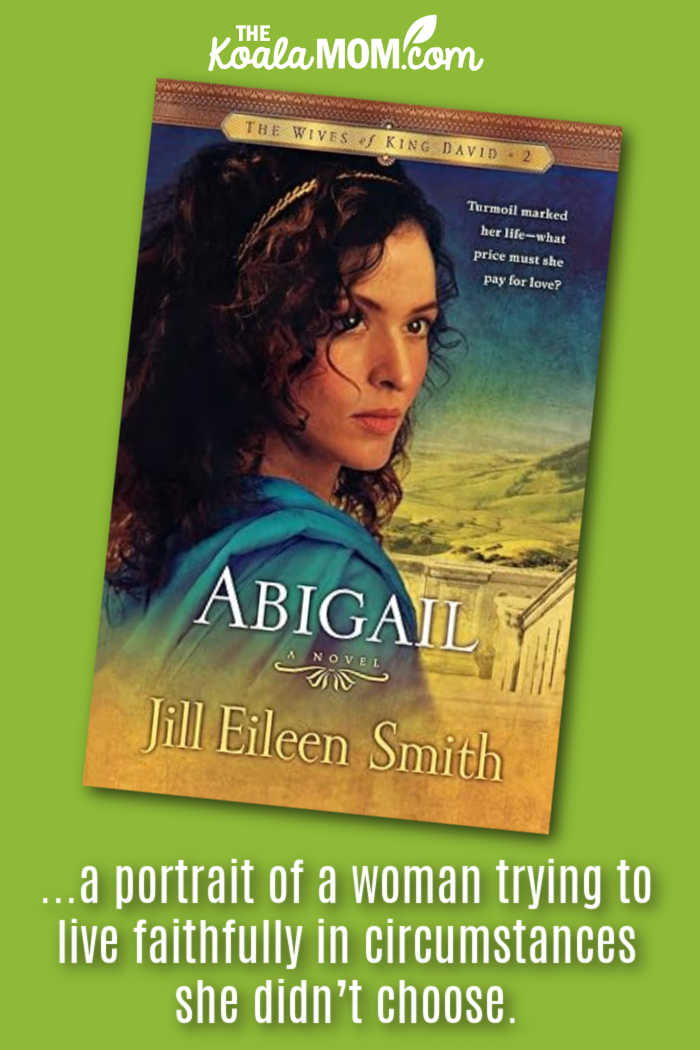
In Abigail, the second book in her Wives of King David series, author Jill Eileen Smith takes those few biblical details and builds a much fuller story around them. She imagines Abigail’s marriage to Nabal, her life before she meets David, and what happens after the dramatic encounter described in 1 Samuel. The result is a portrait of a woman trying to live faithfully in circumstances she didn’t choose.
This book was provided for review courtesy of the publisher and/or publicist; all opinions expressed remain my own. This post contains affiliate links; as an Amazon associate, I earn from qualifying purchases.
Overview of Abigail
Abigail is pledged in marriage to Nabal as a way to pay off her father’s long-standing debt to Nabal’s father. Rumours are already circulating that Nabal isn’t quite the man she would want for a husband, but by the time Abigail learns just how difficult he is, it’s too late to turn back.
Her wedding day proves to be a disappointment, and married life is hardly better. Nabal is wealthy but selfish, unpredictable, and frequently drunk. Abigail finds herself trying to navigate life with a man whose decisions affect not only her but everyone around him. Her faith in Adonai becomes an important source of strength as she tries to be a faithful wife in circumstances she cannot control. Then David enters her life.
David is still a fugitive from King Saul, travelling with his men and depending on the goodwill of the people in the surrounding countryside. Abigail’s parents and brother have already fled to David to escape servitude to Nabal. David and his men have also protected Nabal’s shepherds and flocks from raiders, so when David needs provisions for his men, he expects Nabal to return the favour. Instead, Nabal insults him.
David’s response is swift and angry, and suddenly Abigail is faced with an impossible situation. She has to act quickly to prevent bloodshed and protect her household. This is the moment most readers of the Bible will recognize, but Jill Eileen Smith fills in the story around it, showing us the woman behind those few verses. And Abigail is much more than the woman who brings David food and talks him out of revenge.
My Thoughts on This Novel
One of the things I enjoyed most about Abigail was the way Jill’s research into Biblical times brought alive the little traditions and everyday actions of her characters. Biblical stories can sometimes feel very distant because we tend to focus on the major events—the battles, kings, prophets and miracles—and forget that these people also had ordinary days. They cooked meals, travelled, cared for animals, arranged marriages, worried about their families and tried to navigate complicated relationships.
The novel also made me think more about what happened to Abigail after that famous encounter with David. In Scripture, we can easily read the story as though everything is neatly resolved once Nabal dies and David takes Abigail as his wife. But becoming David’s wife did not mean Abigail suddenly stepped into an uncomplicated happily-ever-after.
David already had another wife, and Abigail would eventually become one of several women married to him. That is a very different situation from the way we might instinctively read the Biblical story today. Smith spends time imagining what that might have meant for Abigail emotionally and practically, and I found that particularly interesting.
The Psalms are another element I appreciated. Smith weaves David’s psalms into his thoughts and prayers as he wrestles with decisions and responds to the events happening around him. Since we know David as the psalmist as well as the future king, this helped connect the fictional character to the man we encounter elsewhere in Scripture.
I also enjoyed seeing some of the lesser-known biblical characters developed into fuller people. When you read the Bible, there are often only a few sentences about someone, leaving you wondering who they were and what their lives were actually like. Biblical fiction gives an author room to explore those gaps, and Smith takes advantage of that opportunity.
That does come with a caveat, of course. This is historical fiction, not another version of Scripture. The Bible gives us the framework for Abigail’s story, but much of what happens between those biblical events is necessarily Smith’s imagination. I think that distinction is important to keep in mind while reading. However, Biblical fiction can also help us to really think hard about the stories of the Bible and what those stories mean for us today.
I did find myself wishing that Smith had stayed with one or two narrators—perhaps Abigail and David—rather than moving between several perspectives. The multiple narrators gave the reader access to more of the story, but I sometimes found myself pulled out of Abigail’s story when the perspective changed.
Still, I thought Smith did a good job of taking a short biblical account and imagining the life surrounding it. She doesn’t simply retell the story of Abigail; she asks what it might have been like to actually live it. What would it feel like to be married to an abusive man like Nabal? What did Abigail’s faith look like on ordinary days? What would she have thought about David, knowing that she was becoming his wife while he was already married to another woman? And what did it mean to follow God faithfully when your circumstances were largely outside your control?
Those questions make Abigail an interesting read for anyone who enjoys Biblical fiction, particularly readers who like imagining the women who appear only briefly in Scripture.
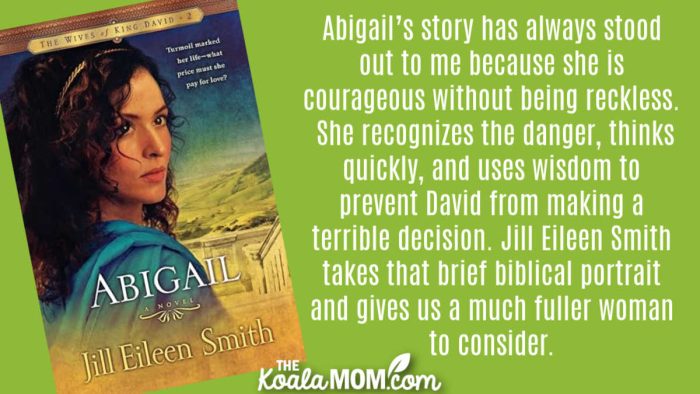
Abigail’s story has always stood out to me because she is courageous without being reckless. She recognizes the danger, thinks quickly, and uses wisdom to prevent David from making a terrible decision. Jill Eileen Smith takes that brief biblical portrait and gives us a much fuller woman to consider.
If you enjoy Biblical fiction that fills in the historical and personal details surrounding familiar Bible stories, Abigail is worth adding to your reading list. And if Abigail is already one of your favourite women in Scripture, it’s especially interesting to spend a few hundred pages imagining what her life might have been like beyond those few verses in 1 Samuel.
No Responses Yet